
Status Report
Where are we at?

The wait for Council to approve the DA has been—as I hoped it would not be but nevertheless expected—long and tedious. We’re now at the four month mark, well over Council’s self-imposed ‘Overall Service Level’.
We lodged the Development Application (DA) on 17th October 2024. As I write this, we’ve been waiting 119 days.
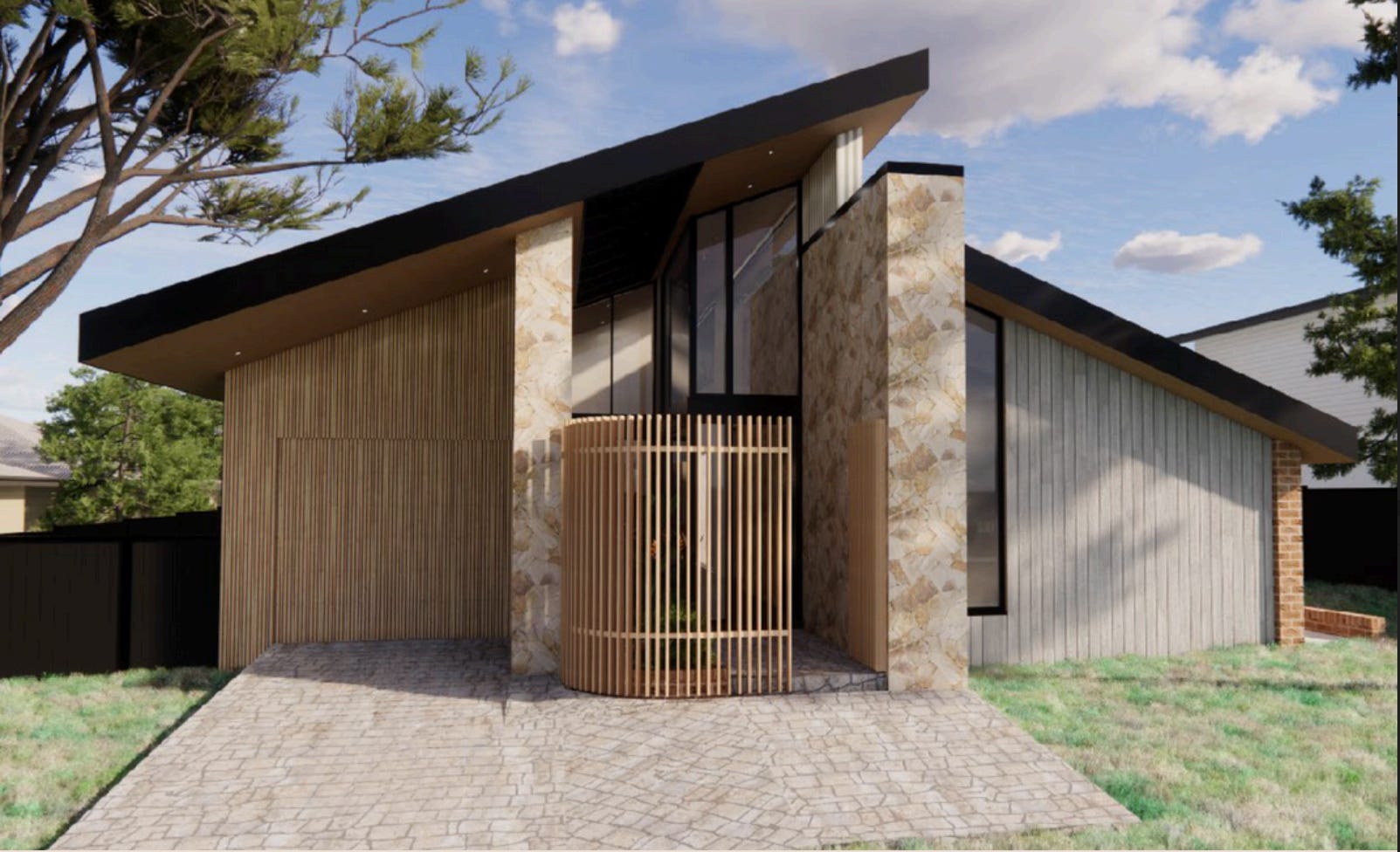
The Dream
Discussion with Council
Finding the information on the NSW Planning Portal to be somewhat opaque, I phoned the person responsible for progressing the DA at Hornsby Council. Although loathe to say anything concrete (no pun intended), this Council officer told me they’d sent the whole thing to the Rural Fire Service (RFS) – again – at the end of January. The delay was therefor with the RFS.
‘If the RFS gives the green light,’ I asked, possibly sounding a bit plaintive, ‘is there anything else?’
The Council officer was cautious. ‘Not as far as I know. At this point. Not that I know of. But I can’t confirm.’
And that’s where I had to leave it.
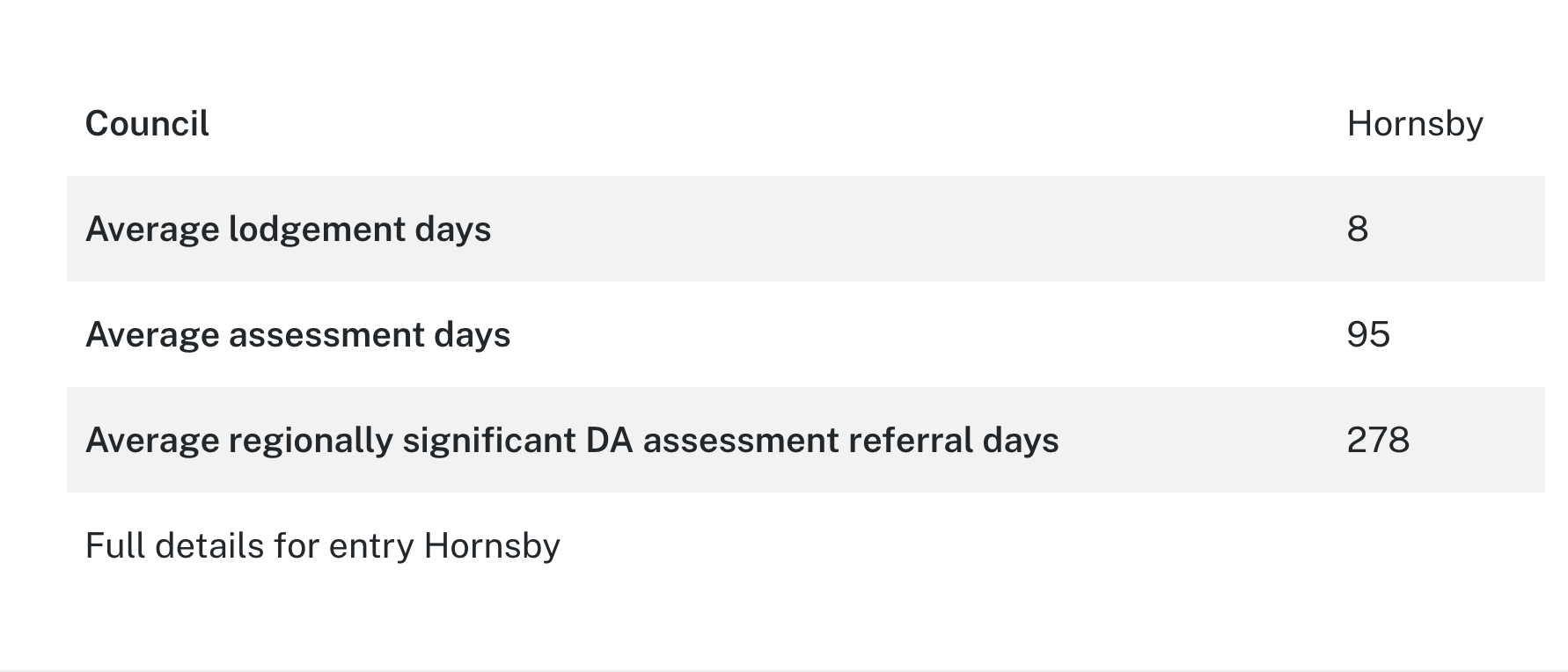
Where Hornsby Council presently sits on the NSW Planning Portal League Table. Consideration of our residential DA is well outside their average. You can do better, Hornsby Council!
Keeping busy
However, we have not been sitting on our hands. Conferences have been held with SIP suppliers. Indicative quotes are being sought from builders. An interior architect consulted.
Those SIPs
It’s been eye-opening to discover that being on the cutting-edge of twenty-first century sustainable building technology has its drawbacks. I’ve written before about using SIPs for a Passivhaus—here and here—but the fact is that not many people are doing it yet. So the suppliers and builders available to bring the vision to reality are few and far between.
In terms of the actual panels, I was a little galled to find that NO ONE makes them in NSW. Apart from a supplier in WA, most of these panels appear to be manufactured in Victoria. Or imported from China. Even those made onshore use imported OSB, so reducing the environmental footprint is kind of illusory.
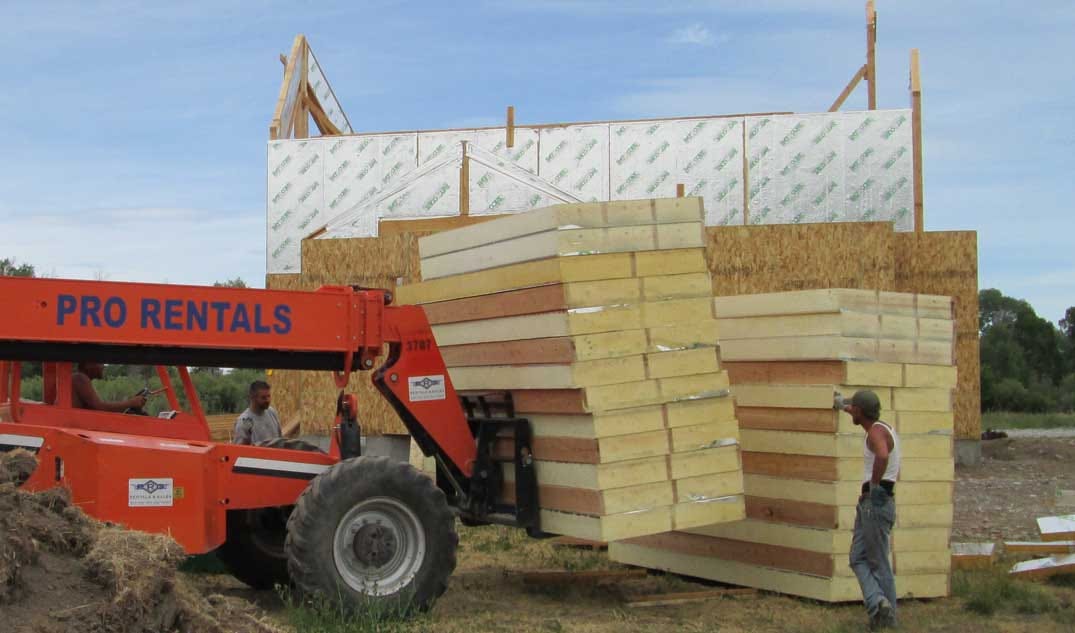
Trucking in the SIPs [source]
Whether the panels are trucked from Victoria or from the dock, a large-ish vehicle with a crane is needed, too. We’re a long way from a team of chippies and their 2x4.
Builders
The paucity of Passivhaus buildings also means there few builders around with experience erecting them. CarbonLite in Victoria will send their own team of experienced builders if you want, but they have to be flown up, and housed in the local motel or something. And so costs escalate.
Having watched the inexperienced builders in that Grand Designs episode, as they tried to work out how to put together the panels with what looked like an IKEA diagram, I’m a little doubtful about this aspect.
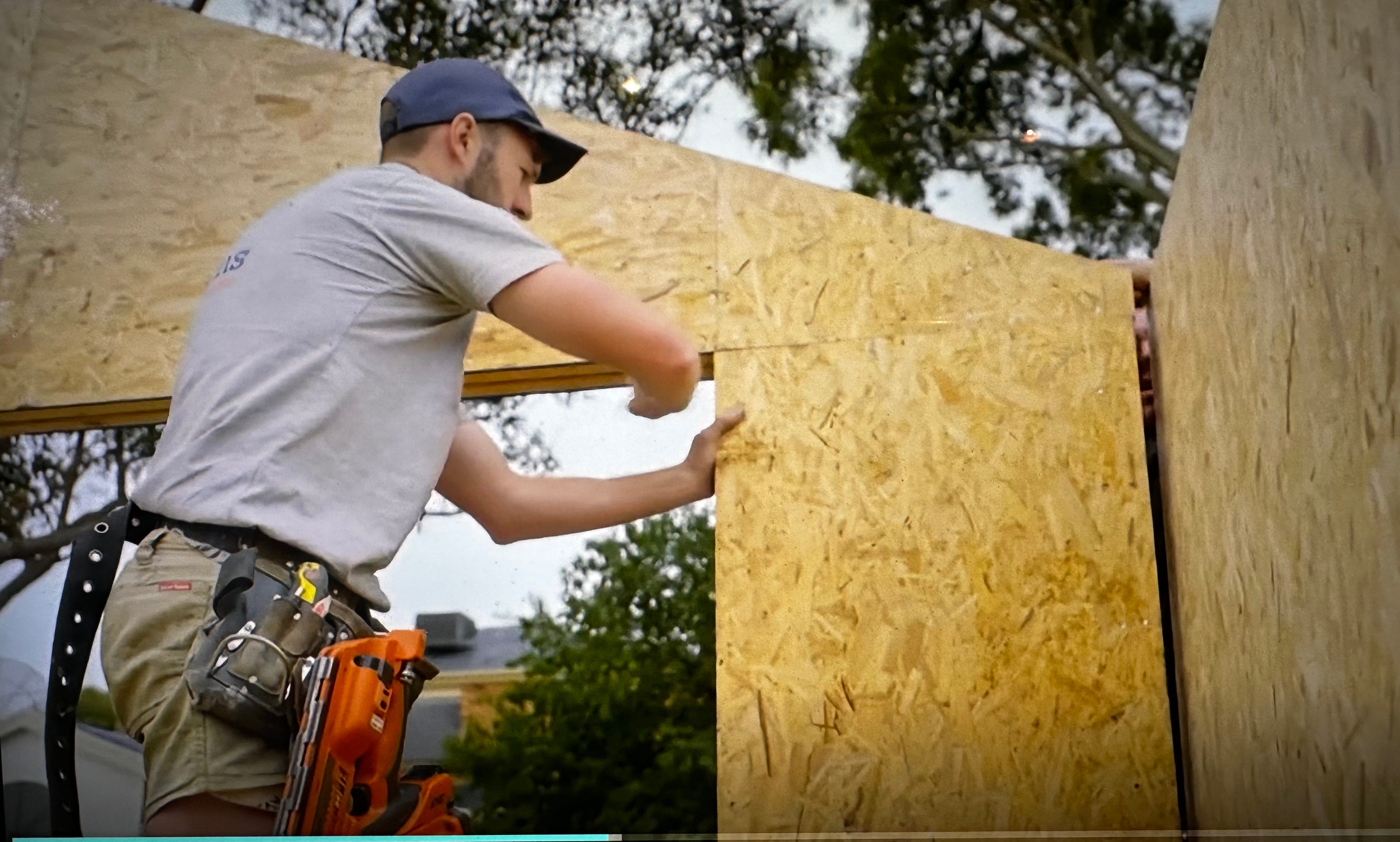
Building with SIPs — giant Lego? [source]
Even when we find a builder who has put up SIPS, they’re not always convinced this is the way of the future. ‘I could cut $200,000 off the quote if you didn’t want Passivhaus,’ one offered. That is, of course, because the panels cost more than the traditional ‘sticks’, but still—where is the builder who has a passion for Passivhaus? Who is going to be as excited as me when we pass the air blower test with flying colours?
Interior Architect
In order to move on to the fun part, I met with an interior architect/designer, the lovely Donna Marie. This was a more upbeat discussion, the goal being to pin down the interior finishes I want, so that builders aren’t quoting on acres of plasterboard when I’d rather something completely different. Once the construction diagrams begin to be prepared, the architects will want some firm decisions about flooring, too.
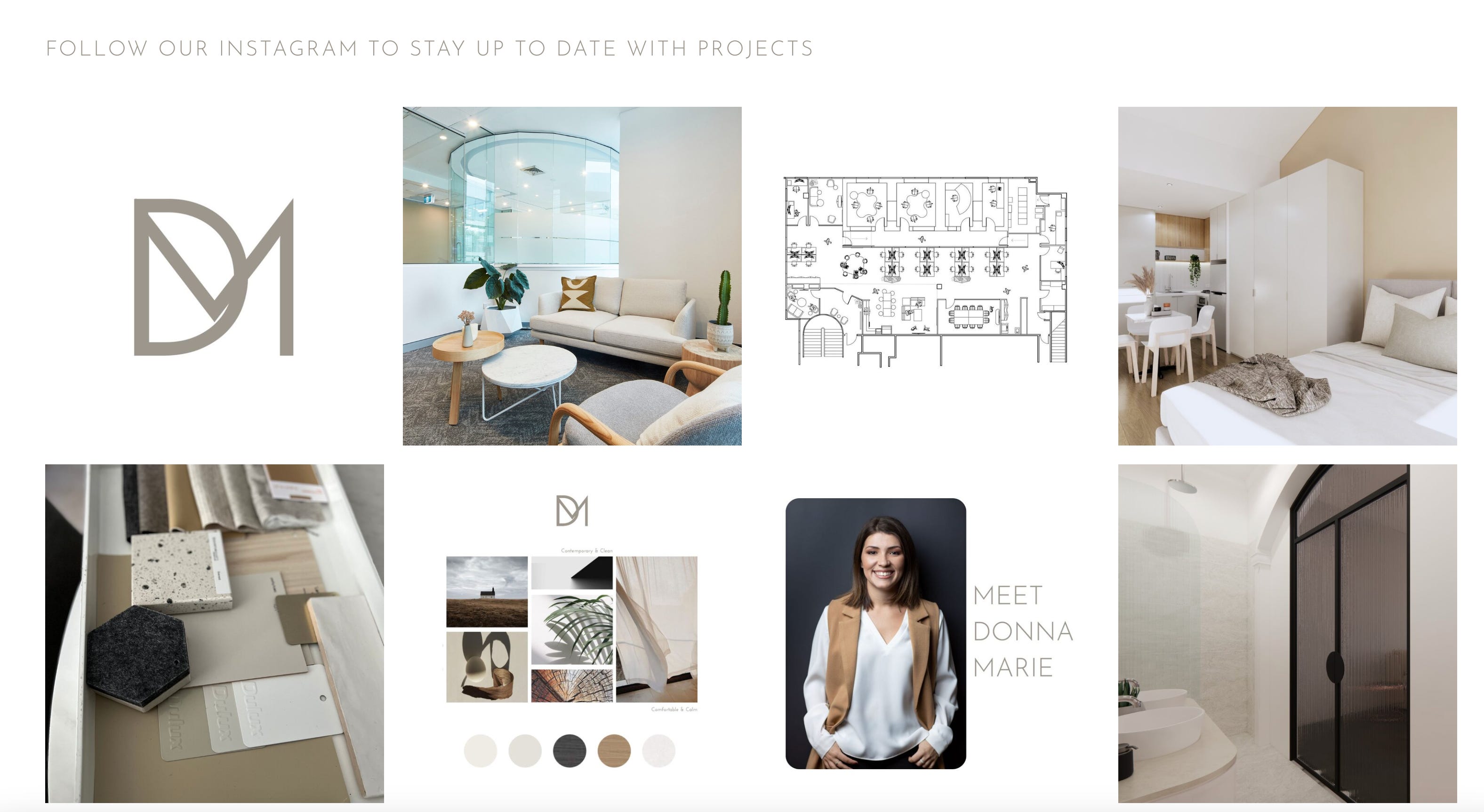
For a happy hour or two, we pored over the floorplan and discussed the options. Donna Marie will now send me her costs schedule for various stages, including things called ‘Concept’, ‘Design Development’ and ‘Documentation/Schedule of Finishes’. She can do a lighting plan! Wrangle some trade discounts! She knows some joiners!
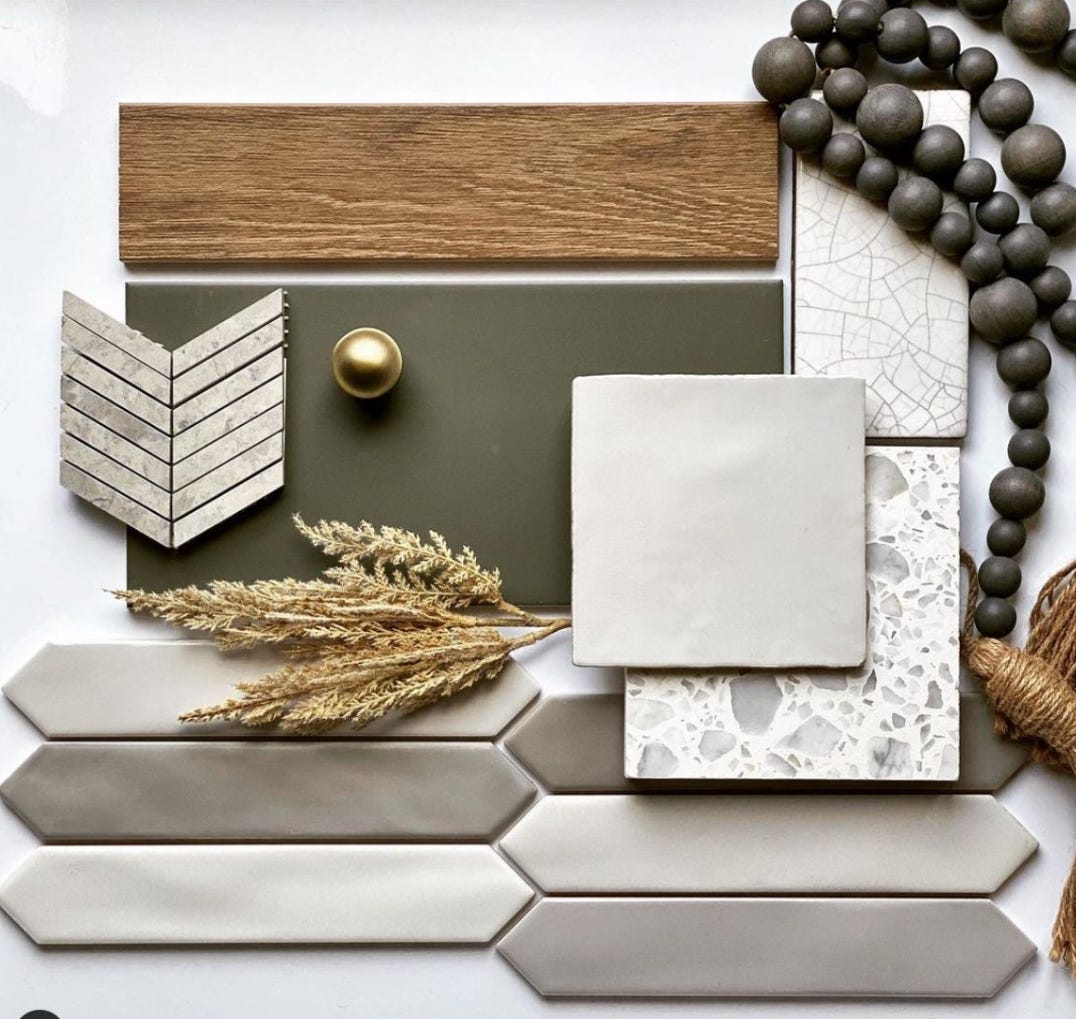
Even in our first exploratory discussion, I learnt about the many possibilities of micro-cement in bathrooms, and concrete finishes for bench tops, and tints for fluted glass, decorative panelling called Polytec, and Covet timber-look aluminium panelling (for those bushfire-prone locations). Exciting possibilities.
Time to move from Pinterest mood boards and consider specific lists of materials and suppliers.
And *gulp* costs.
Good update Annette - such an all absorbing project for you - thanks for sharing. Sx