
Windows
Windows on my new world

Ever since I had the bright idea to build a new house, I knew I wanted to take inspiration from mid-century modern design, but with a contemporary Australian twist. MCM design is known for using floor to ceiling windows, big expanses of glass, high clerestory windows, interesting triangular shaped windows—a long and inspiring list.
‘Contemporary Australian’ also means windows to me: looking out into nature. But it also means bushfire resistant materials and environmentally efficient windows.
Time to research the window question.
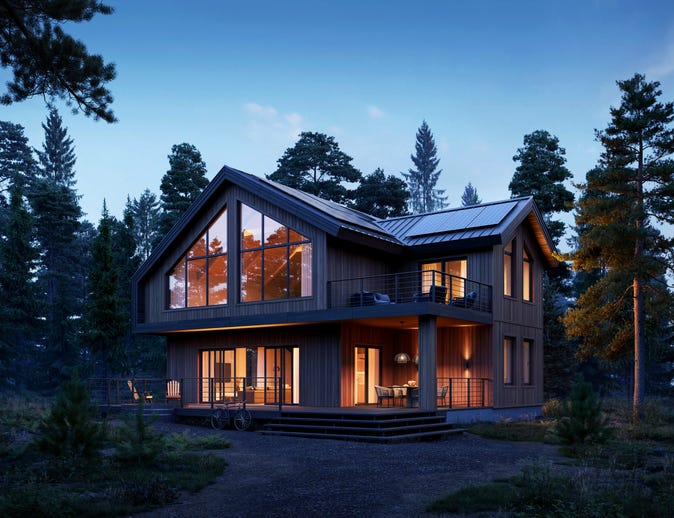
Lots of lovely windows. A Canadian Passivhaus [source]
Orientation
The draft design of the new house, so far, has very few windows facing west. This is to reduce the heat from the westerly sun and help make the house ‘solar passive’. Despite the ‘backyard’ of the house and the view to the bushland behind being westerly, we’ve chosen to orient the house this way for energy efficiency.
At the moment (nothing is set in concrete yet) there are only two possible windows facing west: a south-side window in a corner of the sitting room, (which could be shaded by deep eaves), and the back door, which may or may not be glazed.
I’m pretty impressed with this outcome. To compensate for no views to the bush at the back, there is a large square deck, or ‘outside room’ facing in that direction.
All other doors and windows open onto courtyards, with the opportunity for lovely landscaped garden views.
Windows onto nature. Nice. But is it do-able?
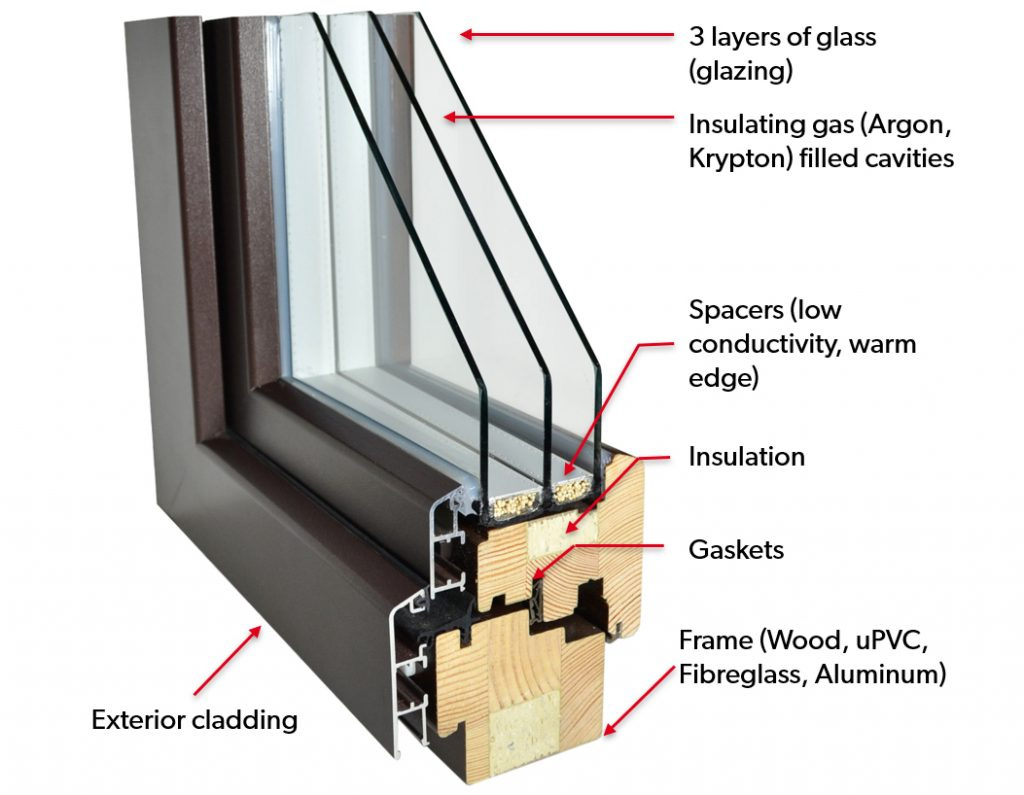
Triple-glazing. It’s complicated. [source]
Double-glazing? Triple-glazing?
Though not all the windows in the house will need the red carpet treatment of double or triple glazing, it’s on the wish-list for many of them, especially those in bedrooms and living areas.
This supplier explains: ‘Double glazing comprises two panes of glass per window while triple glazing has three. The panes are held securely in a frame with layers of insulating gas between them, typically argon. The gas allows light to pass through but reduces the amount of heat that enters or escapes a room, thereby keeping the room more comfortable and saving on cooling and heating costs. Double glazed sliding doors typically reduces heat loss or gain by 75-80% compared to single-glazed windows while triple glazing makes even greater reductions… they’re also better at reducing noise from outside.’
I don’t expect noise to be an issue in the (relatively) quiet suburban streets of Normanhurst, but keeping interior temperatures stable is important. Triple glazing is better at maintaining a consistent temperature in a room due to having better thermal insulation, and is more commonly used in freezing cold climates.
Argon gas? Really?
According to Wikipedia, ‘Argon is colorless, odorless, nonflammable and nontoxic as a solid, liquid or gas. Argon is chemically inert under most conditions and forms no confirmed stable compounds at room temperature.’ Importantly for the application we’re talking about, Argon has low thermal conductivity, and is relatively cheap to produce. It’s used for a wide range of strange things, from humanely asphyxiating diseased poultry to preserving the original American Declaration of Independence.
Fun fact: The name ‘argon’ is derived from the Greek word ἀργόν meaning ‘lazy’ or ‘inactive’, because the element undergoes almost no chemical reactions.
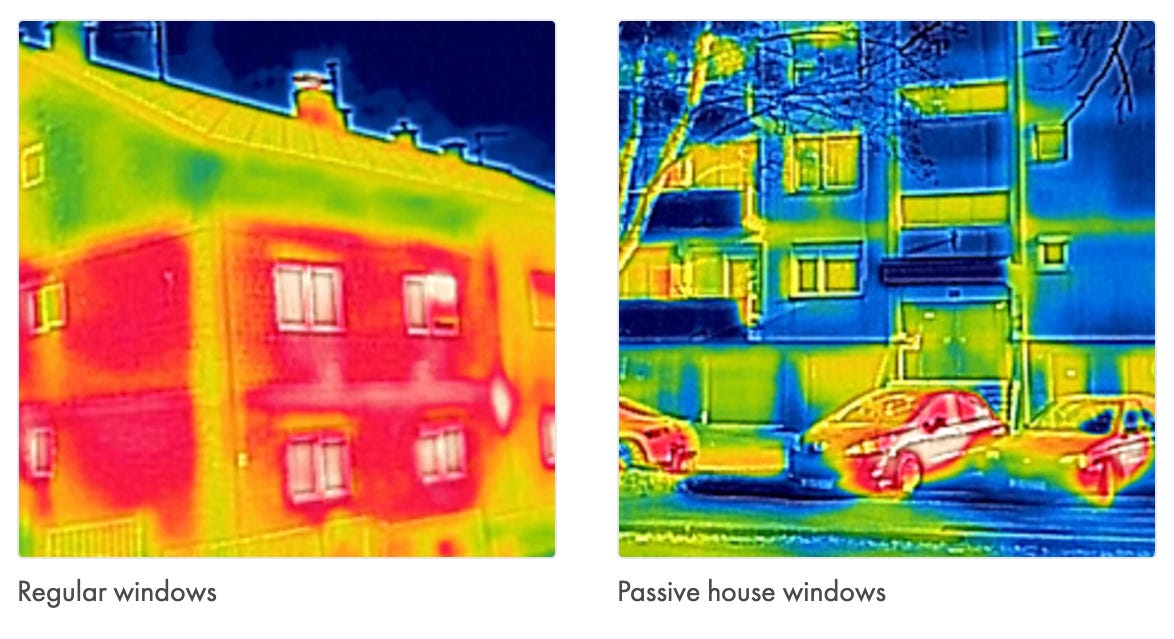
Thermal performance, graphically shown. [source]
More jargon and acronyms to learn.
Start with IGU: ‘It stands for Insulated Glazing Unit – usually referring to double- or triple-glazing.’ Otherwise known as a … window?
The type of glass also plays a role. I learn about ‘Low-E glass’, ‘U value’ and ‘SHGC’ (solar heat gain coefficient)—measuring how much of the sun’s heat will get through the glazing. To block as much solar heat as possible, go for a lower SHGC. To let more through to heat in winter, look for a higher number. The glass used in double-glazed windows can be laminated or UV-tinted. Then there’s the frame thickness, and the air-gap … Much to consider.
It’s not just ‘a window’
There are all these components to consider: the glass panes themselves (usually thicker than in single glazing), the spacer bars, the gas layer (air or inert Argon gas), seals, and the frames.
How much does double or triple glazing cost?
Obviously double or triple glazing will cost more: there are more materials involved, specialised suppliers (possible delays, too), and expert installers. On the other hand, good insulation will lower long-term heating and cooling costs, and possibly increase property value. According to the Department of Energy, double-glazed windows can reduce heating and cooling costs by up to 25% compared to single-glazed windows.
In addition to these dollars-and-cents considerations, there’s the environmental benefits of well-insulated housing.
As to whether to choose double or triple glazing, typically triple glazing costs approximately 20% to 25% more than double glazing due to the added pane, enhanced sealing, and specialised spacers. Expenses vary depending on the size and quality of the windows, though both options deliver energy efficiency and noise reduction.
So much expert advice required. I read: ‘triple glazing is a ‘must have’ in Passivhaus projects.’
But what about the style?
Wish list: black metal frames, modern, low maintenance, fire resistant. Practical. I’d like to have some French doors opening into some of the courtyards, and we need to decide on the doors for the main courtyard. I love the look of fluted glass where privacy windows are needed. I scour Pinterest for ideas.
This is the fun part. But it’s the technical specifications that require scrutiny, and there’s a lot to learn.
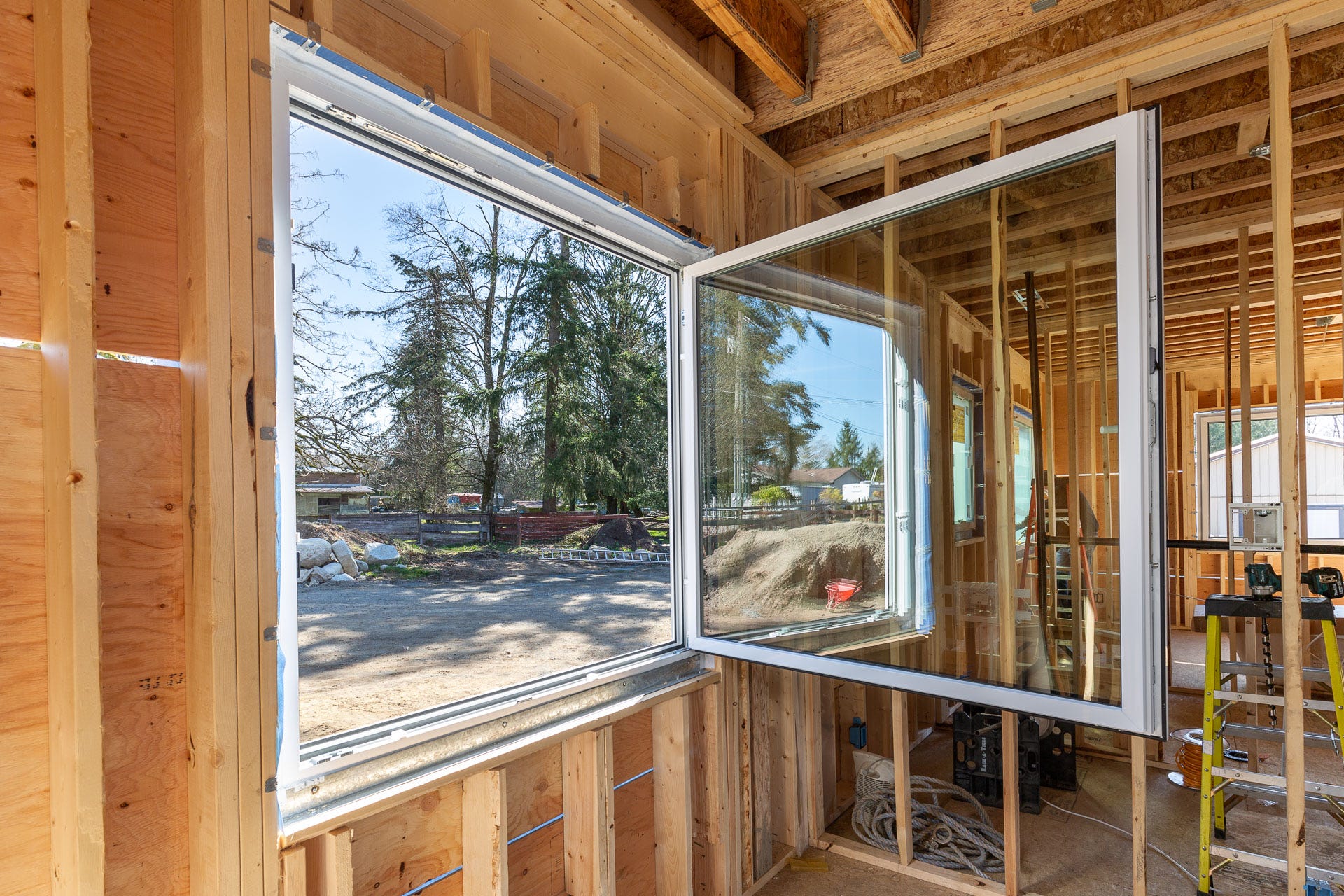
Under construction [source]
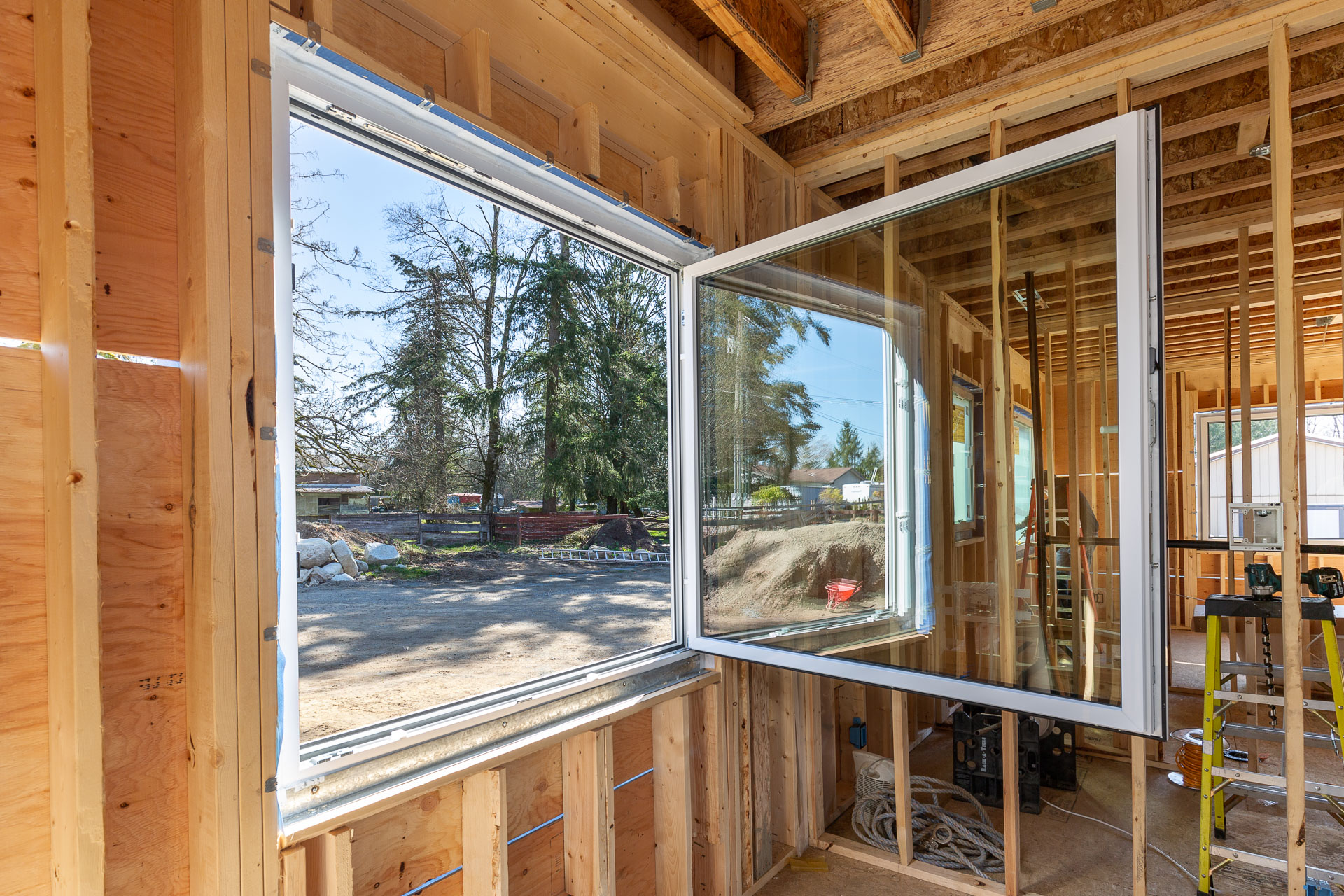
Passivhaus wish-list
Passive homes require high performance double or triple glazed windows that are passive house certified and use a ‘thermally broken’ or ‘non-conductive’ frame like uPVC. The idea is to maximise the energy efficiency while eliminating any conductivity that would cause excessive heating or cooling into the home.
The Passivhaus Association of Australia has a mini-guide to suitable windows, written by Talina Edwards Architecture, and most of the following useful (if overwhelming) info comes from that:
An aluminium-clad timber frame with ‘warm-edge spacers’
‘A high-performance triple-glazed window with warm-edge spacers & argon-filled gaps is still ONLY equivalent to about R1 insulative value (so a lot less than your walls). Windows are measured in U-values which are the inverse of R-values. Triple glazing is a ‘must have’ in Passivhaus projects.’
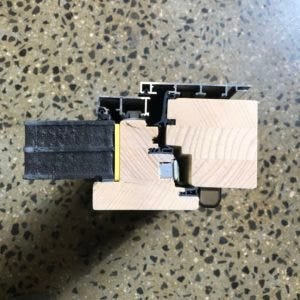
What about the dreaded BAL?
From the PHA mini-guide: ‘This particular window [see pic above] is an aluminium-clad timber frame. Because they are made of aluminium externally, they meet the definition of ‘non-combustible’. Please check with each window supplier/manufacturer to ensure your choosing windows that meet your BAL level. We know of different examples of these windows that meet up to BAL-40 and BAL-FZ. The timber element is internal which doesn’t impact BAL considerations. Depending on your BAL rating, you’re likely to require thicker toughened glass.’
Condensation: I learn something
One thing you don’t want in a Passivhaus is condensation forming inside. From the mini-guide: ‘Will condensation form on these windows? A: Not inside! Condensation can occur on the OUTSIDE which is where you want it to occur! Unfortunately, standard double-glazing in Australia is normally made with aluminium-frames which are not thermally-broken (beware of those that say they are ‘thermally-improved’ which is essentially greenwash!). Aluminium is a metal which is an excellent thermal conductor (which is why we use metal pots and pans to cook with). However when it comes to your building-envelope, we don’t want the outside temperature conducted (transferred) inside – this is what’s known as a thermal-bridge. In winter if you touch the inside-face of an aluminium window frame you’ll feel that’s almost as cold as the outside temperature… and this is why condensation regularly occurs inside.’
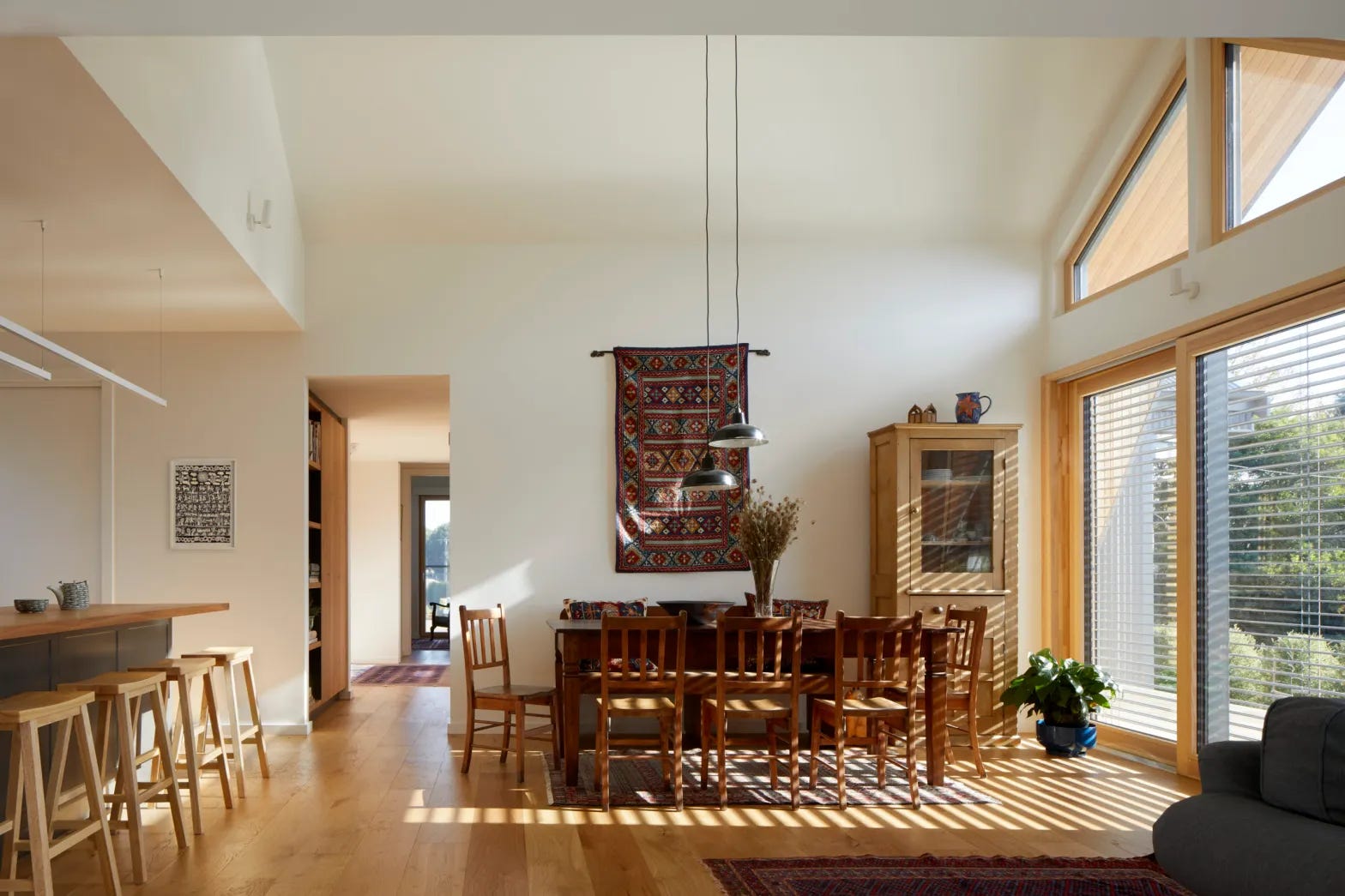
Owl Woods Passivhaus, Victoria. ‘The separate wings and integrated courtyards certainly posed a challenge as it meant more wall area was exposed to the prevailing weather but it was possible to meet energy efficiency requirements by increasing insulation values and using triple-glazed high-performance windows.’ [source]
So what should the frame be made from?
Apparently not straight aluminium, since it’s not ‘thermally-broken’.
Not wood. Fails the BAL rating test.
Possibly uPVC, which apparently ‘excellent in reducing operational-energy (and therefore lowering life-cycle carbon emissions substantially).’ Also lower cost. You might think PVC would be a bad choice for the hot Australian sun, but apparently that’s no longer the case. Window frames made from uPVC are more economical and have excellent thermal properties. Some companies are providing high-quality certified Passivhaus PVC windows.
Wood encased in aluminium, as per the example above: durable and low-maintenance; but more expensive.
Where do you get these fancy windows?
From the mini-guide: ‘The pictures we’ve showed above of the aluminium-clad timber frames are from an Australian company based in Canberra, however they do import these windows from Europe—they’re manufactured in large quantities there. It can be more cost effective to do this (including shipping costs) but it does mean the lead-time can be maybe approximately 5 months, compared to 5 weeks for locally-sourced windows. The uPVC windows mentioned above are usually assembled here in Australia from imported extrusions so can be delivered to site sooner.’
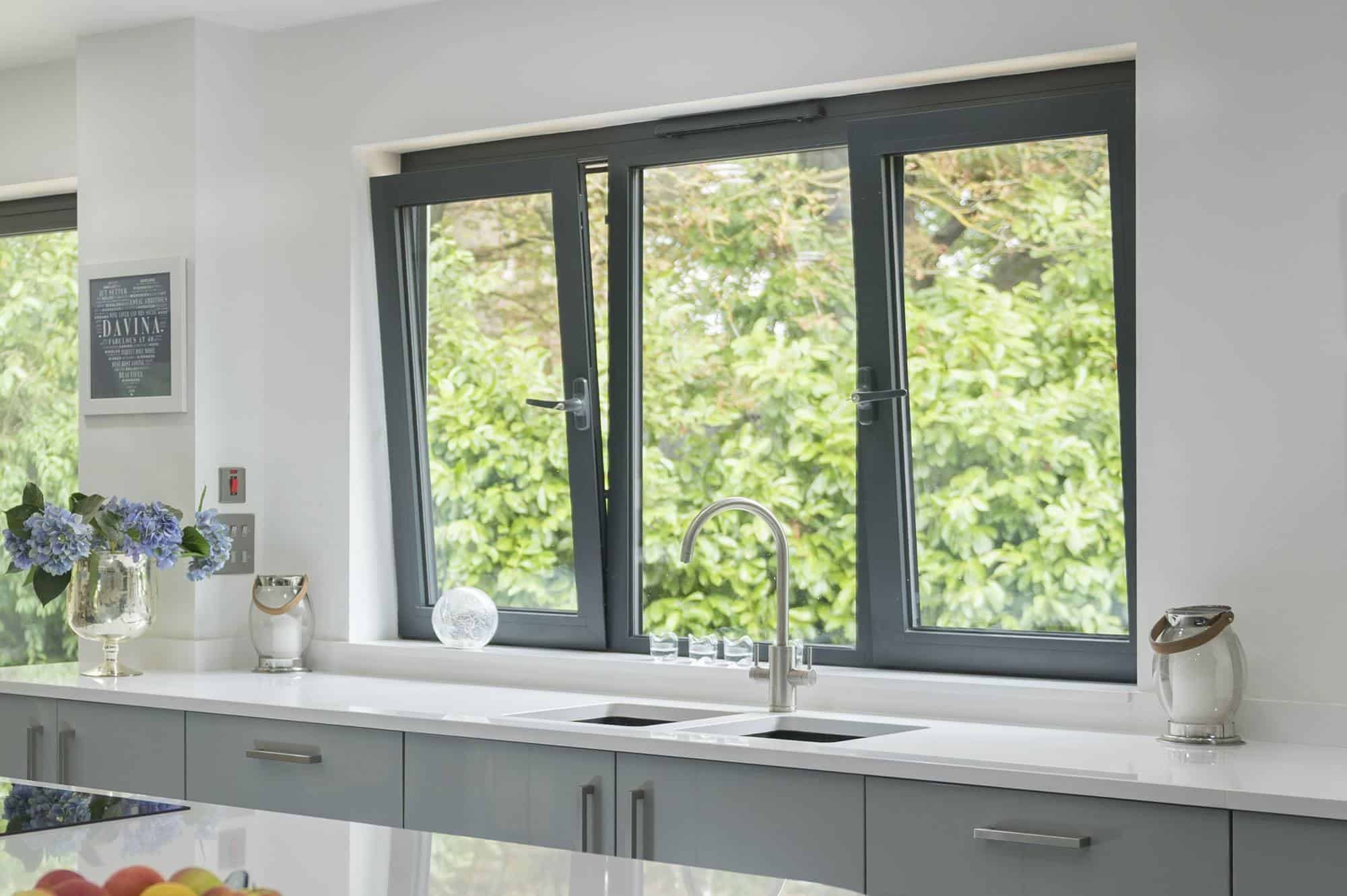
Examples of a ‘Tilt & Turn’ window (UK) [source]
And do the windows OPEN in a Passivhaus?
Yes, if you want.
‘Tilt and Turn’ windows, quite common in Europe, are a popular choice. ‘The tilt-function means you can get a small amount of air in if you want to open your window, it’s an effective and secure option if you want to have your window open for longer periods of time or overnight. If you’re opening up the house in the evening in summer to do a ‘night-purge’ to flush out any warm air, then the ‘Turn’ mode means they open up like a ‘casement’ window (or like a swing-door) ensuring maximum opening and maximum cross-ventilation. (Remember that yes, you may want to open your windows up even in a Passivhaus when the external temperatures are ideal to do so – but you do not need to for ventilation requirements if you have Mechanical Ventilation installed).’
What about the doors?
From the mini-guide: ‘Can you get insulated front entry doors or back doors that aren’t glazed? A: Some companies provide these, but they’re very expensive so you’d be better to go with a triple-glazed door instead! Do beware that most timber/aluminium front doors sold in Australia have very little thermal-insulation properties at all!’
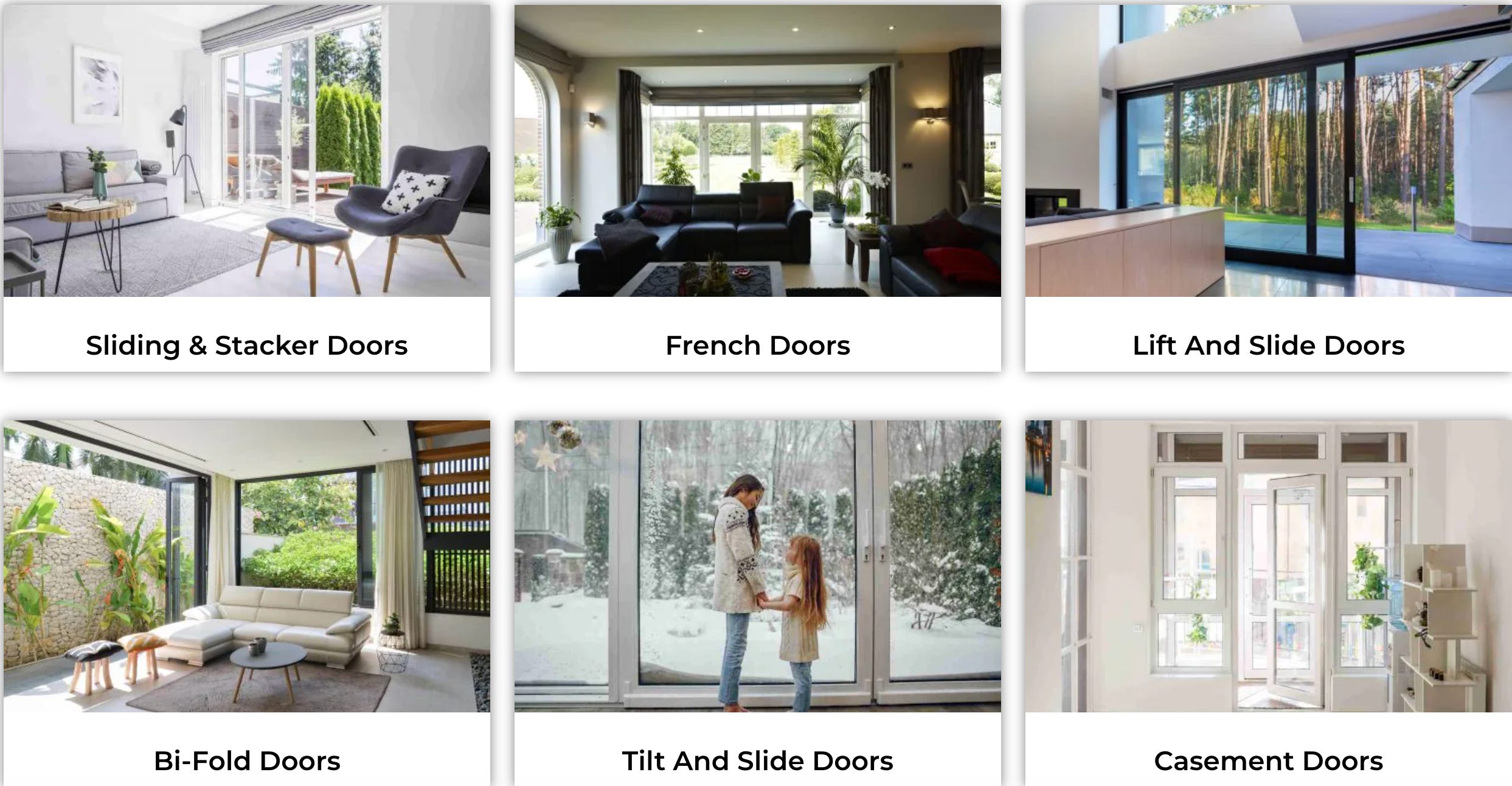
Many kinds of double-glazed PVC doors suitable for a Passivhaus (from this supplier)
Tips for windows and doors in a Passivhaus:
Here’s the full list of tips from Talina Edwards Architecture’s mini-guide:
1. Fixed windows are cheaper than openable windows, and you don’t need every window in the whole house to be openable – be selective and balance out fixed ‘picture’ windows that frame the view outside with those that need to open. Note: Beware of NCC (National Construction Code) room ventilation requirements, even with MVHR to ensure compliance).’
2. Limit the number of external doors. We all love an indoor-outdoor connection, but do you need to go out from every room?
3. Larger windows can be more cost-effective than a number of small windows.
4. Lift & Slide doors are amazing but are at a premium, so consider single or double swing doors instead where appropriate for external access.
5. Don’t overglaze – do you really need that many windows? Yes we all want a home that is light and bright, but you can be selective and not live in a glass house, be selective about the orientation/placement of windows – less is more.
6. This might seem controversial, but consider if the room actually needs a window when it comes to a Powder-room/Loo, Pantry, Walk-In-Robe or even in a Laundry… We all love natural light! However when it comes to rooms that are not ‘habitable’ (rarely used unlike a living area where you’re spending a lot of time) then this is worth considering.
My take-away: don’t overglaze. Because getting this right is going to be costly, but getting it wrong could be even more costly.
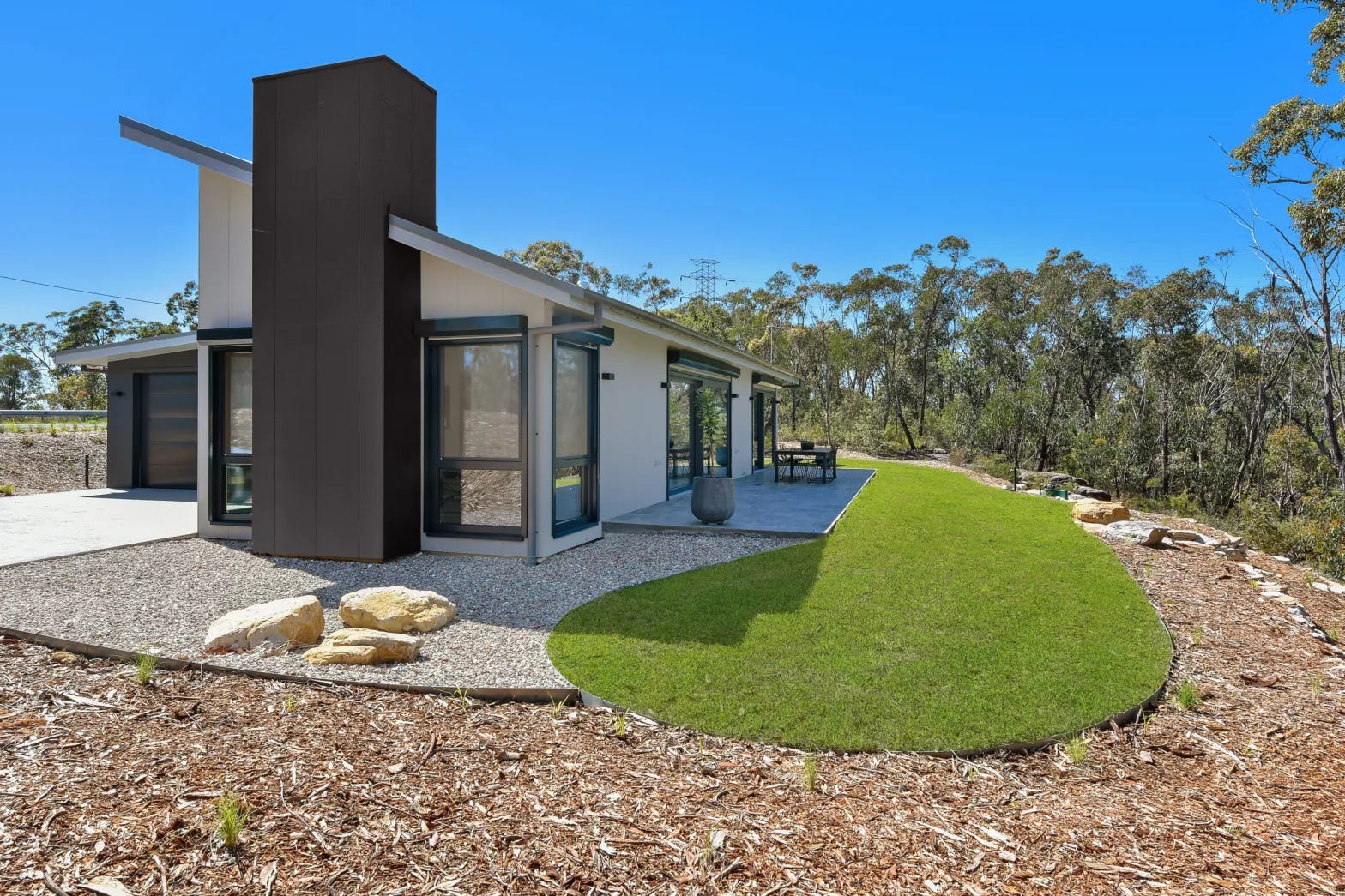
Sapphire, NSW. Passivhaus on a site in a BAL-FZ (Flame Zone). [source]