
Planning The Landscape
Thinking ahead ...

As the new house lives in my imagination, I’m thinking about that time when the builders have left the site, and the fabulous new house is surrounded by … mud, rough dirt, weeds, and a bare block. The big blackbutt tree will still stand in the back yard, but what about the landscape plan? I feel the need to plan ahead.
The Landscape Plan
In order to qualify for the DA (Development Application) we had to produce a landscape plan, and I was thrilled to bits with the concepts the landscape designer came up with. The brief was: native plantings, no lawn, gravel paths, stepping stones, seating areas in little garden nooks, focus on the courtyards so there are garden views from inside the house.
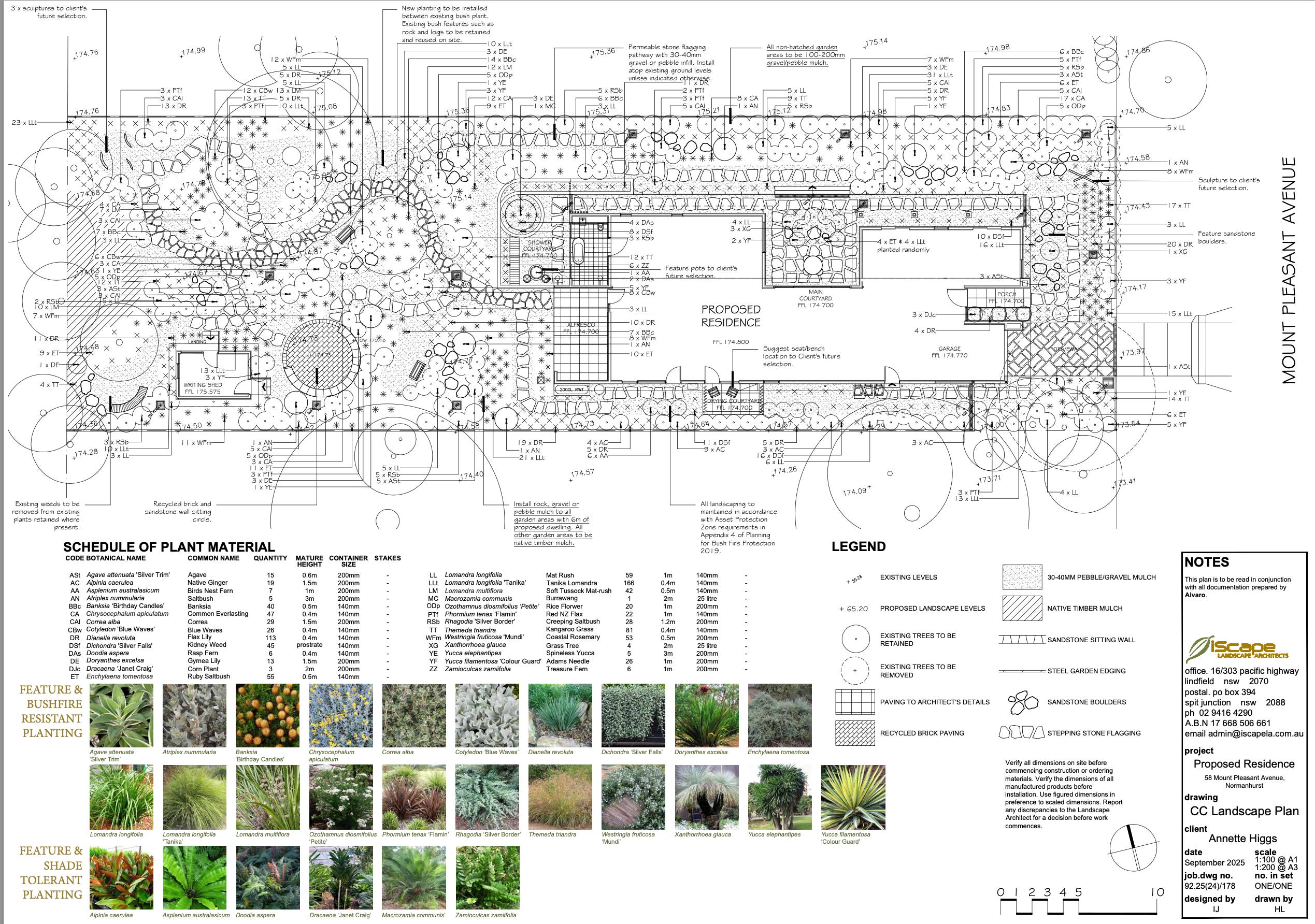
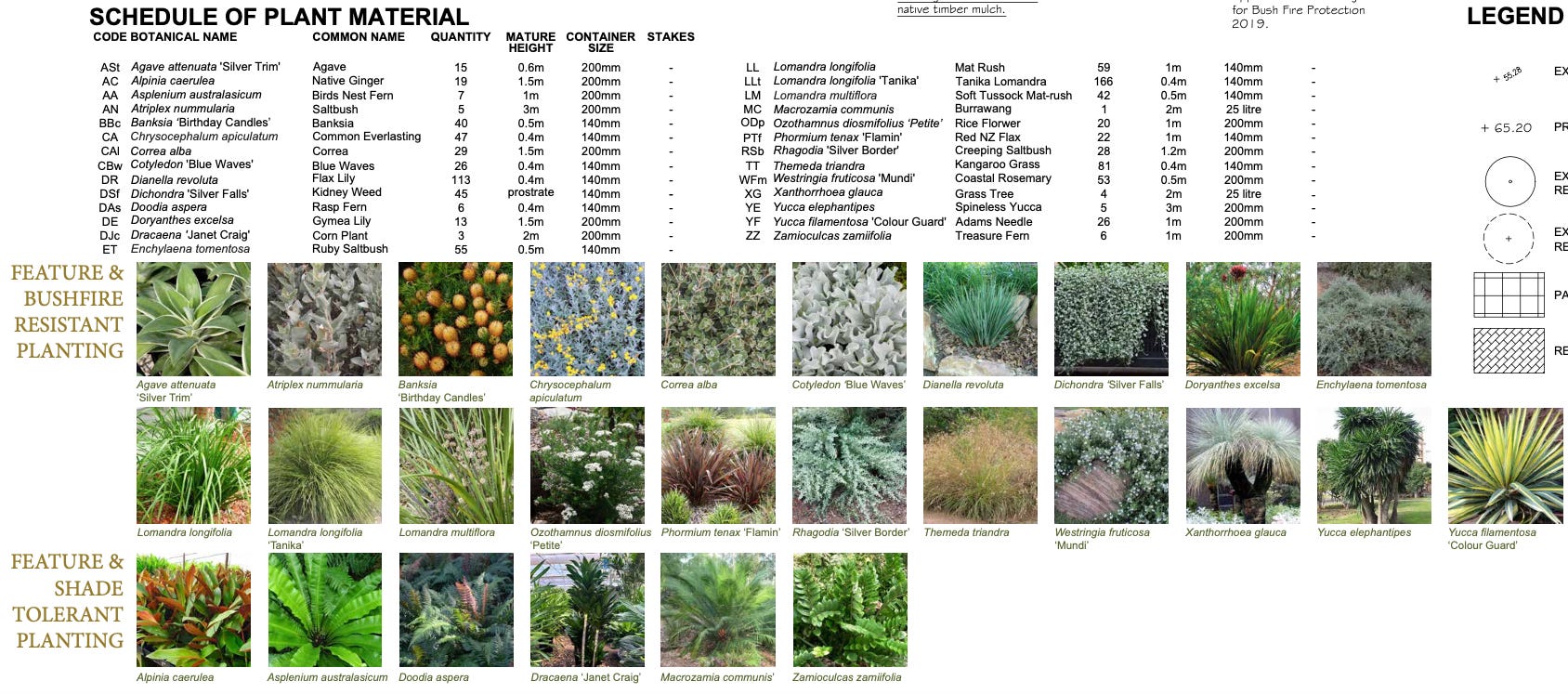
This was the result, and it incorporates all those elements, while also taking account of the bushfire zone restrictions: keeping flammable plants to a minimum and away from the house.
Landscape Trends
According to this article, I’m on trend. “Maximum naturalness” is in.
One of the key trends in landscape design is the drive towards maximum naturalness. Imagine a garden where grass gently sways in the breeze and the scents of native Australian plants fill the air. This trend not only reconnects us with nature but also reminds us of our need to be part of this magnificent world. In Sydney, using local Australian plants like eucalyptus and banksia creates gardens that appear as though they’ve always been part of the landscape—natural and organic. These plants not only enrich the space with vibrant colours and aromas but also provide safe havens for local birds and insects, restoring the balance of nature in urban jungles.
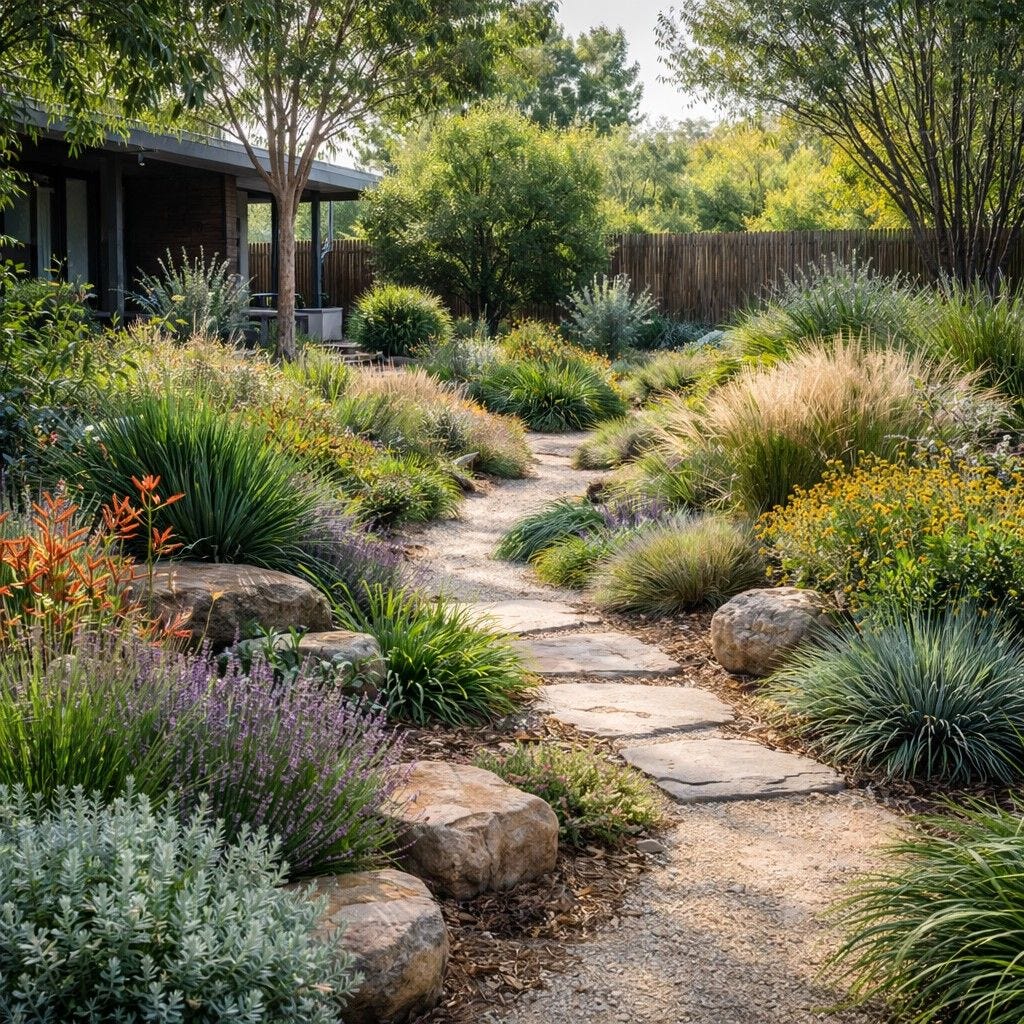
Something like this? (source)
Water feature?
When it comes to including water in the garden, I’ve drooled over photos of billabongs, and waterfalls, plunge pools mimicking bush water tanks, and natural-looking fountains. Maybe a dribbling water pool in the shower courtyard? Water brings an atmosphere of peace and seclusion (and drainage issues, probably).
According to this site a billabong or stream is a must-have for an Australian native garden. “Water is an important part of the ecosystem of the natural wildlife population. It attracts native birds, frogs, fish, dragonflies and provide a source of respite on hot days for all animals. What better way to provide water than in the form of a stunning naturalistic rock stream or billabong?”
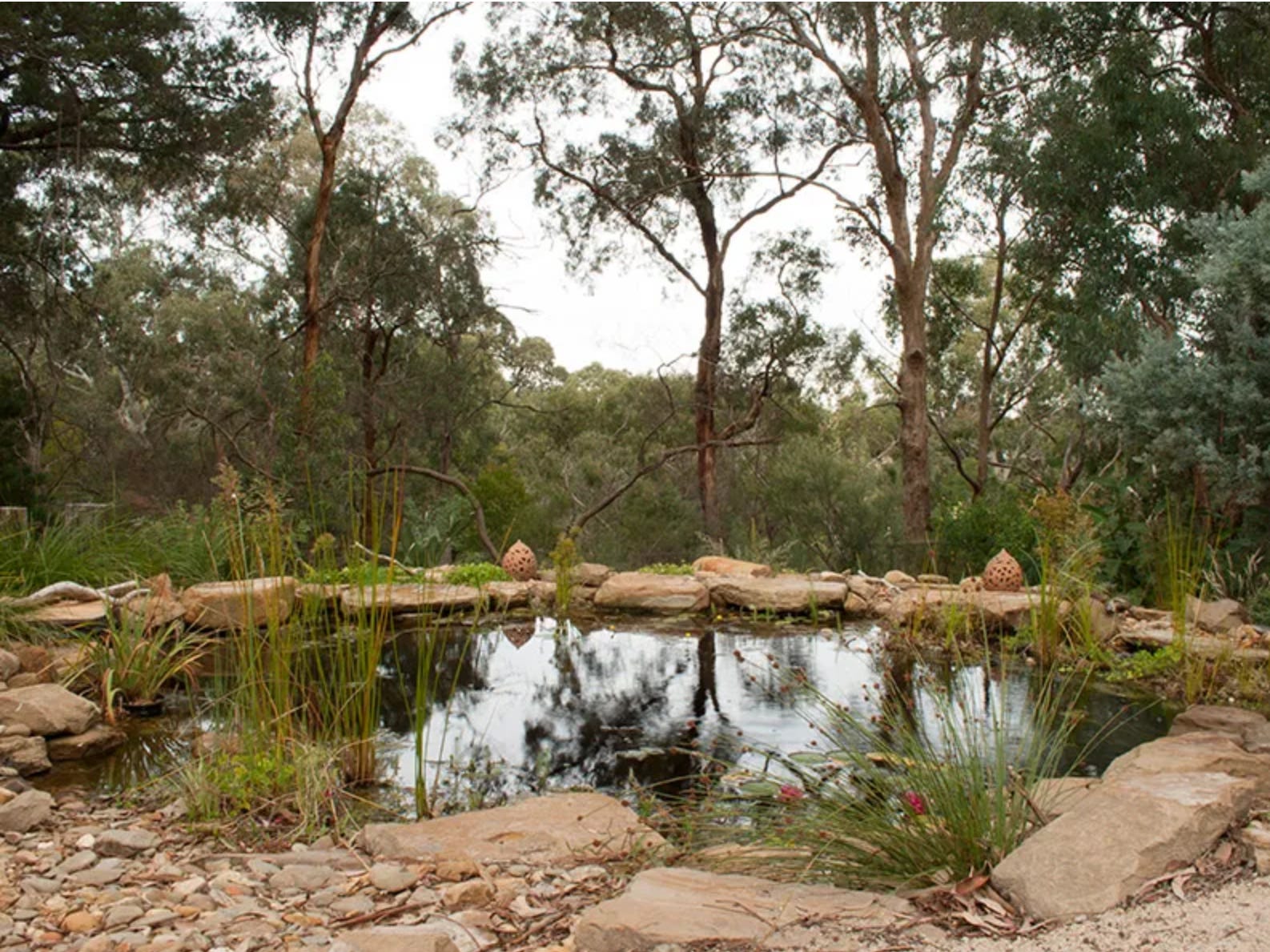
A billabong in the backyard?
A native landscape can also include a dry creek bed, reminiscent of the Australian bush. This skips the water, but looks cool.
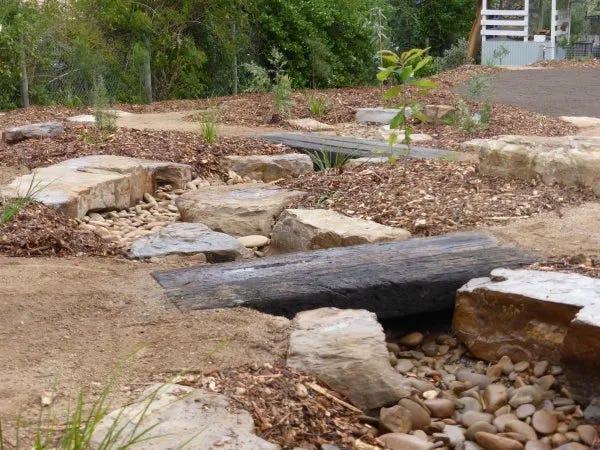
A dry creek bed with bridges made of sleepers.
Natural doesn’t mean unstructured
Picture gravel paths winding through lush green shrubs and trees. Such seeming naturalness requires planning. For a start, those paths need to be constructed and drained. Changes in the level of the land need to be accounted for, possibly retained with low retaining walls. The plantings need to be compatible.
This landscape architect says:
The architecture of the house guides the landscape. We carefully develop zoning and the main views from the windows, designing specific landscape scenes integrated with the interiors. Looking out from the home, you see composed living pictures — a coherent composition that gives a sense of fullness and calm.
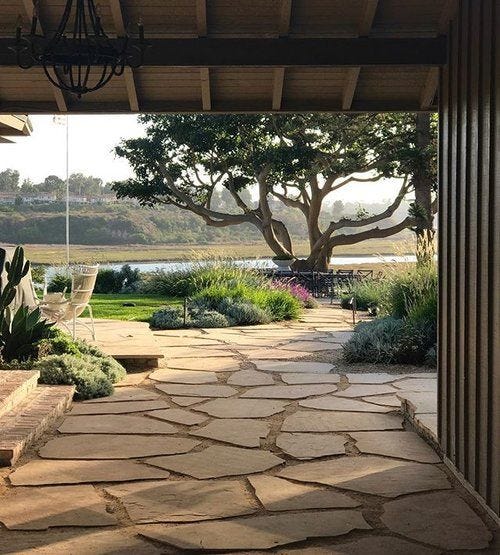
From the inside looking out (Pinterest image)
Sandstone stepping stones
The gravel paths I envision will need stepping stones in places, for ease of use as well as visual appeal. There are a number of alternatives: concrete would be practical and economical. But how about a lovely natural stone?
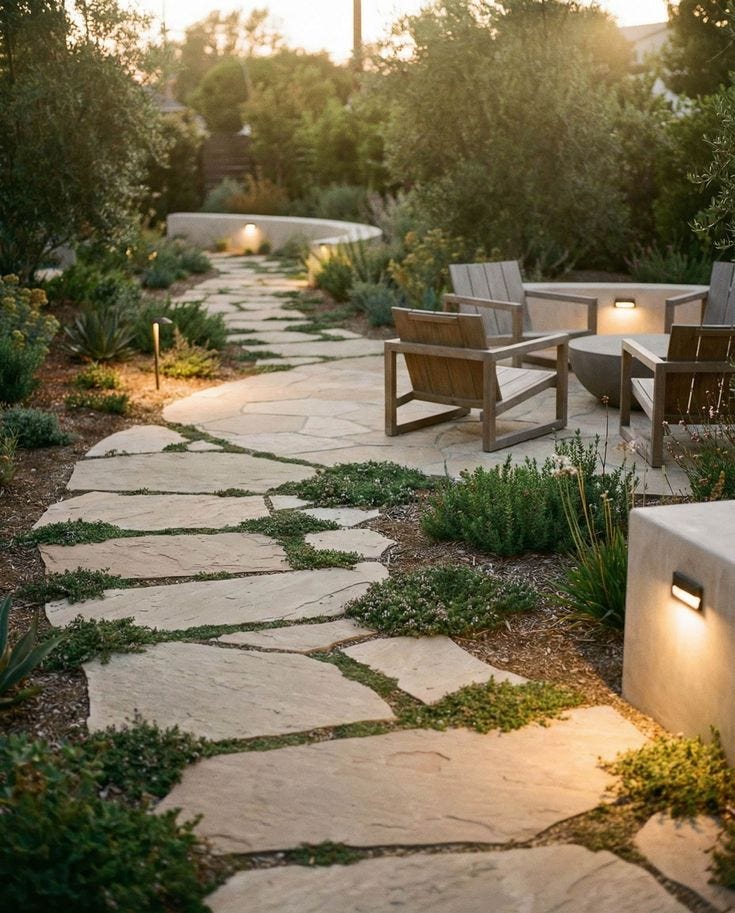
Gorgeous sandstone paving. (Pinterest image)
Stone Pavers Australia has options in travertine, bluestone, granite, limestone—and sandstone.
Sandstone stepping stones are popular for their beautiful light yellow colour with a slight brownish hue, and alternative to darker stones.
These flat, natural edge stepping stones are made of sandstone, a sedimentary rock composed of grains of sand cemented together by minerals such as quartz and calcite. Sandstone is a durable and weather-resistant material well-suited for use in landscaping.
There are many ways to use sandstone stepping stones in your garden or outdoor area. They can be placed in a walkway or path—a convenient choice for creating a pathway through a garden or outdoor area. The stones can also be used as accents or border elements in landscaping projects, adding a touch of natural beauty to the surrounding area, arranged in a variety of patterns or designs to create a unique, personalised look.
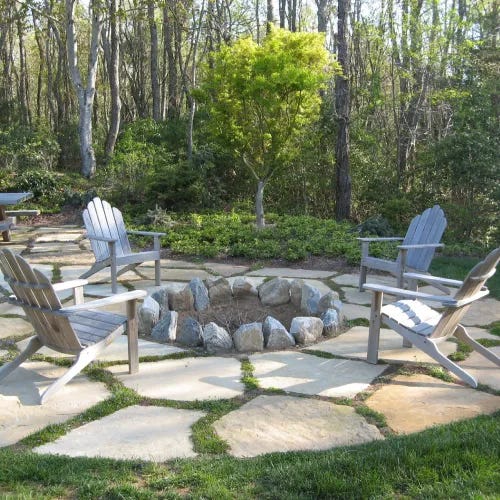
The supplier claims that sandstone stepping stones are low-maintenance and easy to install and are resistant to weathering and fading. Cost? I’ve seen one website quoting $14/$24/$45 per piece for small/ medium/large sized stepping stones.
Watering the garden
My new house will have a 5000 litre rainwater tank, which will harvest rainwater from it’s big, snazzy steel roof. Some of this will be used to flush the toilets, and some will be used to water the garden, which will hopefully be quite drought-resistant and need minimal watering after its established. NO LAWN should help with that goal.
A water tank can also save the garden during periods of drought-related water restrictions. Sydney does not presently have under any severe water restrictions in place, but operates year-round under permanent Water Wise Guidelines issued by Sydney Water, which apply to all residents and businesses in Sydney, the Blue Mountains, and the Illawarra.
Did you know that these are the base mandatory rules for water usage in Sydney, which apply at all times? These rules apply to everyone in Greater Sydney.
Using drinking water for watering gardens and lawns is permitted before 10am and after 4pm. There are 3 permitted watering methods: hand-held hose with an instant on-off mechanism (such as a trigger nozzle), sprinklers or watering systems.
Smart watering systems or drip irrigation systems may be used between 10am and 4pm.
Cleaning hard surfaces like paths, driveways, concrete or other paved areas with water is not permitted unless necessary for safety, health or emergency reasons, construction activity or surface contamination.
Hoses and taps must never be left running unattended.
Fire hoses must never be used for anything other than firefighting.
Water run-off or overspray onto hard surfaces like pathways isn’t permitted.
If we’ve given you a notice to fix a leak, you must do it by the deadline we’ve set.
There is an exception for NEW gardens: “You can use drinking water anytime for 28 days after your turf is laid or your garden is planted.”
Smart technology for garden care
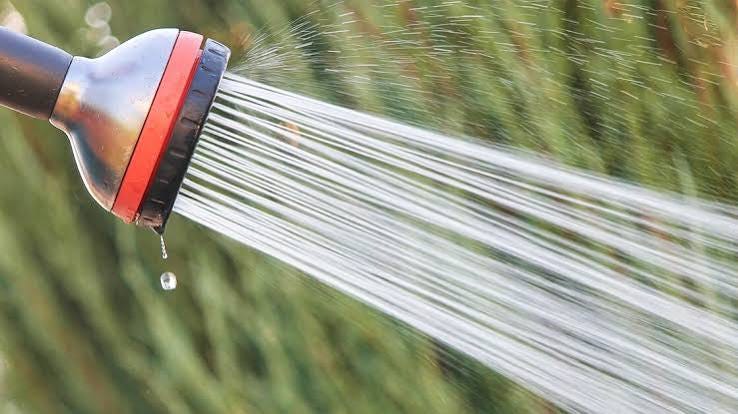
Adding some smart tech to the garden is practically de rigueur these days. Smart irrigation systems are a major part of this. According to this site garden owners can also consider garden monitoring apps and sensors, automated fertilisation and pest control, and even drones for imaging large gardens! But let’s go back to the irrigation systems. Sydney gardens equipped with such systems can be efficient, reducing water usage and improving plant health.
But although drip irrigation is said to be an efficient irrigation method, with 95-100% water use efficiency, they can leak—one drip per second can result in 12,000 litres of water wasted in a year. The ins and outs of drip irrigation are discussed on this blog:
Downsides of drip irrigation systems: clogged emitters (common), leaks (dire), high initial costs, requires maintenance, is grid-dependant (for timers), and produces high material waste.
THE WORST ISSUE: Drip systems do not promote an extensive root system, one that is deep and wide and not shallow-rooted -- the very type of system that allows a plant to be truly drought-resistant in the long run.
Drought-resistant?
A drought-proof native garden
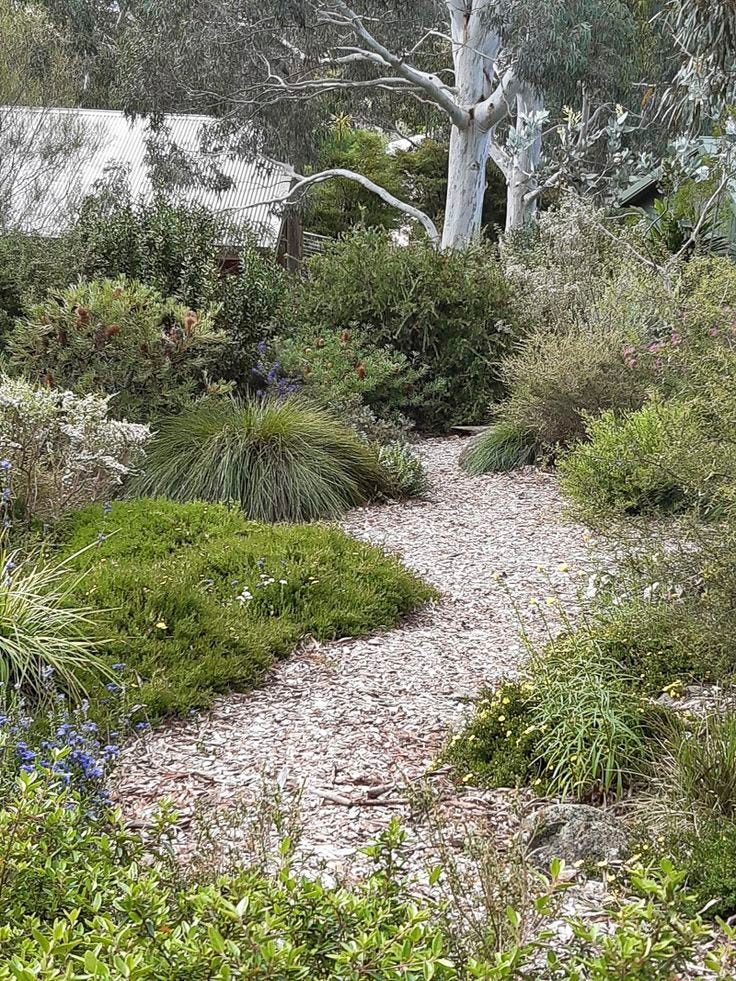
Basically, the essential practice for water-conservation in Sydney is to plant a native garden. Australian native plants are naturally adapted to the local climate and require less water than introduced species. Survival Seeds Australia has some good info on how to go about this:
Definition Of A Drought-Resistant Garden
A drought-resistant garden is a type of outdoor environment designed to thrive in dry climate conditions. It utilises plants that have adapted to surviving with minimal water, as well as other methods for conserving moisture. This type of gardening provides an opportunity to create a beautiful and sustainable outdoor space even during periods of extreme heat or water shortage.
The right soil is the foundation of any drought-proof garden. Taking into account the type of soil you have, there are several steps you can take to optimise it before planting anything. To start off with, add organic matter such as compost or manure to improve its structure and fertility. This also helps retain moisture so plants don’t dry out too quickly when water is scarce. Additionally, mulching your beds with hay or leaves helps keep moisture in and weeds away. Lastly, make sure your beds are slightly raised above ground level to aid in drainage and prevent flooding during heavy rains.
Growing beautifully (Pinterest image)
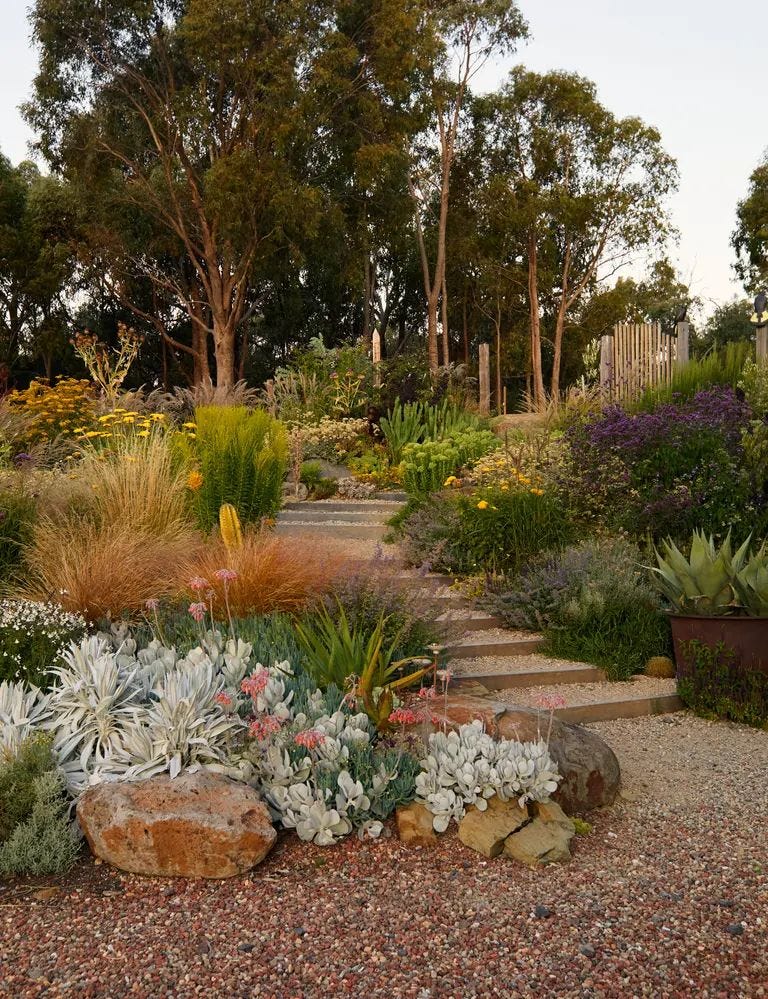
…many varieties of natives have deep root systems, allowing them to access subsoil moisture more easily. This means you won’t need to water as often or for long periods of time; just enough to keep the soil damp until roots develop further down in the ground.
Mulching, rainwater harvesting, windbreaks and shelters, plant groupings for increased humidity, plant selection for dry conditions.
Train your plants to be water wise
Australian Plants Online tells me I have “train my plants to be water wise”. “The more you give into them, the more demanding and less self supporting they become.” Like pets. Or kids.
Most new plants have been growing under controlled conditions in the nursery, with water sprinklers that come on at regular intervals, sometimes 2 or 3 times a day. Therefore in order to become less water demanding and more dry period tolerant when you get them home, your plants need to be gradually weaned of their previous high water dependency cycle.
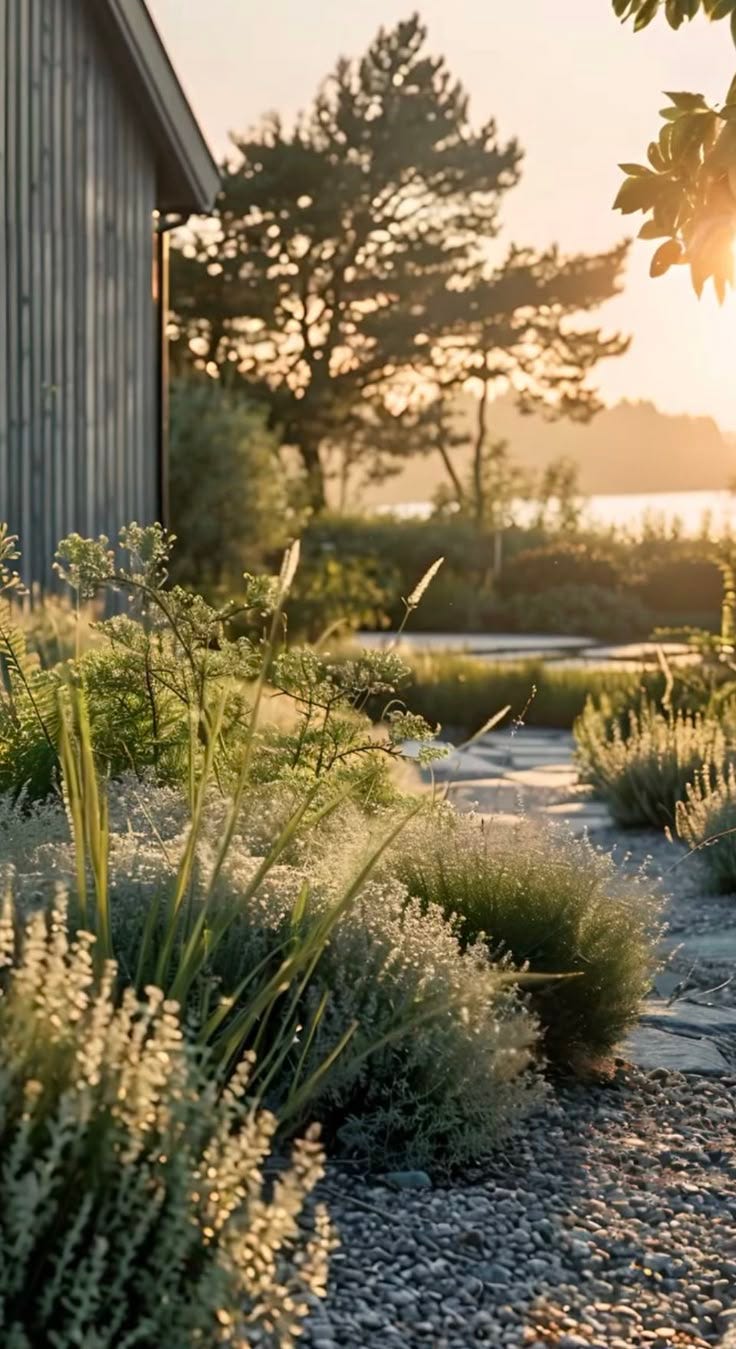
native plants, gravel, stepping stones, corrugated steel
Start the water wise process by:
Watering the plant thoroughly at well spaced intervals. Don’t give your garden light and frequent sprinklings of water just to “ freshen things up”.
The roots of your plants should be encouraged downwards, as a result of occasional deep watering, rather than upwards as a result of frequent light surface watering.
Directing the water around your plants root area, in an imaginary line circling down from the plant’s outer foliage. This area is called the plant’s dripline.
Watering in the cooler parts of the day, early morning is best but probably evenings are most convenient for busy working gardeners.
You can’t simply dig a hole, plant an Australian native plant, let it dry out, and expect to get the results you are looking for, a healthy garden specimen. However once properly established, most native plants will grow and thrive in the garden with minimum watering and require very little ongoing maintenance.
I can’t wait to get on with building a garden.
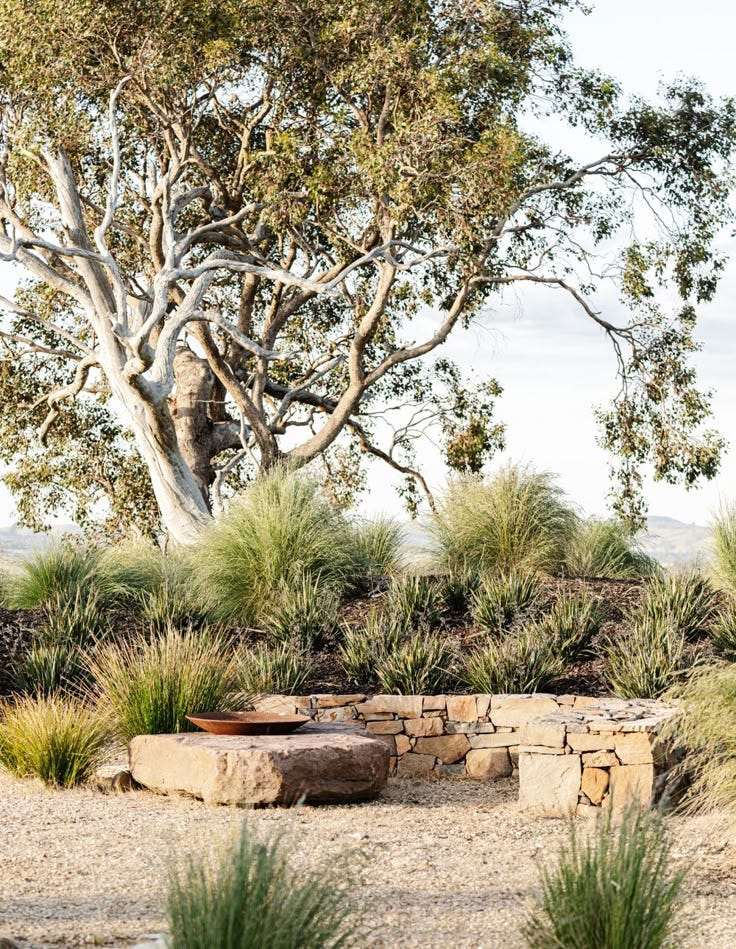
Australian garden dreams (Pinterest image)