Landscape Brief
Plant choices

Soon (I hope) someone is going to ask me for a brief for the landscape architect. Council will require a landscape plan as part of the DA submission. This can be something of a boiler-plate plan, but I’m told that Council can check that it’s been carried out—have you planted the trees you said you would plant?
Since I have a vision, so to speak, I thought I’d come up with a broad-brush landscape brief, so that the DA plan roughly reflects what I’d actually like. Of course, I may well be corrected by the professionals as this project get underway, but here’s the starting point I’ve come up with.
Book Review
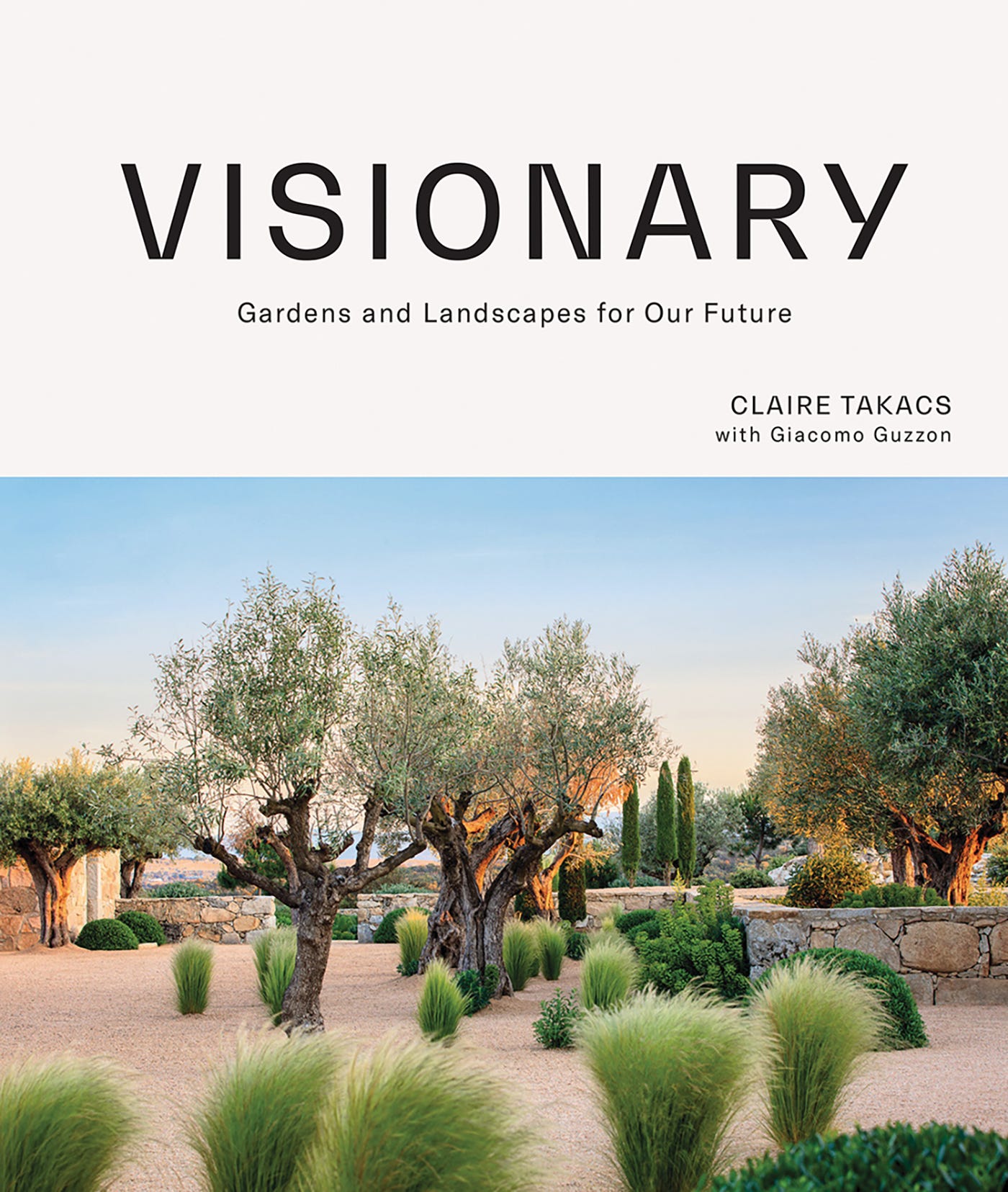
Let’s start with a rave review of a book which was recommended to me by an architect friend (thank you Cara!) ‘Visionary: Gardens and Landscapes for Our Future’ photographs by Claire Takacs, words by Giacomo Guzzon (Hardie Grant books, 2024).
As the publisher says, the authors ‘introduce stunning private and public gardens from around the world that have addressed both sustainability and climate change with outstanding results. Be inspired by the new ways garden and landscape designers are thinking about planting and garden design in the face of climate change.’
I was indeed inspired, especially, of course, by the private Australian gardens photographed in the book. Not a lawn in sight. I’ve drooled over the pictures, and noted the names of the plant species chosen by the featured landscapers and gardeners. I may have got some of these wrong—a coastal plant where I should be choosing a Sydney bush variety, for instance—but at least I have a starting point.
My brief:
• Low maintenance, predominantly native, blends with the Sydney bush.
• No lawn, drought resistant plants, fire-retardant plants
• Gravel or sand paths, flagstones. Meandering gravel pathways.
• Recycled/reclaimed materials.
• Plants that will self-seed and spread.
• Free-draining, requiring only minimal irrigation from tank water.
• Could include resilient exotics from the Mediterranean and US arid regions.
• Habitats for birds and small animals (posts, logs, etc).
• A deliberately limited palette of mostly drought-resistant plants.
• Few flowers, mostly different colours and textures in the foliage.
• The bush behind the block is Sydney blue gum, messmate/stringybark.
The feature tree
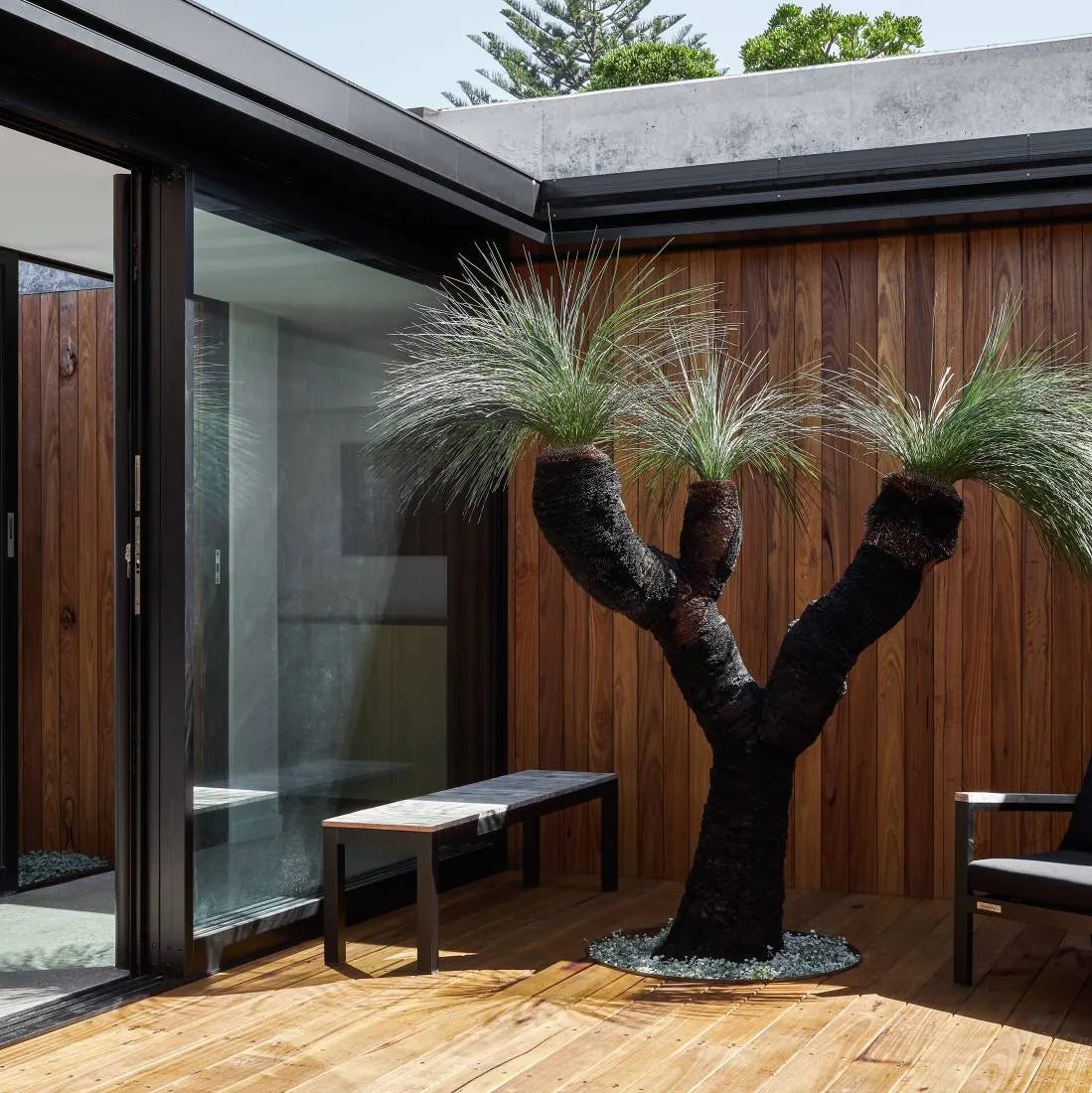
I’ve written before about the wish-list feature tree, which I envision in front of the house in a small front garden: a grass tree. There are east coast options for a Xanthorrhoea, but I admit to a love of the branching arms of the Margaret River Grass Tree (Xanthorrhoea Preissii) [photo source]
Gravel paths
In the absence of grass, I favour gravel paths for walking around the garden. I’m told that you cannot simply spread a bit of gravel and hope for the best—it’s likely to be washed away in the first rain storm. And those of us who reside in Sydney will be familiar with the famous Sydney deluge. The paths have to be constructed: concrete sides to hold everything in place. For example: a 10 cm layer of sand, geotextile (permeable fabric), then 20 cm of gravel. Much depends on the underlying soil, or how far down the sandstone layer is. Advice will be needed.
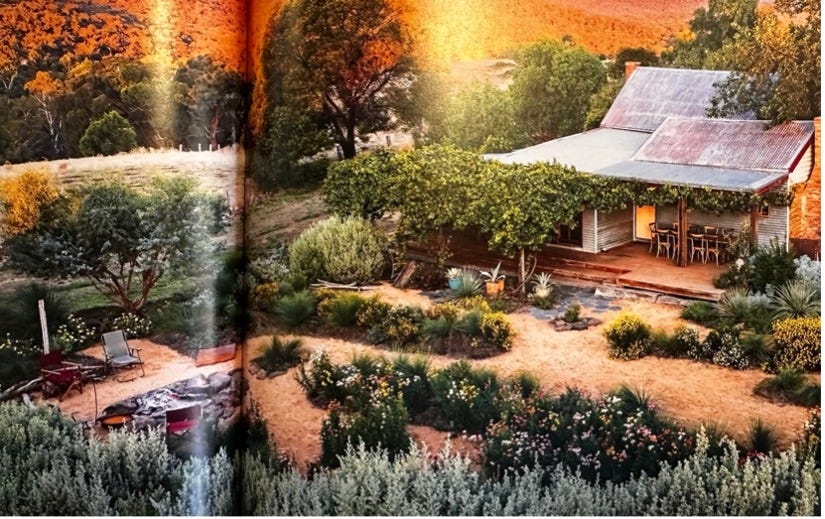
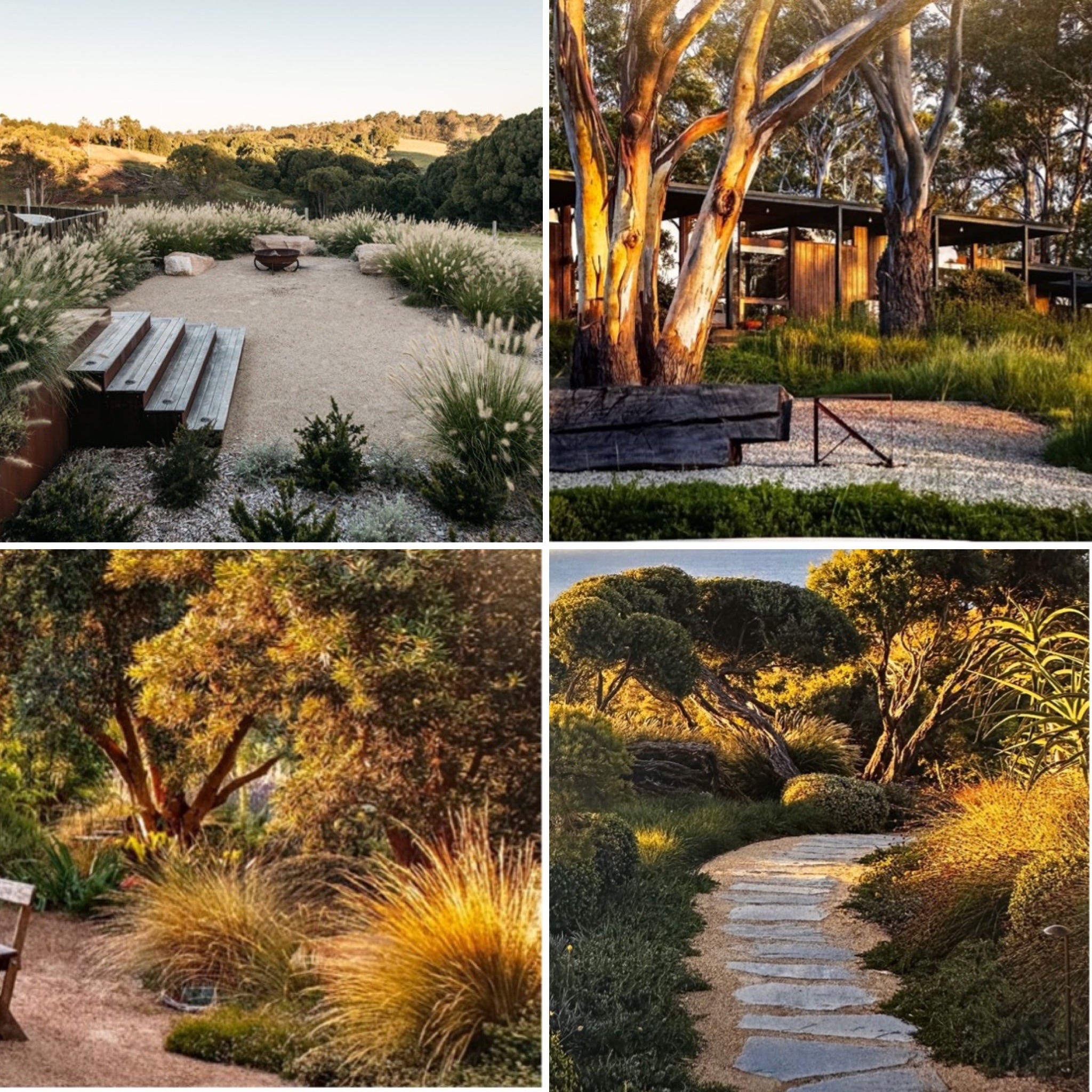
One inspiration is this garden in Glenluce, Victoria, where the whole garden is built to act like a base for containing stormwater. [Photo source: Visionary, p. 166-167]
More inspirational photos for a gravel & native plant garden [photos from Pinterest & Visionary]
The plant varieties
Researching these—and I’m a complete amateur when it comes to plant varieties—I focussed on native grasses, low-growing shrubs, and drought and fire-resistant varieties. Here’s the list I’ve come up with. Suggestions welcome!
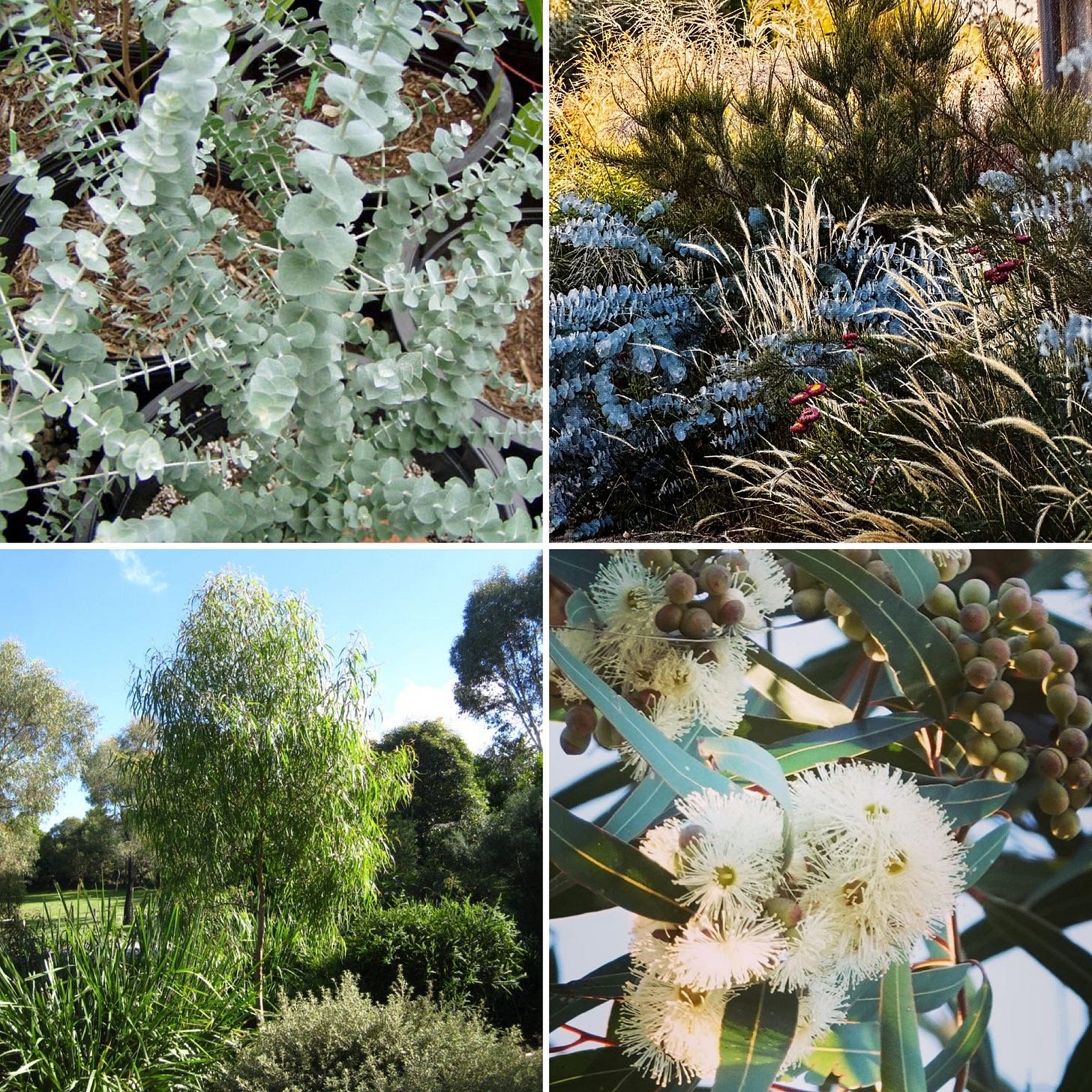
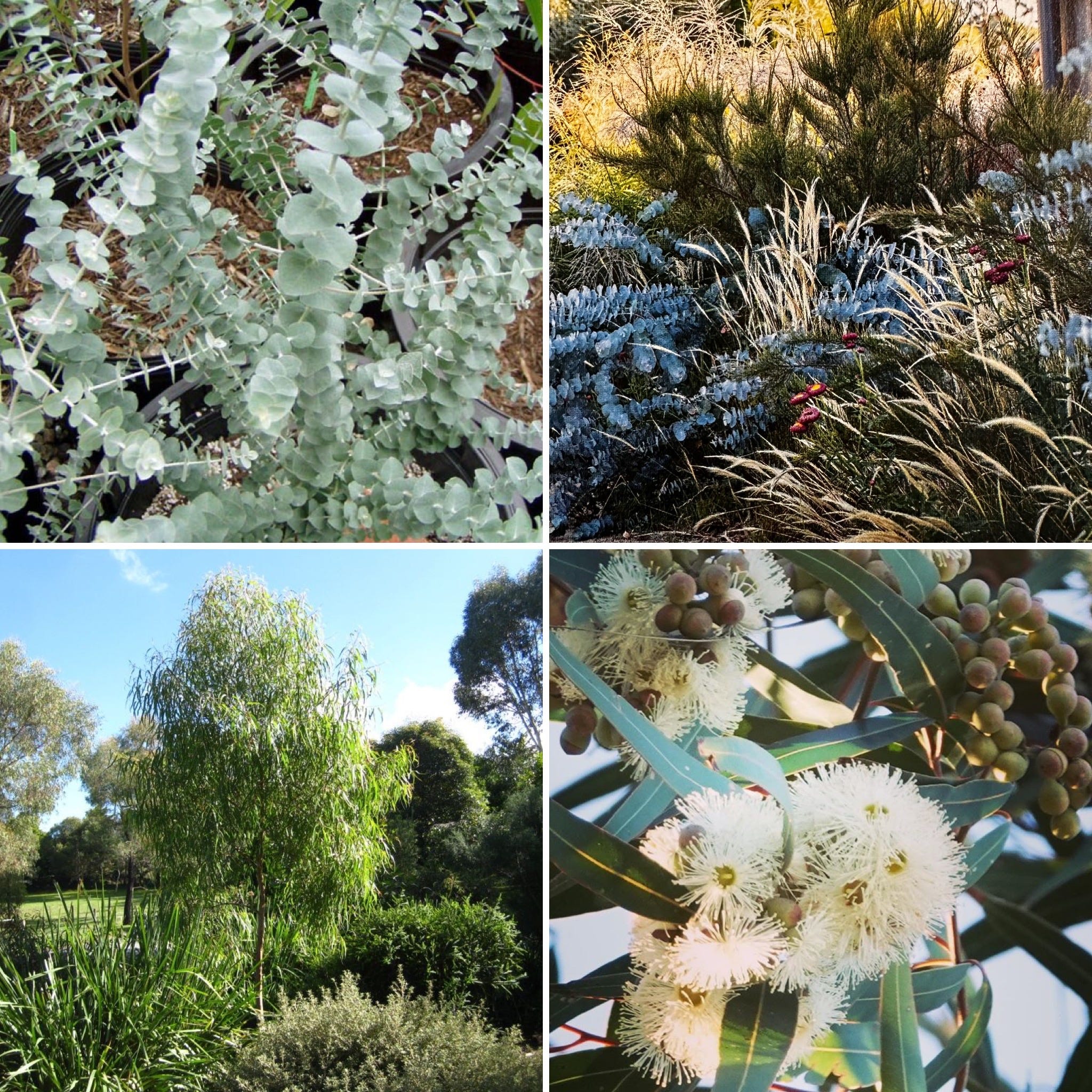
Eucalyptus:
Eucalyptus latens ‘Moon Lagoon’
Dwarf lemon-scented gum corymbia citriodora. Dwarf varieties grow to 6-8 m in 10 years.
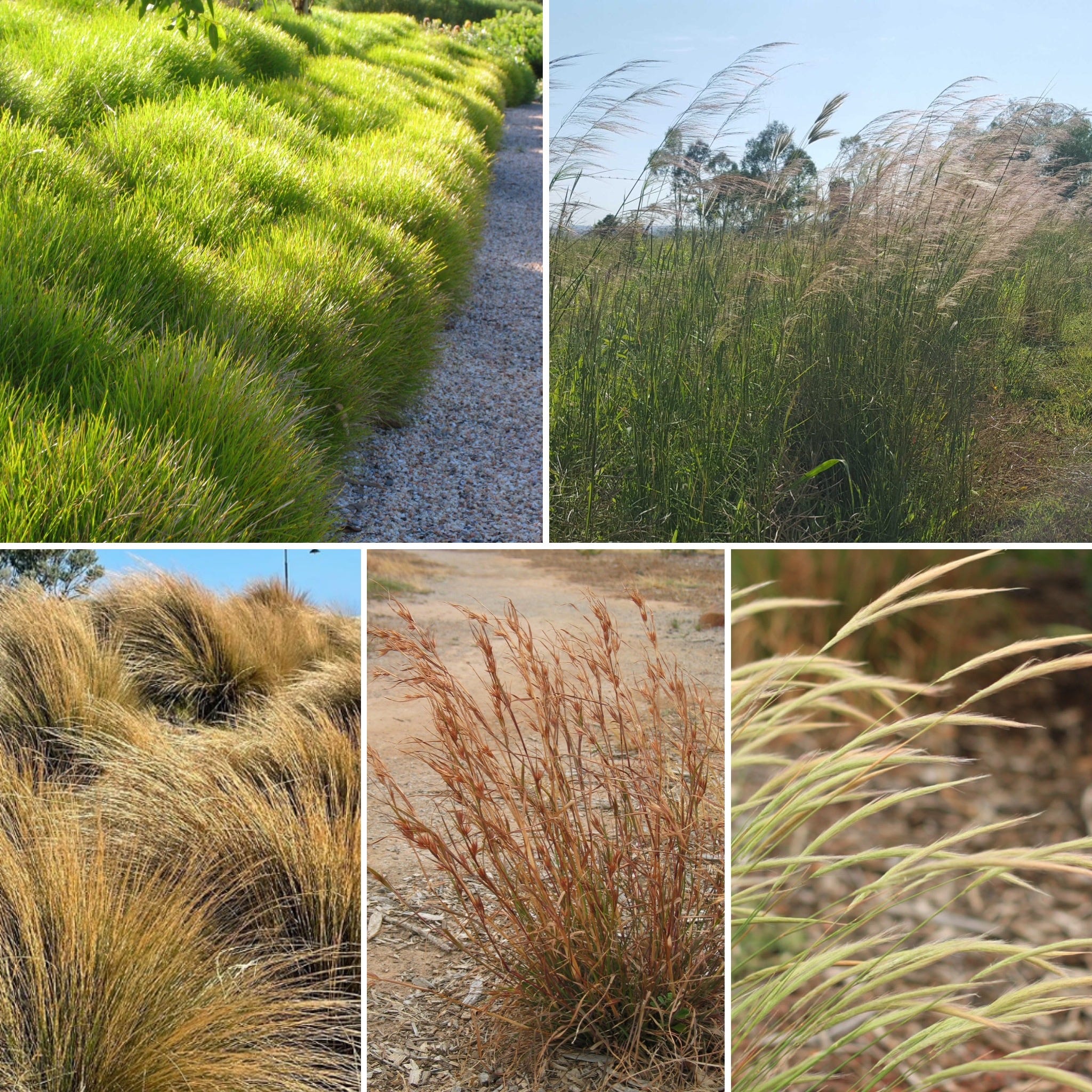
Grasses:
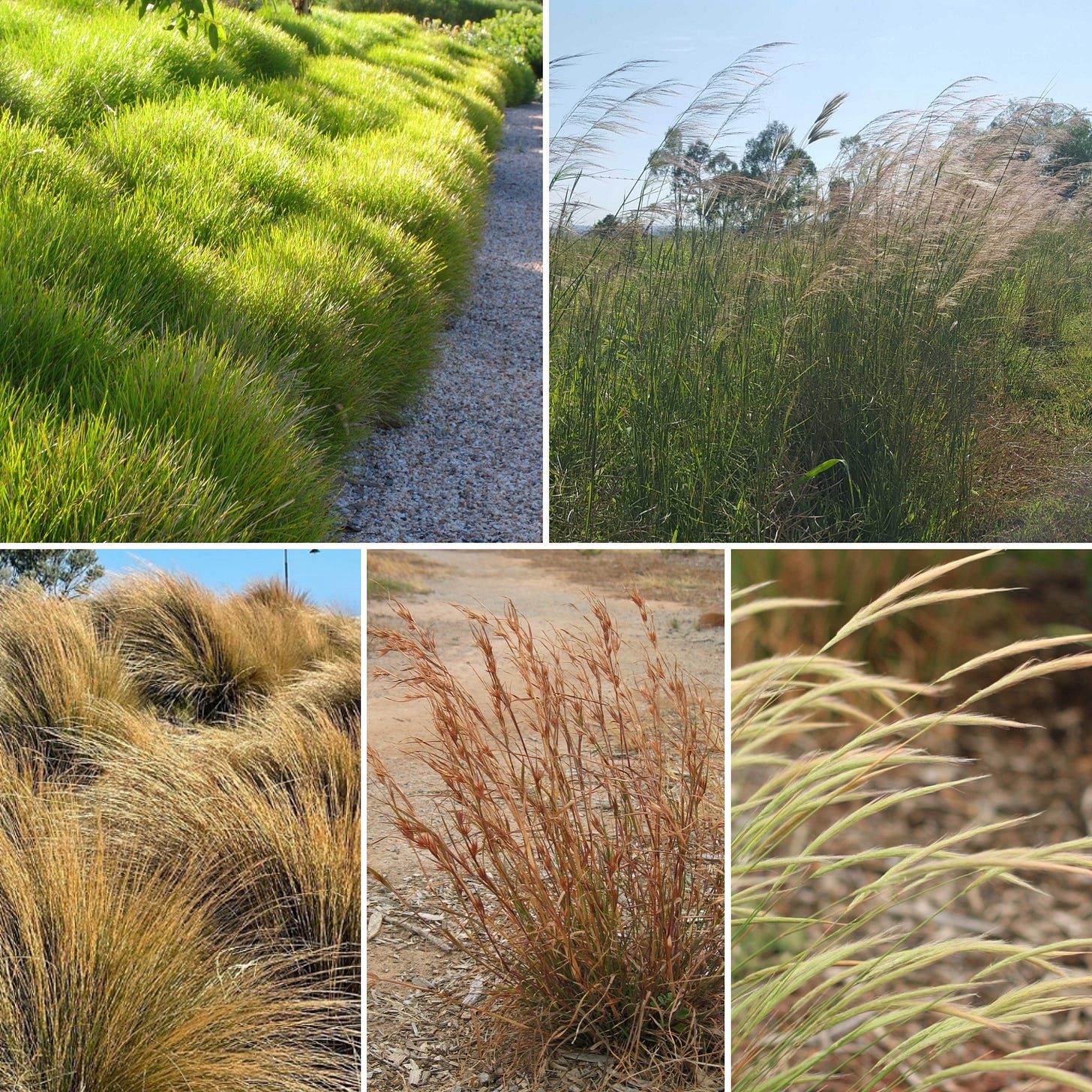
Lomandra – Australian native, drought resistant
Slender bamboo grass Austrostipa verticillate
Coastal spear grass Austrostipa stipoides
Kangaroo grass Themeda triandra
Long hair plume grass Dichelachne crinite
Shrubs and flowers:
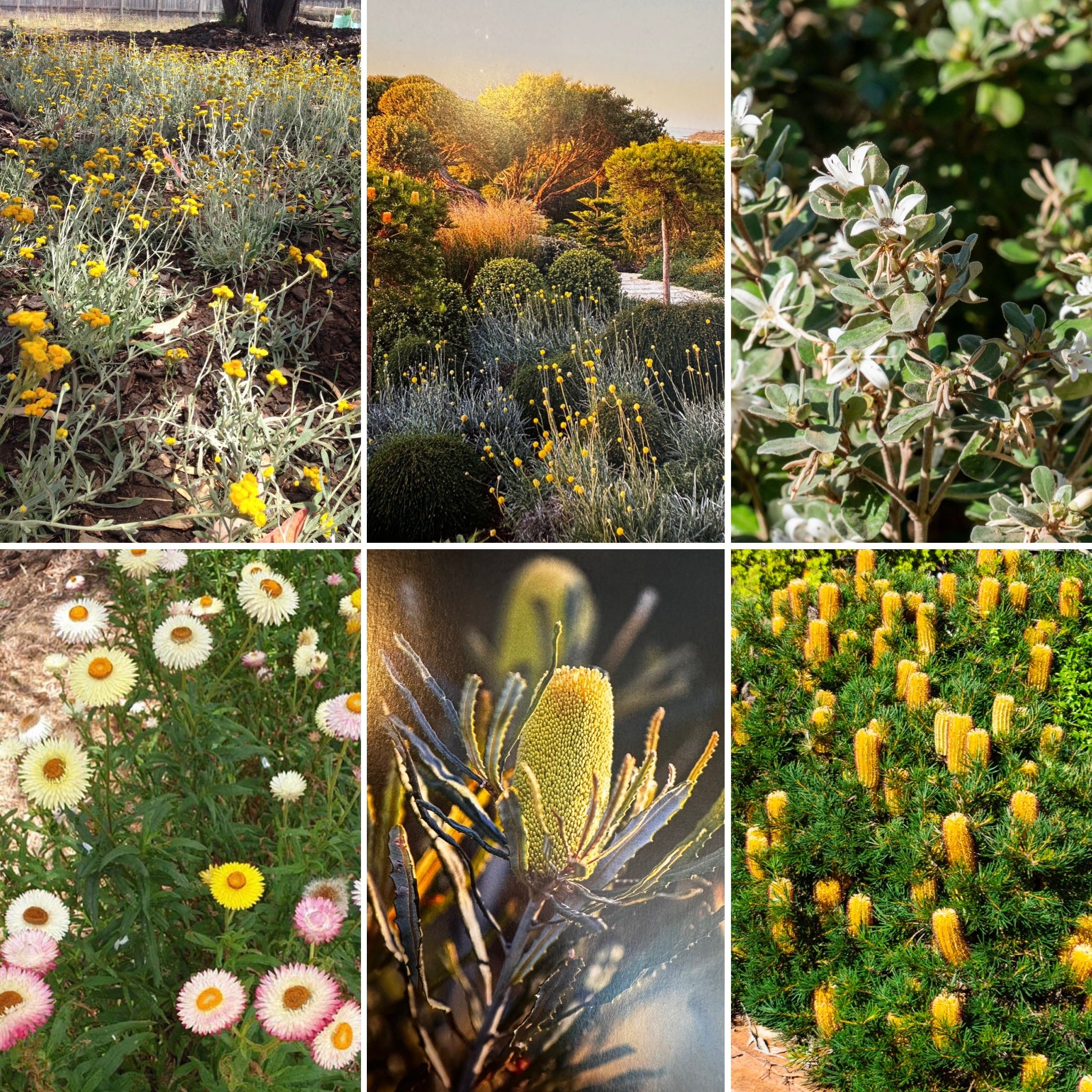
Everlasting daisies (paper flowers) Chrysocephalum apiculatum (Yellow flowers)
Pycnosorus globosus ‘Billy Buttons’
White correa correa alba
Paper daises Xerochrysum bracteatum ‘Lemon Monarch’ ‘Strawberry blonde’
Grevillia excelsior
Banksia ‘Birthday Candles’, a form of Banksia spinulosa growing to only 45 centimetres high by one metre wide (south coast NSW)
Fire-retardant plants
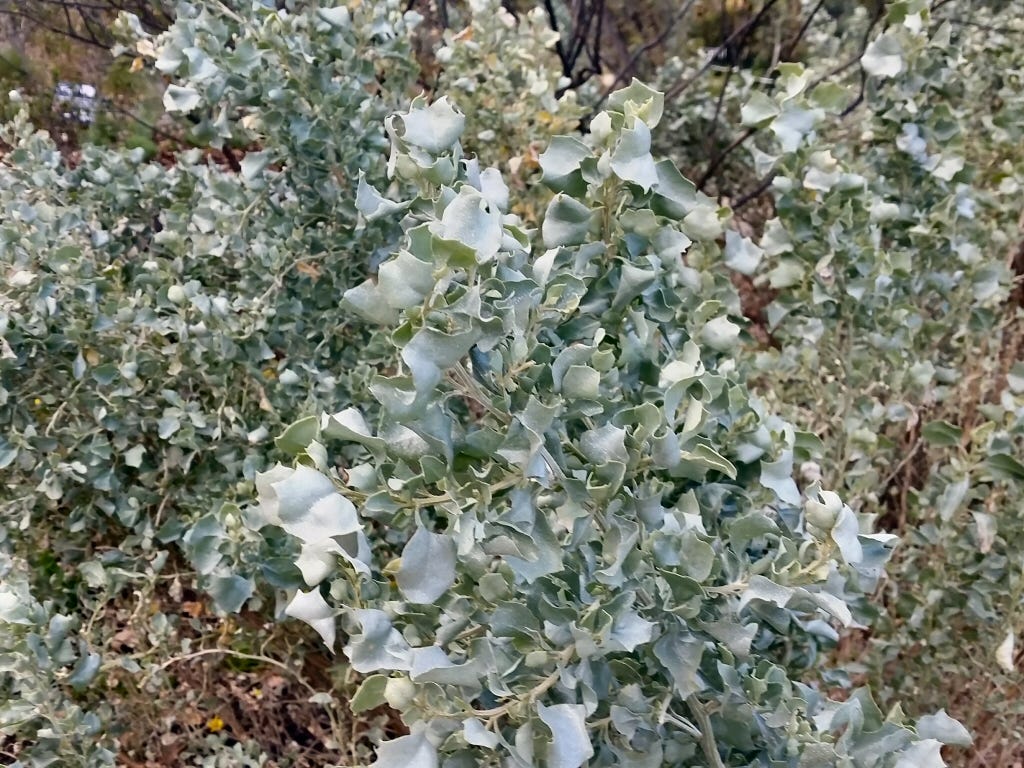
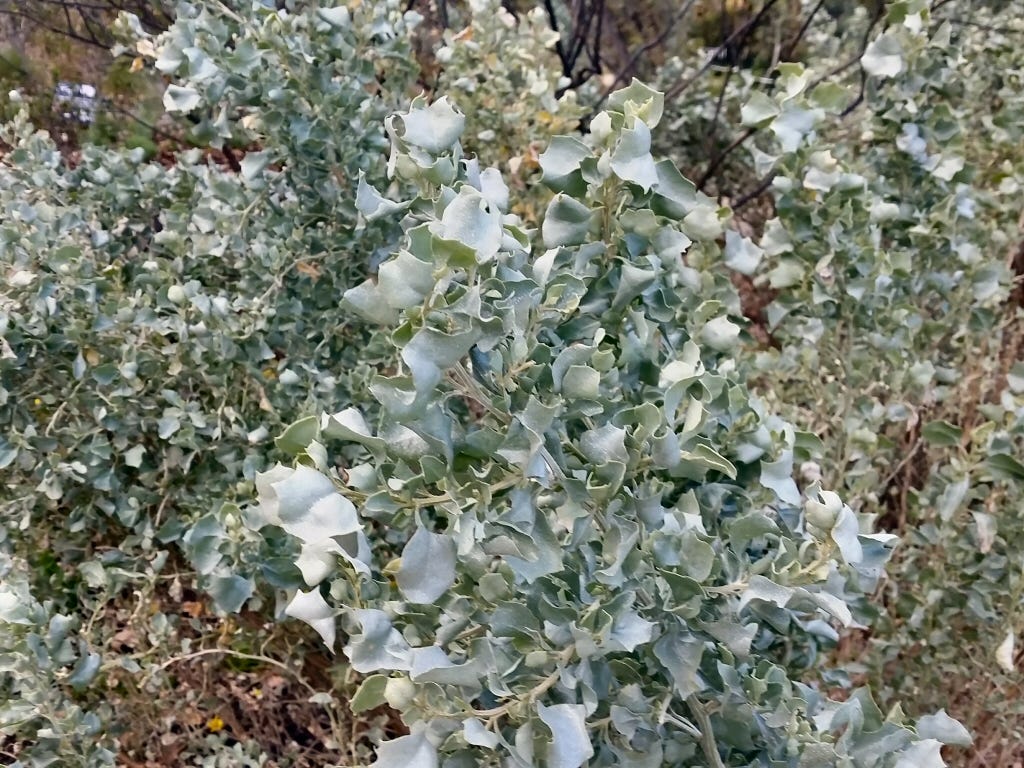
Australian saltbush Atriplex nummularia
Rhagodia spinescens ‘Silver Border’, also known as ‘creeping saltbush’. Reputed to be a fire retardant plant. The dense foliage makes good shelter for small creatures like lizards and birds.
You get the drift, I hope. If you have a green thumb, or know anything about gardens, please do leave suggestions in the comments.