
How big?
How big is too big?

Recently I read an article in the Guardian with the confronting headline: ‘Homes on steroids: how Australia came to build some of the biggest houses on Earth’. Confronting, because I have a niggling feeling that I might be overdoing it by building this house. After all, I’m supposed to be downsizing, right? I’m just one person, and one person should surely live in quite a small space—ethically, ecologically and politically. I thought about houses I’d lived in in the past, and how come Australians tend to live such big places.
House sizes in Australia
According to the author of the Guardian article, Celina Ribeiro, who’d done her research, Sydney residents began to look past the workers’ cottages of Balmain and Glebe around the end of the 19th century, when the Appian Way in Burwood became the new dream. ‘As federation neared, local councils were determined to dispense with the smaller terrace homes and workers cottages of the past, the slums which had proven unsightly and problematic in the larger cities. So they called for larger subdivisions of land,’ according to architect Tone Wheeler.
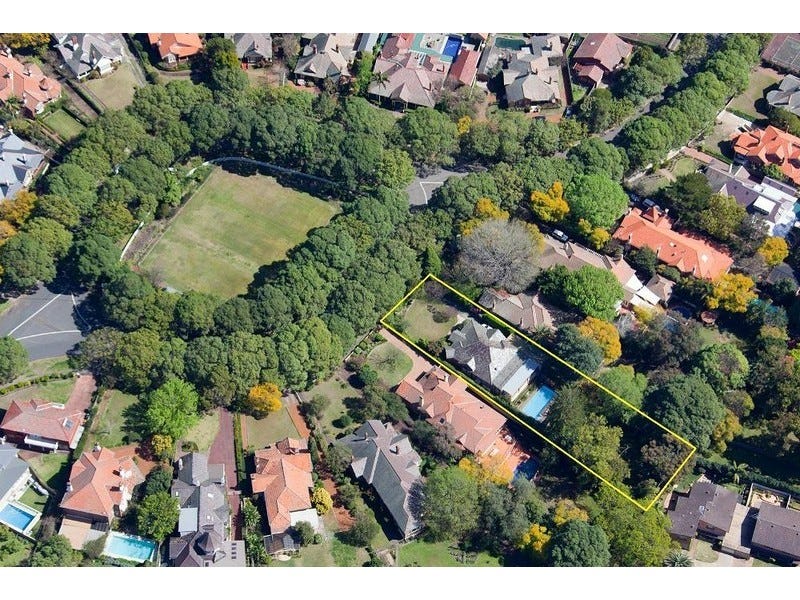
Appian Way, Burwood, today. Quarter-acre blocks. [source]
And so we come to the ‘quarter-acre block’ beloved of Australian housing myth. A quarter-acre is roughly 1,000 square meters (my Normanhurst block, for reference, is 1350 sq m, oversized for Sydney these days.) Next came project houses, in pursuit of the dream of individual houses in the suburbs, rather than rows of squalid inner-city dwellings. A V Jennings was one of the earliest project builders. Read about Jennings in this article.
Project houses were all the rage when I was a young person starting out in the housing market – you bought a block on the outskirts (the Blue Mountains in our case) and you chose a neatly designed three or four bedroom cutie to build on your block. There were dozens of companies in this game back in the 1970s—Jennings was still going strong. The innovative Petit & Sevitt were offering some lovely mid-century modern designs. I remember the names Masterton, Clarendon. Many are still in business, but out at Homeworld the houses are much bigger than I remember.
The PM thought it was a good idea
During the second world war, Prime Minister Robert Menzies encouraged the dream of home ownership, outlining his political vision in his famous ‘Forgotten People’ radio broadcast of May 1942:
‘The material home represents the concrete expression of the habits of frugality and saving ‘for a home of our own’. Your advanced socialist may rage against private property even while he acquires it; but one of the best instincts in us is that which induces us to have one little piece of earth with a house and a garden which is ours: to which we can withdraw, in which we can be among our friends, into which no stranger may come against our will ...’
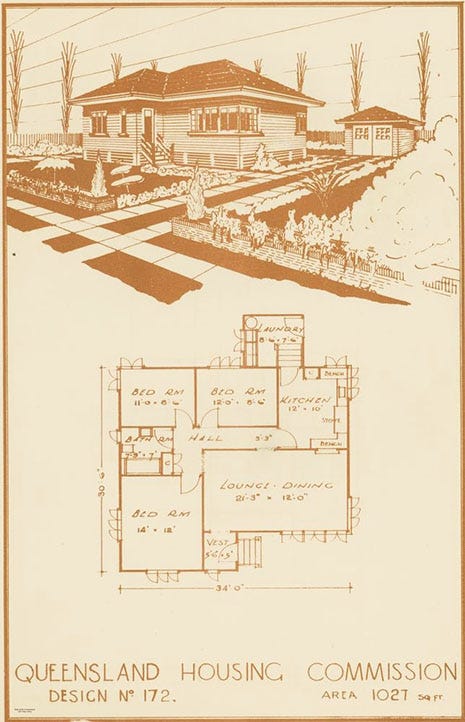
3-bedroom cutie, Queensland Housing Commission, 1950 [source]
How houses grew
The Guardian quotes Tone Wheeler again, on how we went from a bungalow on a quarter acre block to the behemoths of today: ‘The two-storey house is the thing that destroyed the bungalow idea of single-storey Sydney and Melbourne. When you have two-storey houses it enables you to have a much bigger house, to separate things out, to put children’s rooms separate from parents rooms. And then what do you fill these rooms with? You have a parents’ retreat, a rumpus room, now you have a cinema room, a games room, the kitchen gets bigger, you get a butler’s pantry. It goes from being your domestic life, your home where you raise a family, to being property and product.’
I’ve sniffed at the big houses on small blocks that seem to be spreading in Sydney. (Do I fall in the category of an ‘advanced socialist’ who ‘rages against private property even while he acquires it’, as Mr Menzies might have accused?) But I do know that I don’t need or want a cinema room, a butler’s pantry, a games room or a rumpus room. However, I would love to have a library. To each their own.
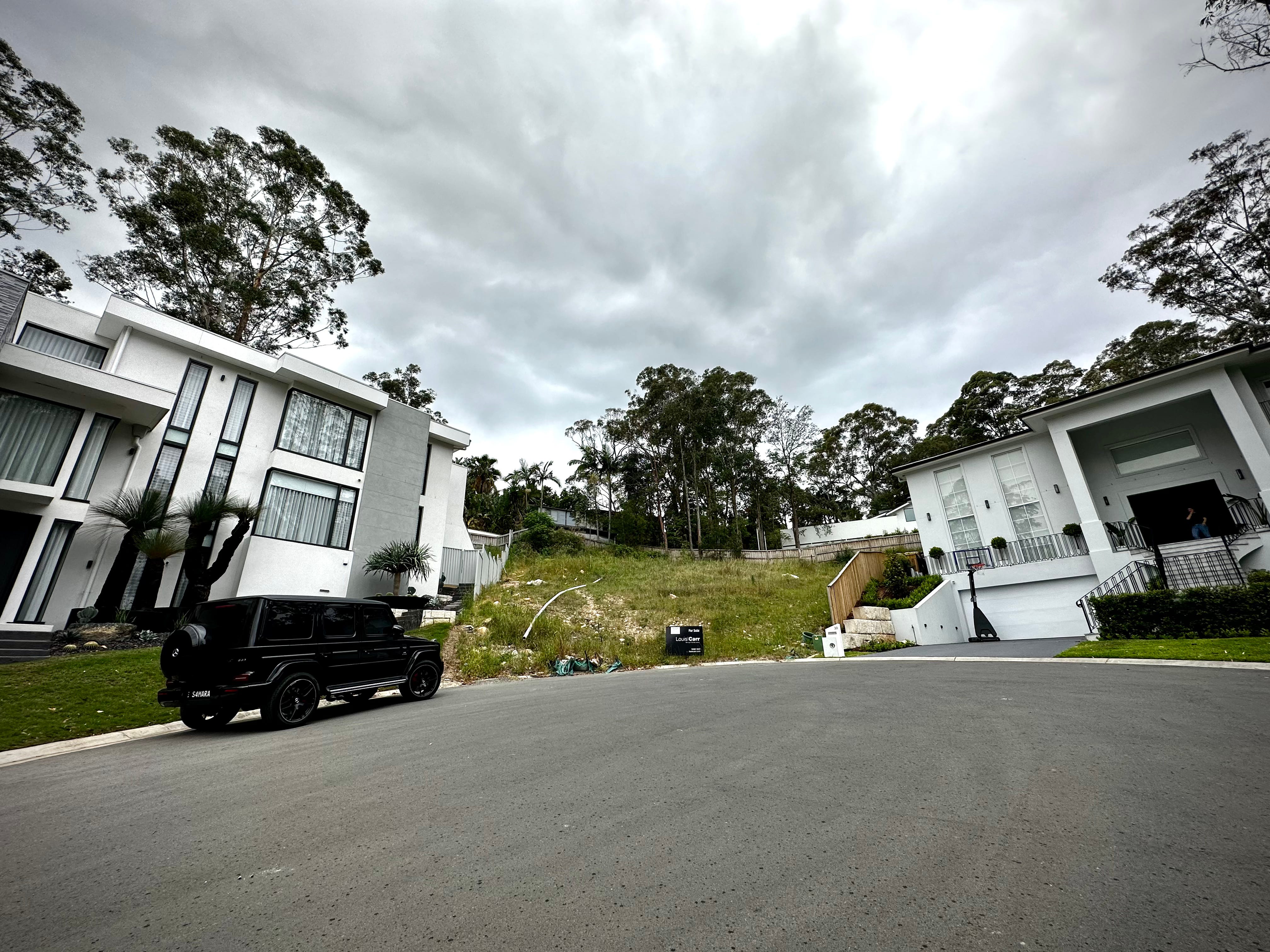
Rivendell Way, Glenhaven, Sydney, 2023. Squeeze another one onto that vacant lot?
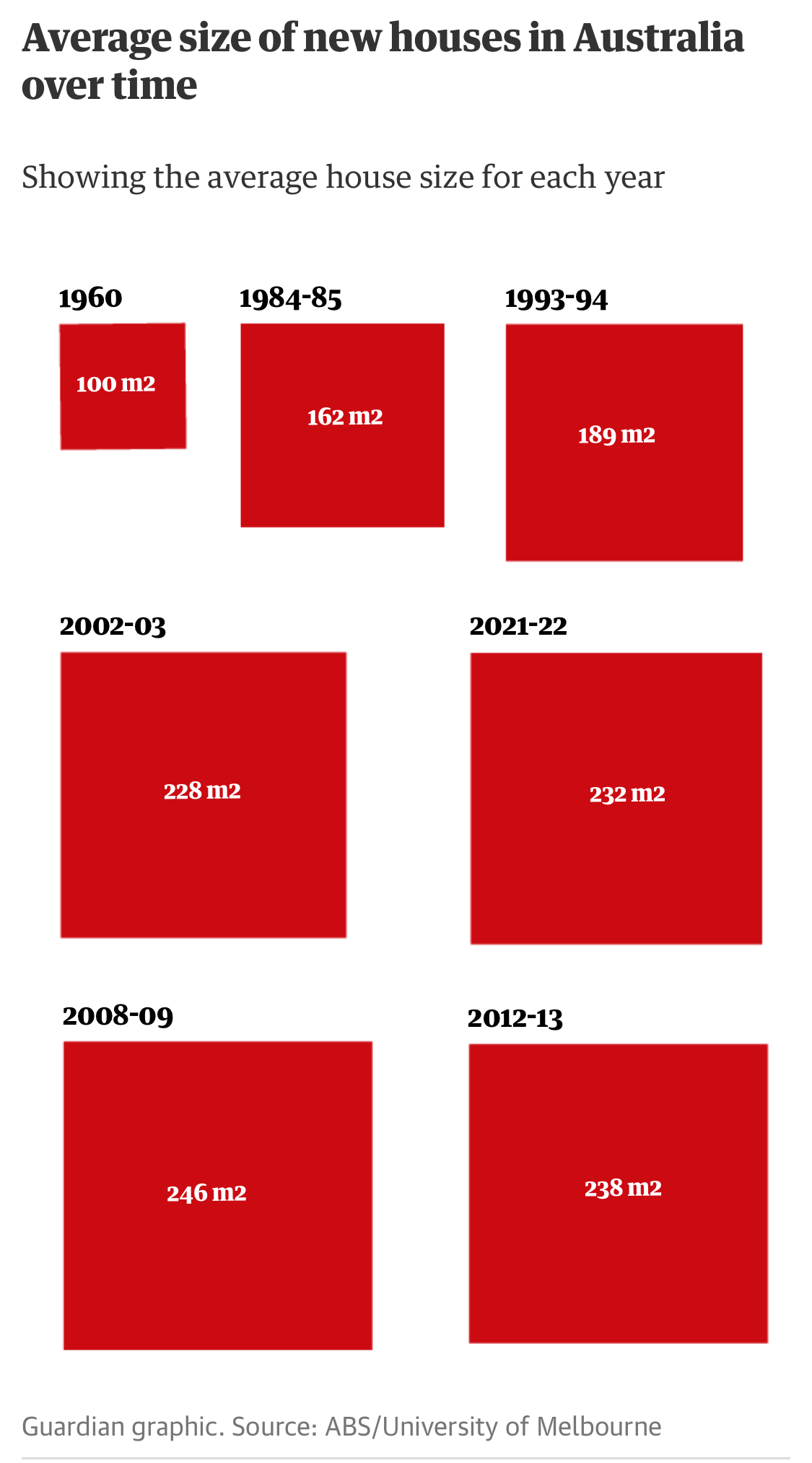
Here’s a graphic of how average house sizes in Australia have changed, settling around 238 sq m in 2013 [source]:
Presumably, if there were figures available for earlier times they’d show even small houses—such as this hut built by settlers in the Tasmanian back-blocks in the nineteenth century. My great-great-grandparents started in something like this.
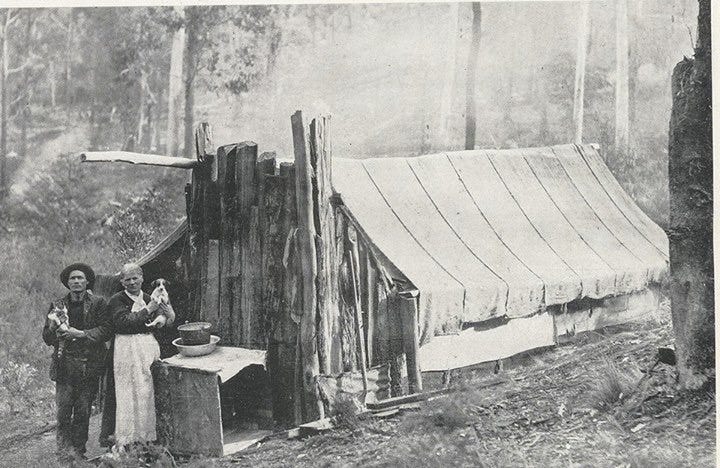
Home sweet home, 19th century Tasmania
I’m only at the wish-list stage of designing my house, and practicalities (not least, financial) have yet to be squarely faced. Should we shrink it down? Or can I justify a generous square meterage? Maybe one day I could turn the place into a writers’ retreat, or a home for itinerant artists, or a multigenerational enclave where members of all the generations of my family could hole up if they need to, thus justifying it’s size.
What is the ‘average size’ anyway?
Architecture and Design published an article in 2022 which said: ‘The average Australian house has a floor size of 186.3 square metres. However, that trend is increasing. From 2019-2020, the average size of a newly built home was 235.8 square meters – a 2.9% increase on the previous year, making this the largest increase in more than a decade.’
This article from 2020 claims that ‘Australia is still building some of the biggest houses in the world, but, on average, US houses are still bigger by around 6%.’ The number of people living a house has also changed: ‘In 1911 there was an average of 4.5 people in every home, but by 2006 this ratio had almost halved to around 2.4 people in every home.’
ModernHouse site asks: ‘When did modern start meaning massive?’ and muses that post-war building in the 1950s would necessarily be constrained by shortages. But ‘Something happened around 30 years ago; maybe it was brilliant marketing on the part of bath and basin manufacturers, but it suddenly became necessary for pretty well each member of the family to have their own bathroom. Who knows what that’s done to society – people talk about the alienation caused by mobile phones and computers, but you’d have to wonder whether houses with multiple bathrooms, where the occupants are never told to hurry up, have anything to do with it?’
It’s not just about the bedrooms
My plans are for a three-bedroom, single storey house. The bedrooms will be for guests—I want my family and friends to come and stay. But the other rooms of the house will be just for me and my passions, spaces to fill with the things that give me joy (see this post.)
As Harry Seidler said in 1952, soon after building a house for his mother, ‘When designing a house, the contemporary architect thinks of an ‘environment for living’ rather than of empty box-like rooms … he designs actual spaces in the interior for specific purposes and designs the furnishings and equipment that go into them.’ [source]
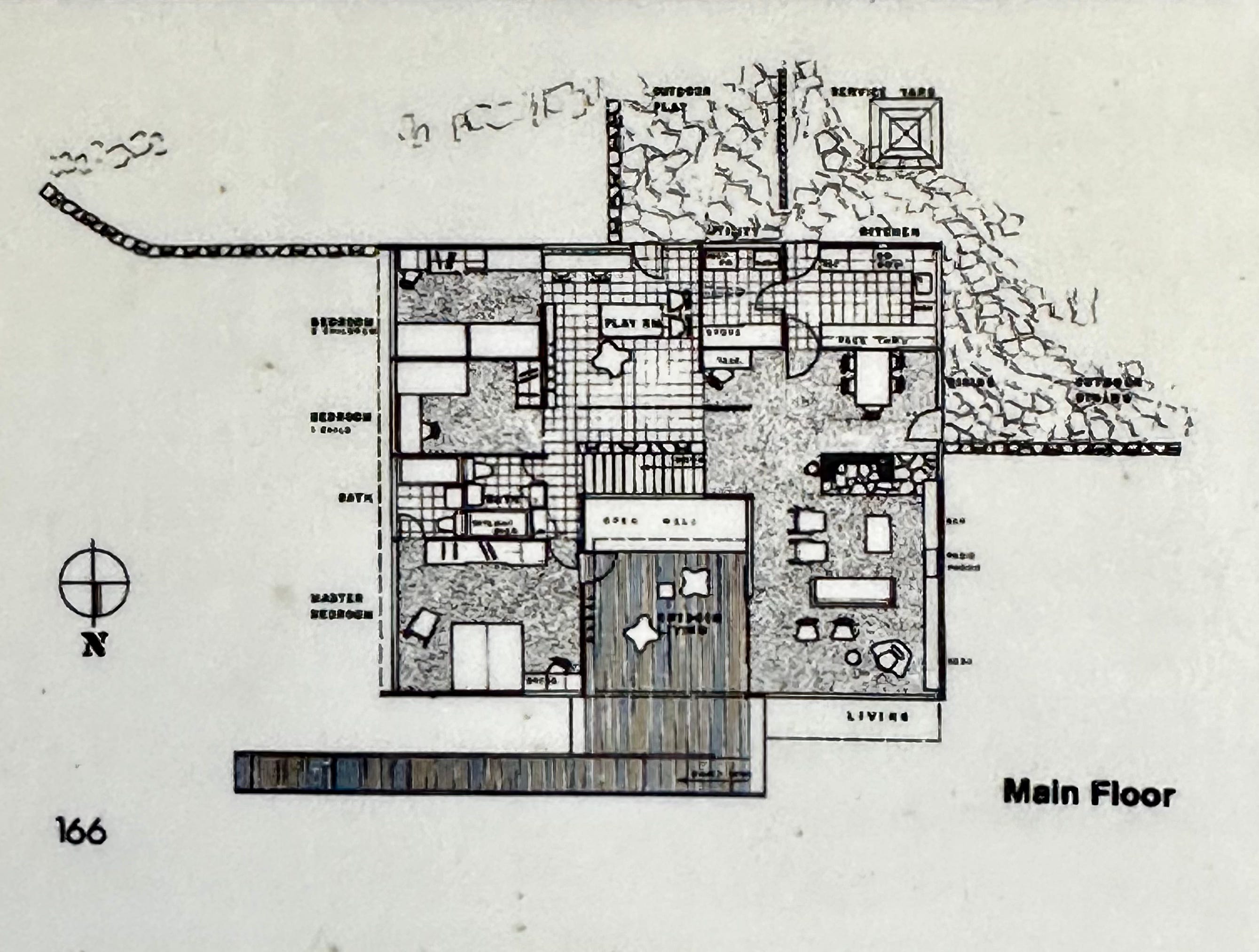
Floor plan, Rose Seidler House, 200 sq m [source]
Thinking back to other houses I’ve lived in
The last house I lived in, the one I just sold, was a Federation bungalow with a 1990s extension. It was 217 internal square metres—so actually a little below ‘average’, though it felt big to me. It also took up a lot of the block it was built on.
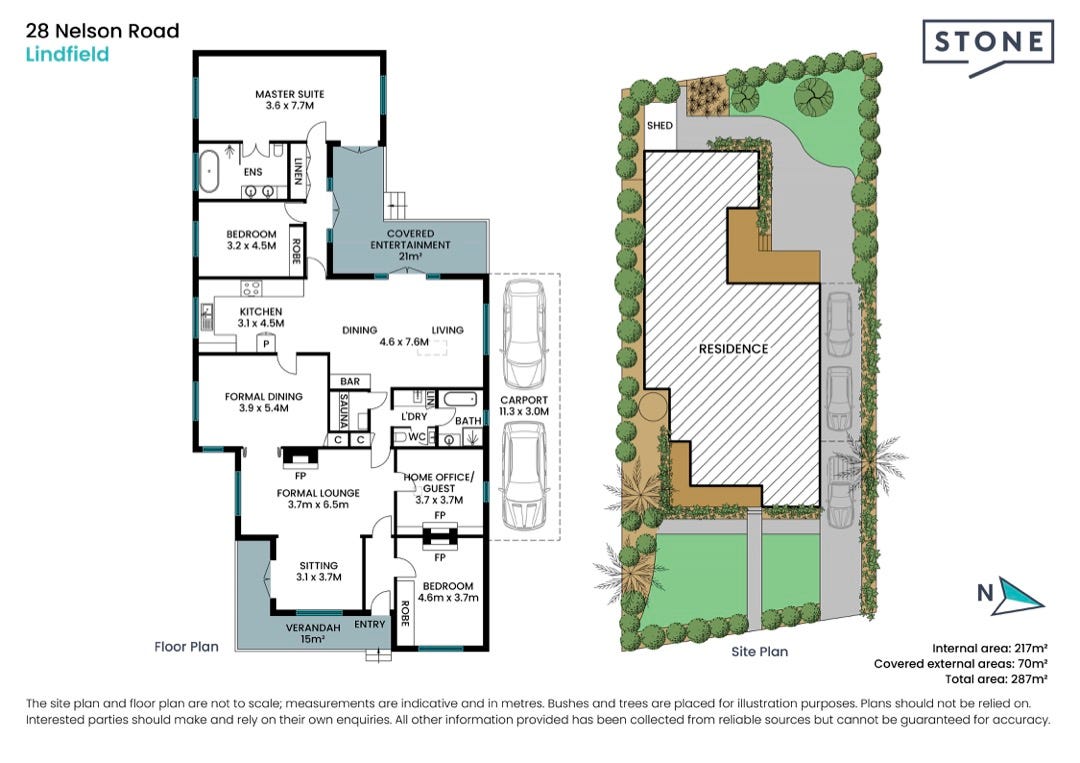
Lindfield. Is 217 sq m ‘big’? Well, yes.
I don’t know the square meterage of the two-storey family house I lived in in Berowra in the 1990s, but it was probably bigger still, given it had a second storey. There were four bedrooms and two bathrooms, and it housed a family of five.
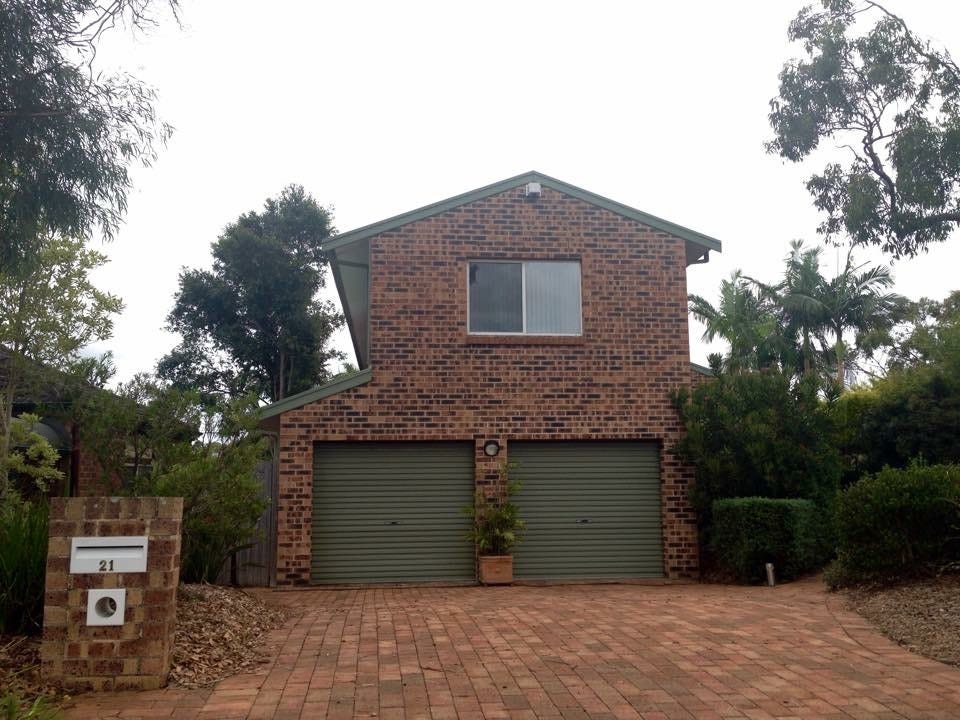
We go two-storey. Berowra, 1990s.
The Blue Mountains house (the one that burnt down) also had four bedrooms and two bathrooms. We considered it spacious and luxurious—and it was, for the 1980s. After all, we had a large bush block on which to spread out (a two-edged sword, as it turned out).
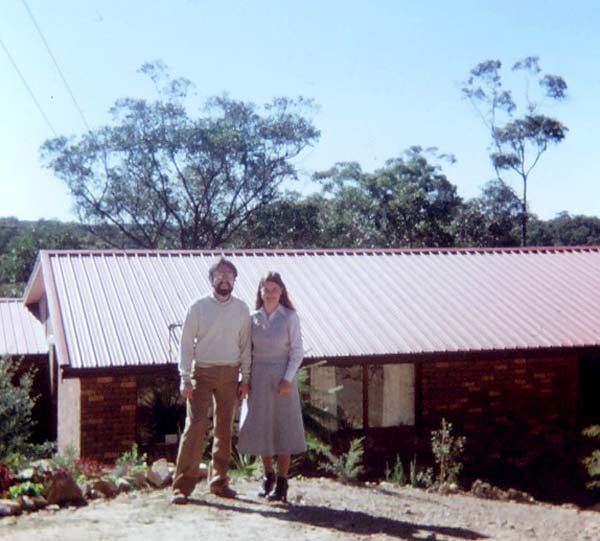
Blue Mountains, 1980s. The one that burnt down.
The house I grew up in, in small-town Tasmania, housed a family of six. It had two bedrooms and a ‘sunroom’, which was used as a bedroom when my little brother came along. We three girls shared a bedroom, in bunk beds. There was one bathroom, and originally the loo was outside (!) When the sewerage came to our street, there was enough room for an inside toot in the existing laundry—a room as big as the kitchen. (Laundry was an industrial-sized job in those days, involving a ‘copper’ and a wringer.)
The house had a wide hallway—I know everything seems big when you’re a little kid, but this hallway could accommodate all our bookshelves, the nook for the telephone, and a spreading Christmas tree every year, where the whole extended family of about a dozen adults and kids could comfortably gather at present-opening time.
I wish for a big wide hallway like this, a place where stuff happens, not just a passage way with a row of doors.
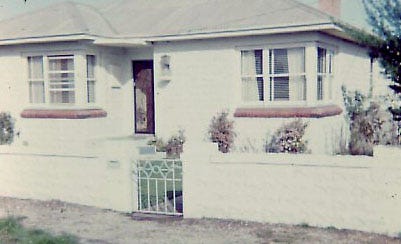
Goulburn Street, George Town, Tasmania. Built 1955. Hallway heaven.
This Tasmanian house was built in 1955, designed by my mother (a close copy of the house her parents had built in another small town), and built by subcontractors with my father adding his labour. Luckily, I won’t have to get this hands-on.
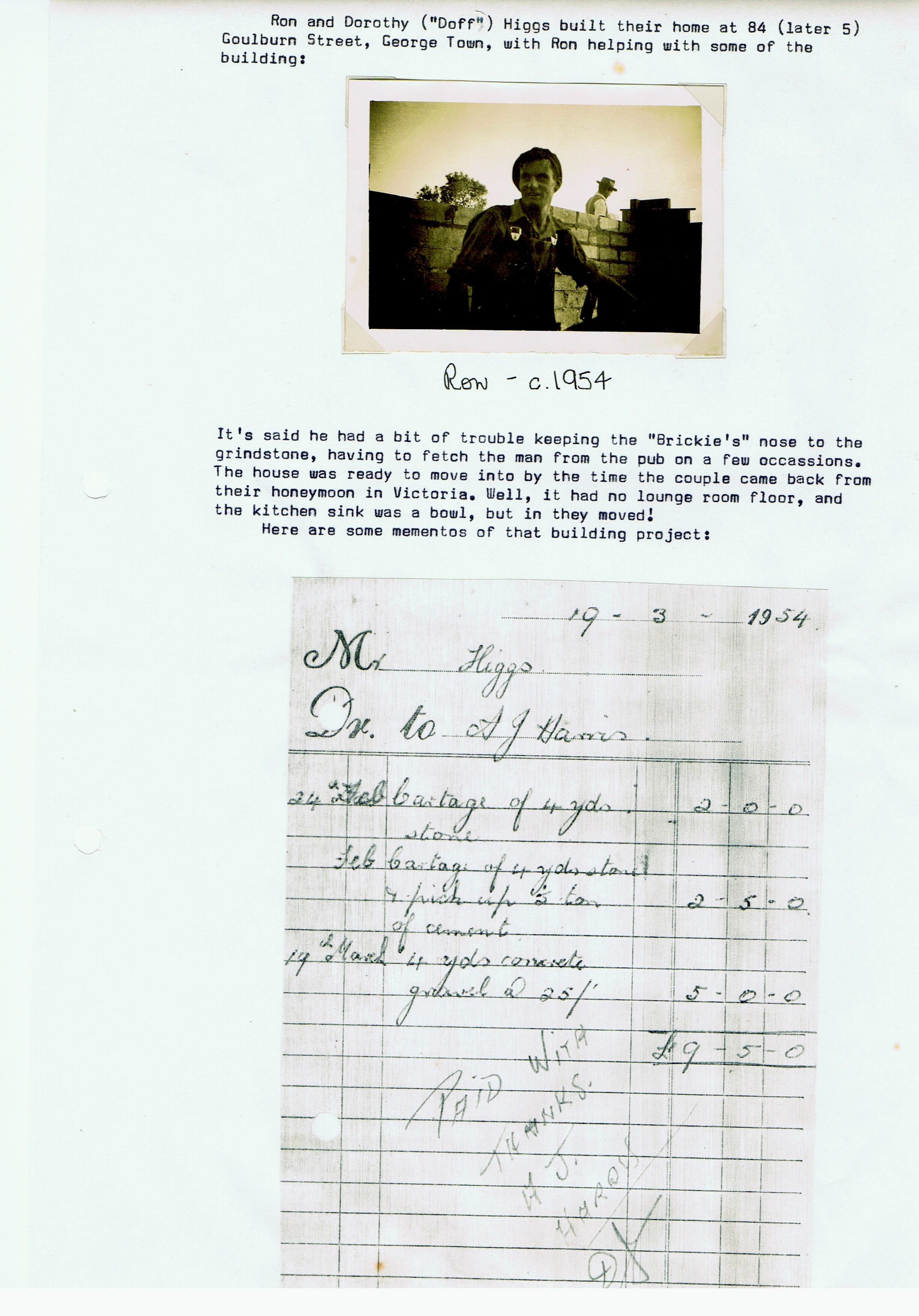
DIY building, 1954-55
The Castle
So, the ‘average’ house size in Sydney today seems to be somewhere around 235 sqm. Two-storey houses may be larger, as may houses with larger blocks and more room to spread out. Spreading out seems to be a goal, as if we’d prefer to be ‘lord of all we survey’ rather than feeling like a rat in a hole. There are arguments (some good) for down-sizing to a small apartment. But then there’s the urge ‘to have one little piece of earth with a house and a garden which is ours’.
I guess it’s the vibe.