Home Show Again
October 2024

Another Home Show, and this time I’m focussed. The world of infinite possibilities has been honed down to ‘what exactly is useful to me here?’ But like all good expos, there’s always the serendipity—the things you didn’t know would be useful until you saw them. Here are my latest discoveries.

At the Brickworks exhibit I came upon what looked like a full-sized brick wall installed in the temporary exhibit booth. How could this be? The Brickworks rep explained: it was put together with ‘thin bricks’ hooked or slotted into a metal frame. Each thin brick is secured by hooks to mechanically interlock the thin brick to the panel. She pulled back a curtain and showed me the reverse side of the ‘brick wall’. Amazing!
She also gave me a sample: ‘San Selmo Reclaimed’ in Limewash. Lovely. Expensive. Although the Thin Tech system is designed in Australia, this particular brick is imported from Spain. $3 per brick. But since the thin bricks are simply sliced-up regular bricks, you can have any brick turned into thin ones!
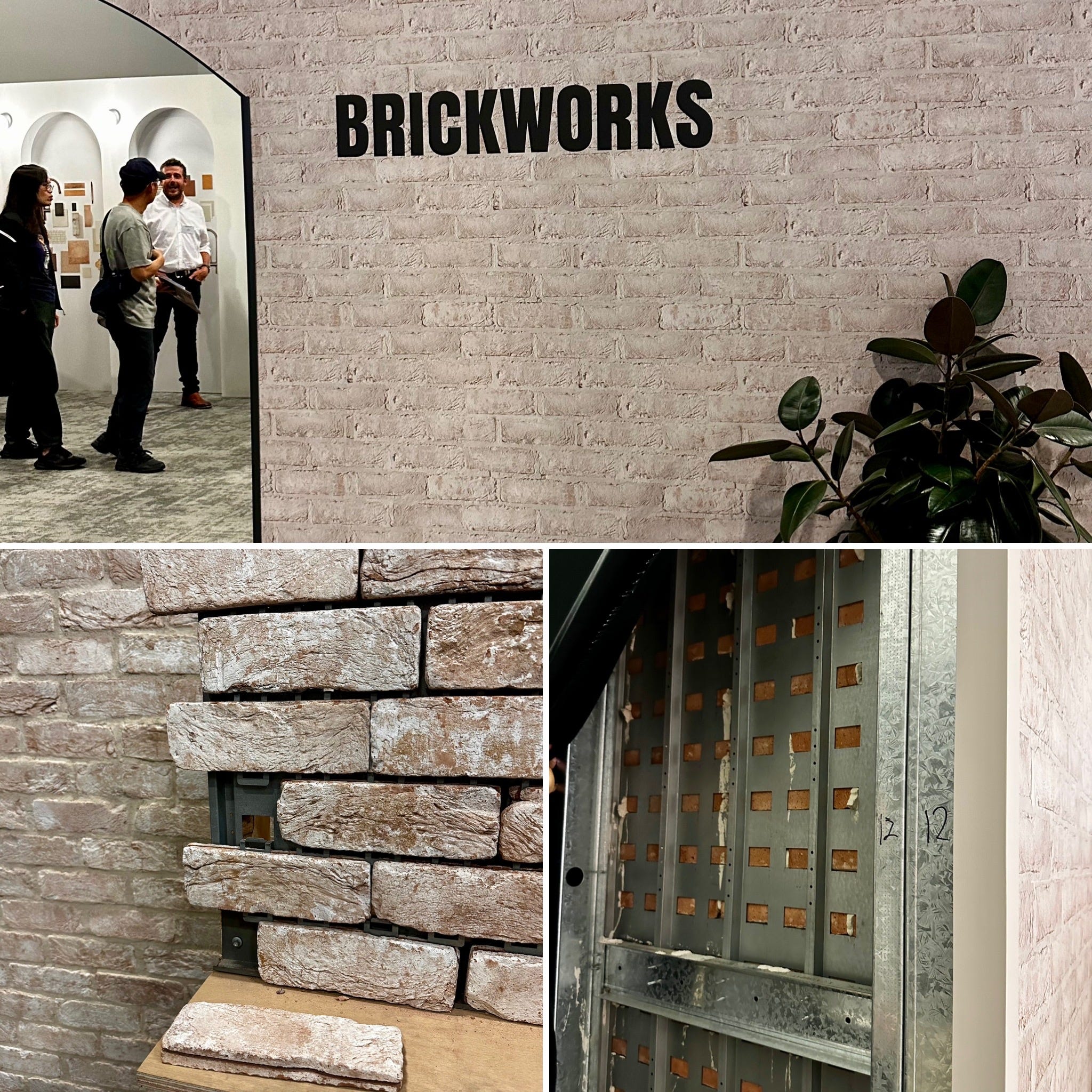
‘San Selmo Reclaimed’ in Limewash on display—and a glimpse behind the scenes.
‘Thin Tech’ bricks can be installed more quickly, and by a handyman or builder, not necessarily a ‘brickie’. I was told a brickie could charge $2 per brick. Who knew? Though the ‘Thin Tech’ materials are more expensive than regular bricks, there are big savings on installation. So cost-wise it works out roughly the same.
Thin bricks reduce the need for footings and lintels, and can be installed on many different kinds of surfaces (including SIPs). And because they’re thin, they can save floor space: thinner walls, more floor space.
Is this a winner?
Solar Systems
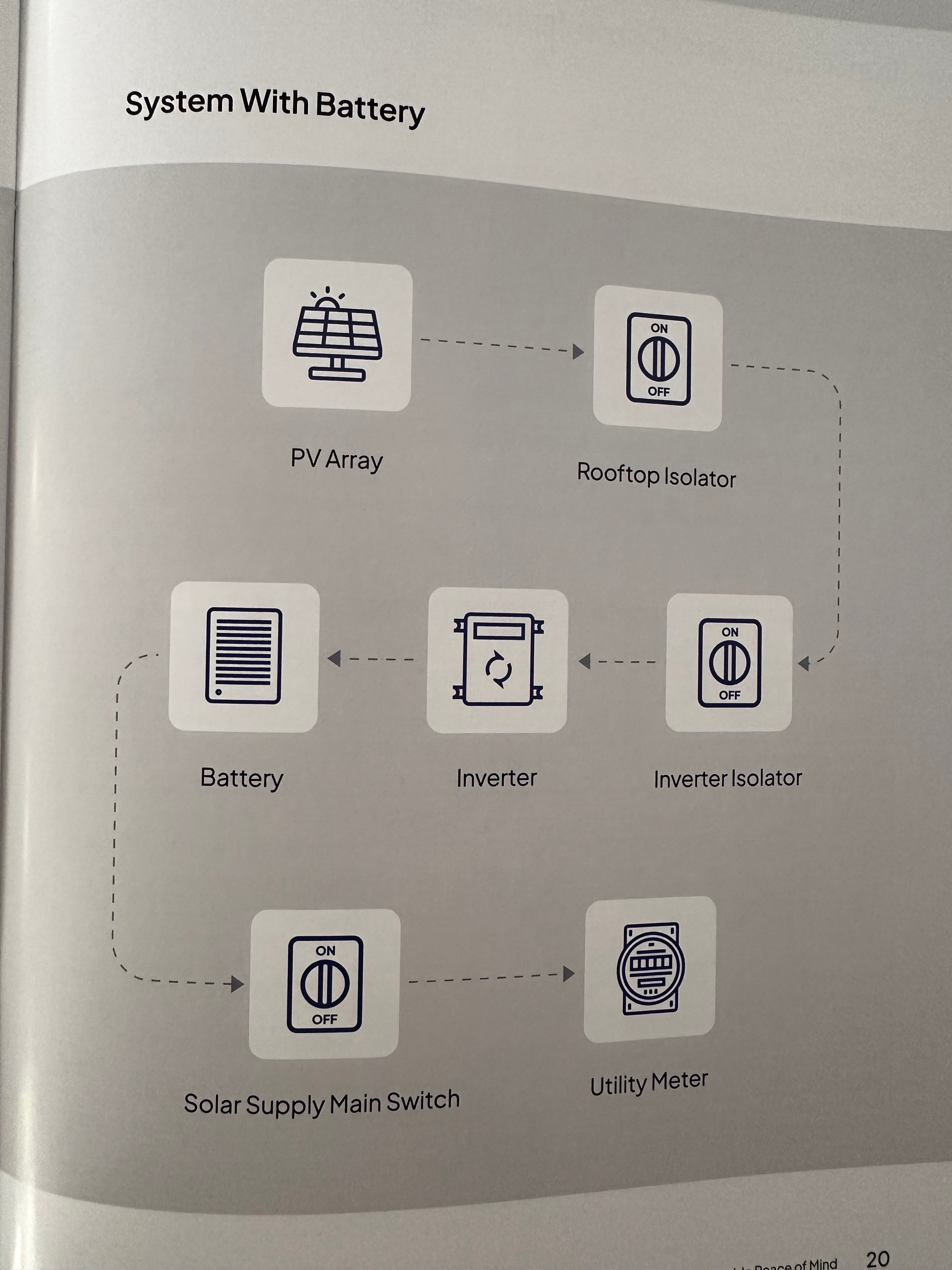
Knowing I want to build an all-electric house with a solar array, it was time to find out more. At the One Power stand I found out about the design and installation of custom solar systems—not the kind with planets, but the kind that turns sunlight into something with which to charge your phone. I asked about batteries—yes, I was told, it’s about time to commit to a battery. The tech is there. The economics are making sense.
‘Send me your floor plans,’ said the guy. ‘I can design you a system.’
During construction, solar installers arrive at the point where the electricians & plumbers will be doing their ‘fit off’. This moment is probably at least a year away, but hey. Info is info. The solar guy said the garage would be a perfect location for the battery. And there are NSW government subsidies going at the moment too.
Bring on the electric house.
Passive House windows
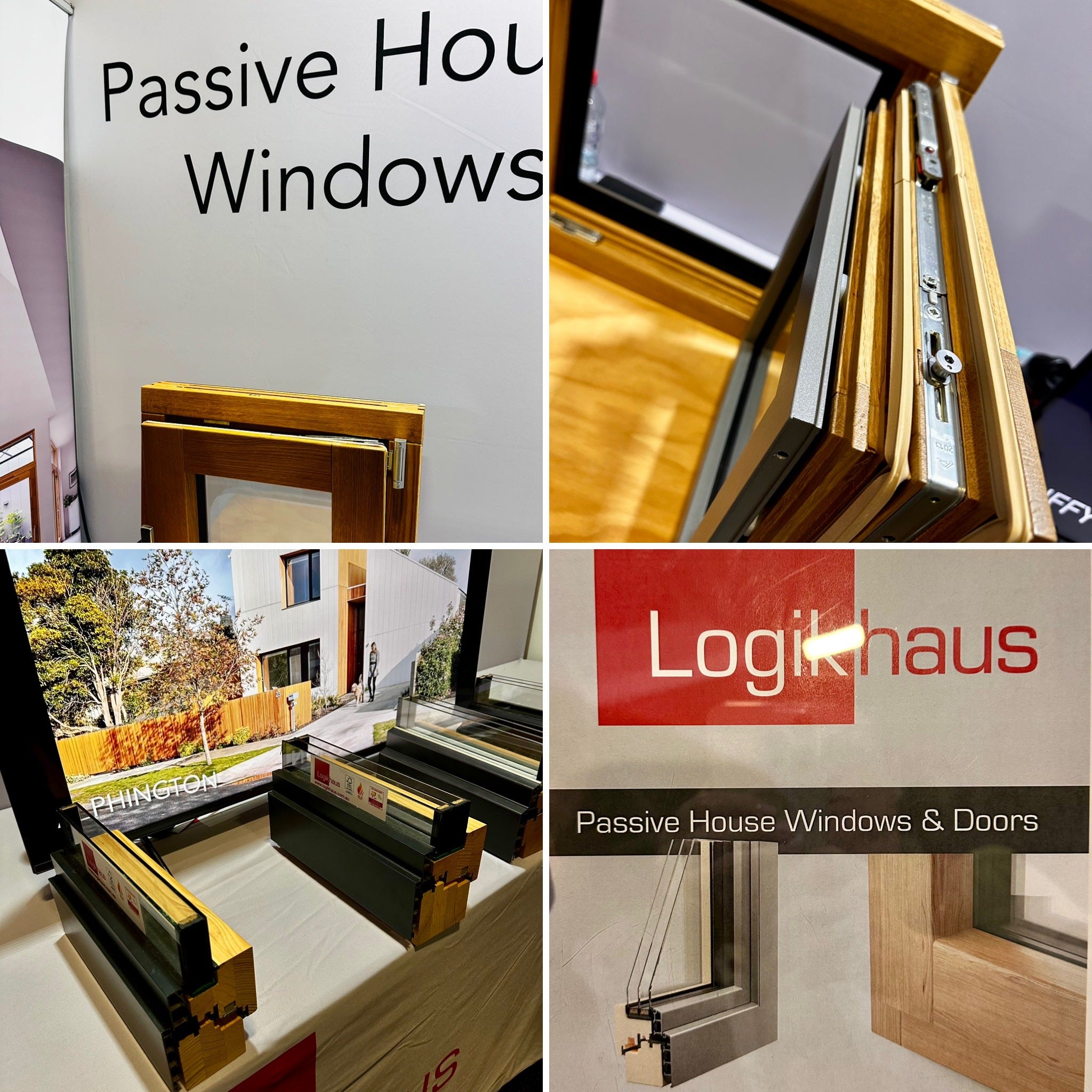
For the first time at the Home Show, I met some Passivhaus enthusiasts: a trio who were there to sell amazing windows, double or triple glazed, with marvellous opening systems, fully Passivhaus compliant. Unsurprisingly, the windows are made in northern Europe—Poland, apparently—but the enthusiasts keep stock in Australia.
They said I was only the third person they’d spoken to with a Passivhaus project. It was the last afternoon of the Home Show. Good luck selling the windows, guys!
Hidden doors
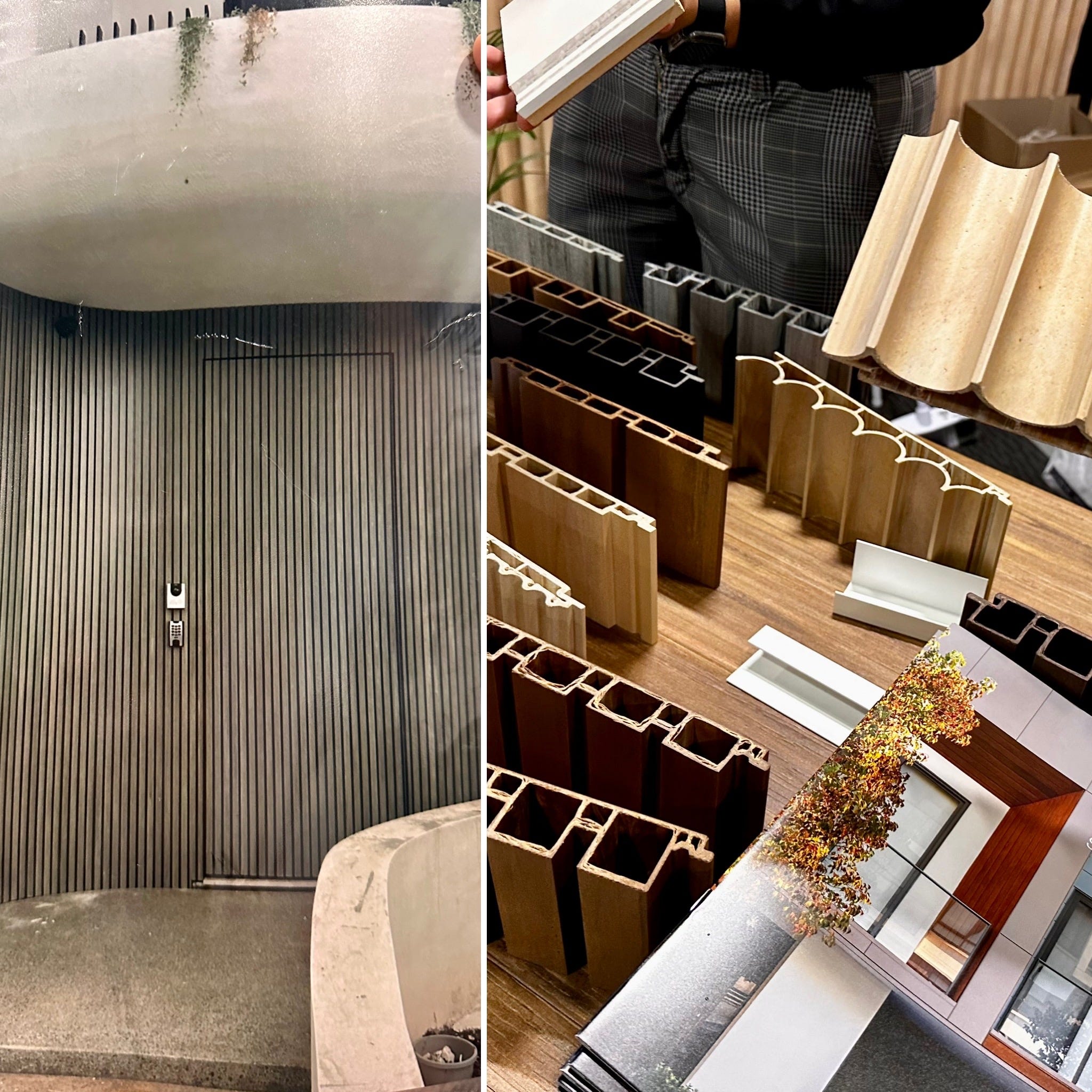
At a stand touting a kind of light-weight engineered wood panelling, I got excited about the possibilities for creating ‘hidden doors’ in the interior of my house. The stuff bends and blends. Could be perfect.
Grass trees
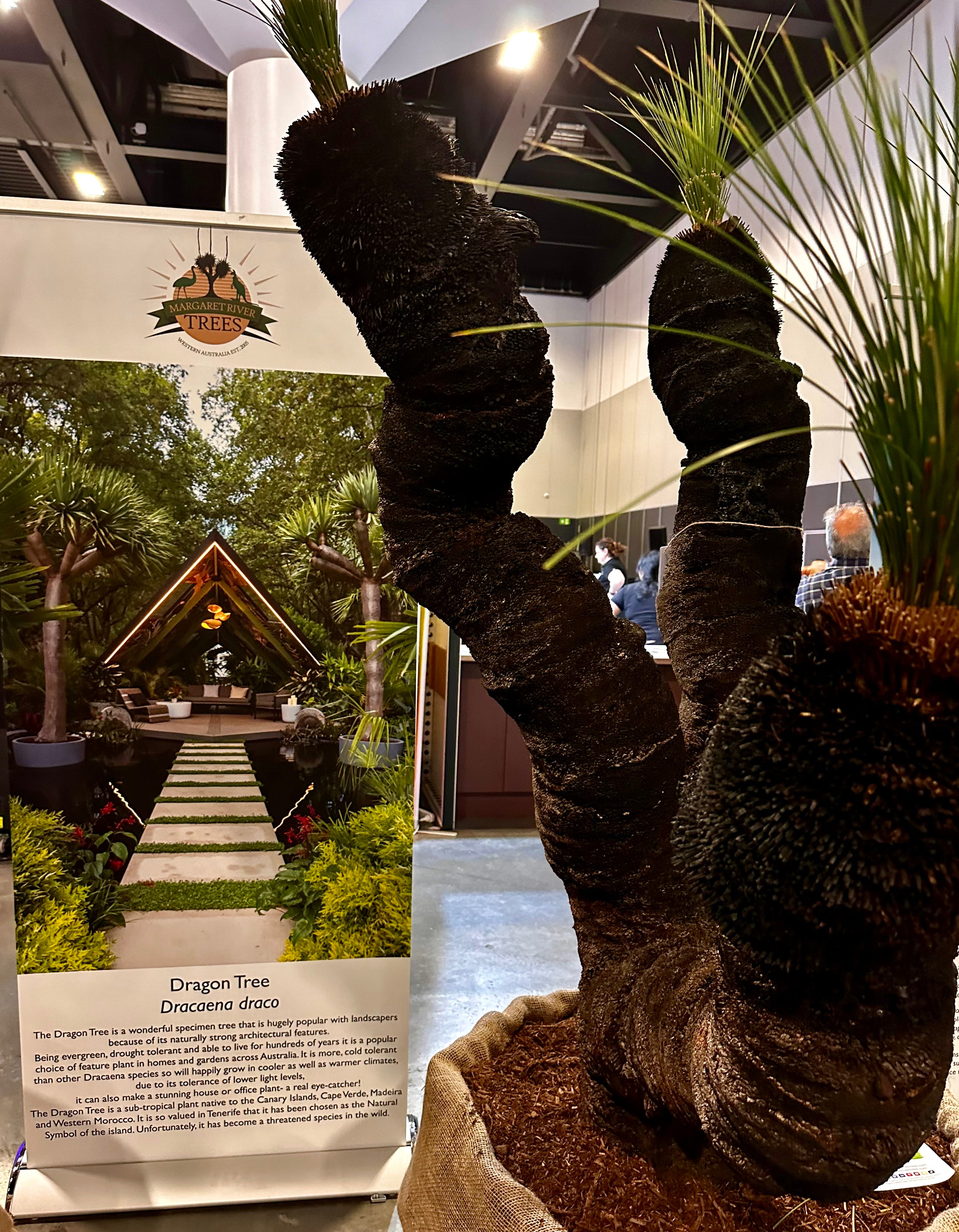
Though landscaping is X-number of years away, I drooled over the magnificent Margaret River grass trees. These cost between $3000 and $5000 per specimen, but the chap who runs one of the two Sydney depots told me there are often bargains to be had. *makes note* They also sell spectacular ‘Dragon trees’ (dracaena draco) which are not native—they come from the Canary Islands and the southern Med—but he did tell me they never need to be watered. *makes another note*
Attic ladders
I’ll need an attic ladder! We’re planning storage space in the roof cavity over the garage. I filled in my details to go in a draw for an attic ladder.
Joinery
This too is some way down the track—certainly well after the bricks and windows and solar array—but I drooled over some lovely cabinetry and took pictures to copy it later.
Plunge pool
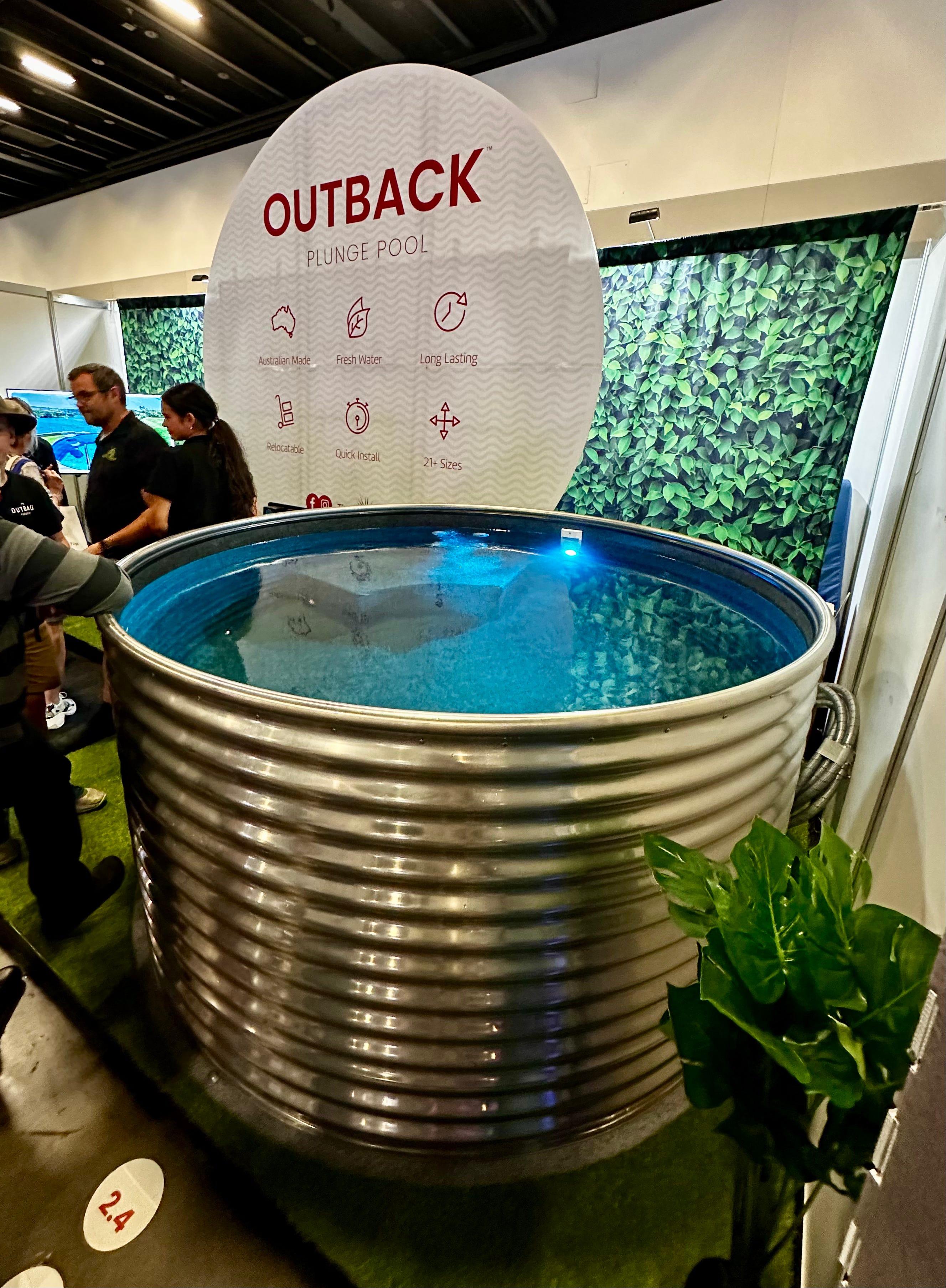
Okay, I’m NOT planning a pool. Definitely not. But I was sucked into this display because it was being ‘manned’ by two cute kids, about 12 or 14 years old, wearing Akubras. They came from Outback Plunge Pools, based somewhere up the coast—was it Coffs Harbour? As I was admiring the corrugated profile and the ‘water tank in the bush’ aesthetic of the plunge pool, the kid said to me: ‘Can I give you any information?’
‘Why yes,’ says I, waving a hand at towards the display. ‘Can you tell me roughly how much a set up like this would cost?’
‘I can tell you exactly,’ said the kid, and did (between $12,000 and $20,000 depending on whether you want to heat the water and have a spa effect). The pool is built of stainless steel, and you have a choice of interior colours. They recommend fresh water using a UV sanitiser (no chlorine). And its pre-plumbed and fully relocatable (though you do need a Council permit and a pool fence).
So cute. But I’m NOT having a pool.
A waterfall then?
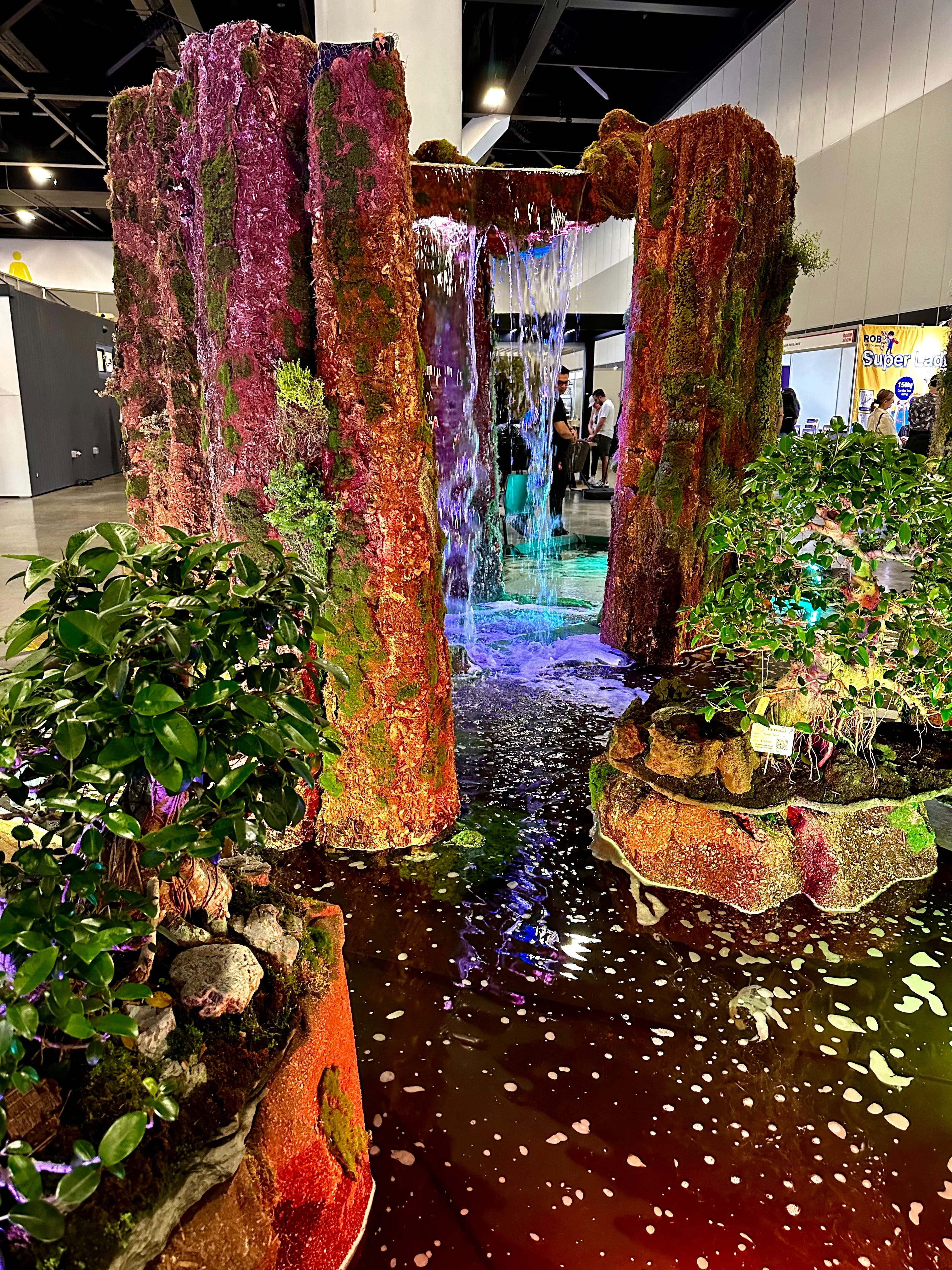
Speaking of features you didn’t know you wanted, how about a waterfall? Currently there’s a large swathe of land in the back corner of my block that has no real purpose. How about we fill it with a billabong? Or a waterfall? There’s an enthusiastic water landscaper from Europe, Kostya Udin Landscapes, who can—they claim—make that a reality.
Or maybe not?