
Forest Floors
Would wood do?

In the house I lived in for the last 24 years, most of the floors were wood. Some of these were many decades old, as evidenced by the lovely patina and the wide boards in ‘Imperial’ measurements. Over the years I had some of these floors sanded and re-lacquered and their gorgeous deep grain and rich colour gave much pleasure.
These floors also provided a suitable surface for my other underfoot passion, handwoven silk rugs, but that’s a whole other story.
‘What kind of floors do you want?’ I’ve been asked. Wooden floors, please.
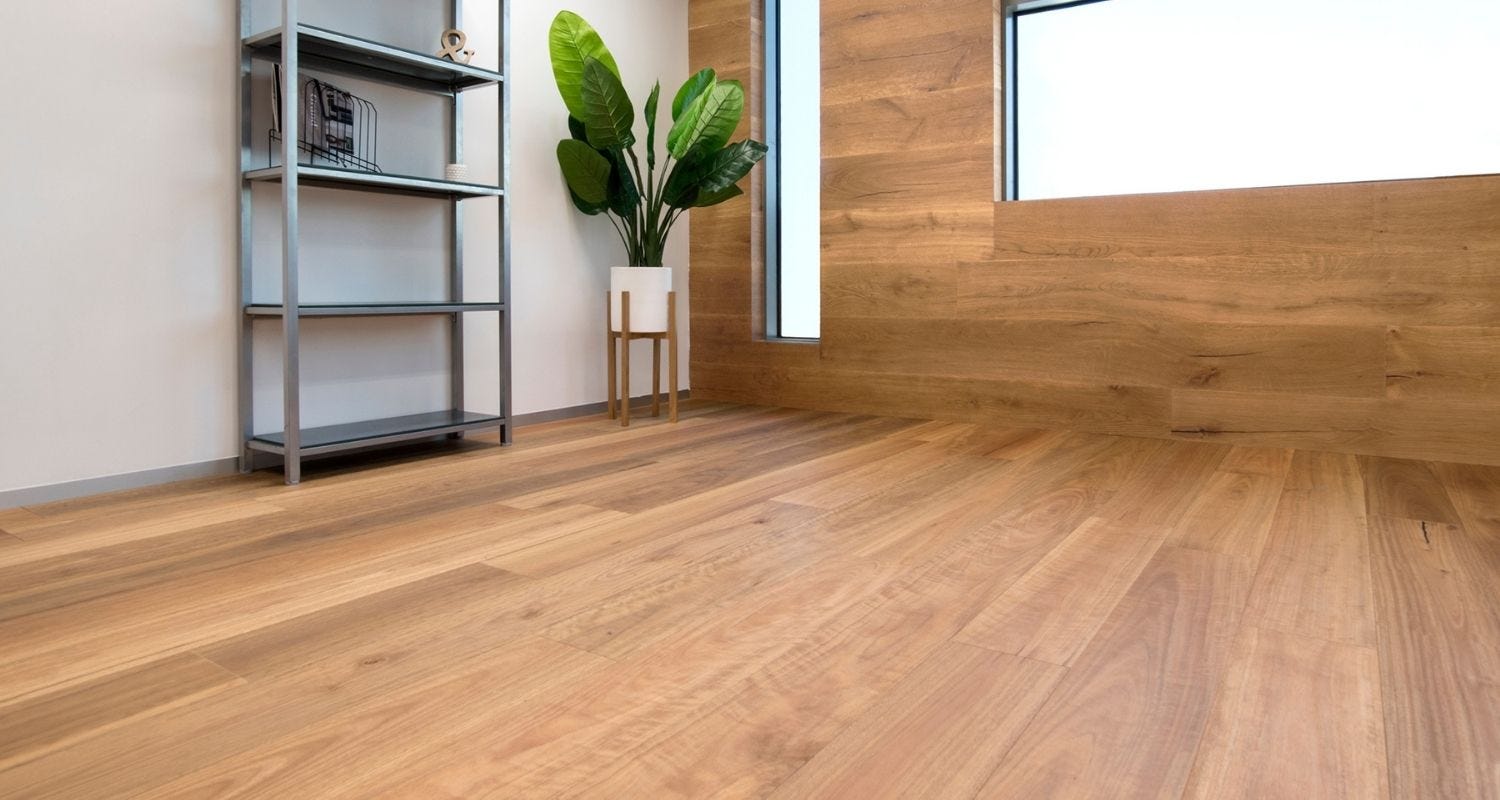
A Spotted Gum floor. Solid or engineered?
Solid wood vs ‘engineered’ wood
Wood for floors, that lovely natural product, comes in a wide variety of colours, grains and tones, with a matt or gloss surface finish. It also comes with a decision: ‘solid’ or ‘engineered’?
‘Engineered’ wood has a thin layer of ‘real wood’ on its surface, integrated with a pulped-wood underlay, built in. It’s supplied pre-finished, and can be glued directly to concrete.
Solid wood, made from milled timber, costs more—perhaps 75% more, partly because of increased installation costs. It’s installed unfinished and must be sanded and lacquered, plus it needs a plywood underlay or other subfloor on top of concrete.
When the two types are laid, the manufacturers claim that it’s hard to see any difference. Yet I always think I can tell …
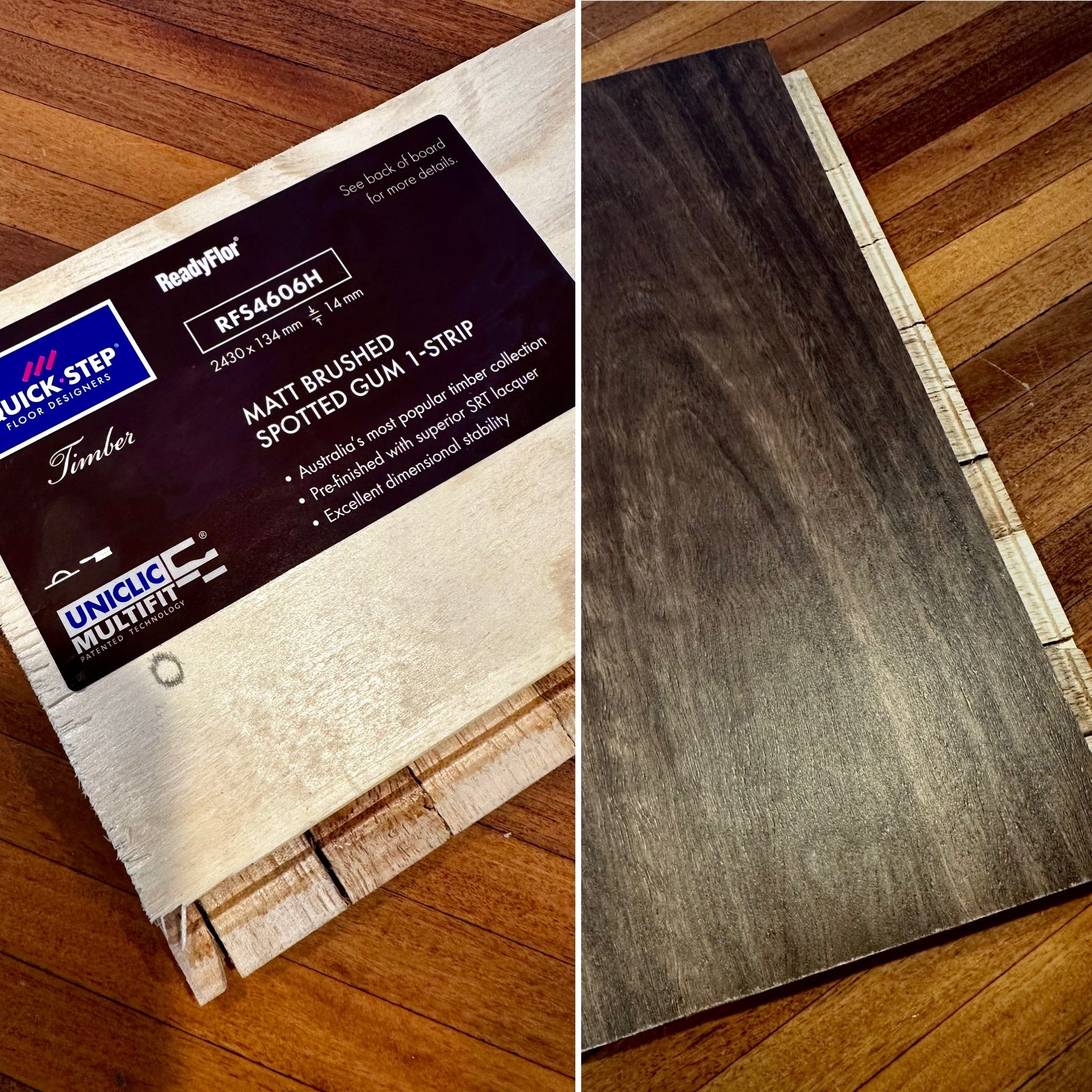
Wood flooring sample: ‘engineered’
Pros and cons
Solid wood: According to this supplier: ‘Solid timber flooring, crafted from a single piece of timber, boasts timeless beauty and durability, making it a popular choice for those seeking a traditional, luxurious look. However, its susceptibility to moisture and limited installation options may pose challenges in certain environments.’
Engineered wood: ‘On the other hand, engineered hardwood flooring offers versatility and stability with its plywood construction, making it suitable for areas where solid hardwood may not be practical, such as basements or over concrete slabs. Despite perceptions of inferiority, engineered hardwood provides cost-effective options without compromising on aesthetics or durability.’
Solid wood: things I like about it
As it can be sanded and re-lacquered multiple times throughout its life, a solid wood floor can be rejuvenated repeatedly—for example to remove scratches, imperfections, stains or dents. Moreover, it’s beautiful, with all the knots and imperfections, the unique patterns of a tree that has lived a long life.
It’s robust: solid wood will last. It will absorb lots of foot and furniture traffic, and can be rejuvenated if needed—witness the 100 year old floors in my old house.
It’s a natural material, crafted from a tree. ‘Each plank tells a story’.
However, is there really that much of a difference? Or am I being romantic about wood?
Sustainability comparison
According to this site: ‘At first glance, a straight plank of wood looks like the cleanest, greenest option for hardwood flooring. However, engineered wood flooring actually uses much less of a tree per plank than solid hardwood’. Hmmm …
Accreditation
Because it’s a plant that can be ‘farmed’ and harvested repeatedly (albeit with long growing times) wood is a ‘renewable’ material. It’s also generally a sustainable material, largely thanks to carbon uptake by timber trees. However, the environmental impacts of using wood also depend on forest management, transportation, and supply-chain handling.
Ethical and sustainable hardwood flooring comes from forests that are managed, monitored, and protected. One acronym to look for is FSC = Forest Stewardship Council, a global organisation that sets standards and verifies sustainable forest management.
Australia also has another forest certification scheme called PEFC (known as ‘Responsible Wood’ in Australia), which monitors supply chain practices. This site explains: ‘Auditors look at a variety of factors to grant these certifications. The forest management audit considers social, economic and environmental aspects. Everything from making sure workers are being paid well and under their appropriate awards, to ensuring that the environment is being managed in a way that water is not being contaminated and special species and vegetation communities are not being harmed… The chain of custody certification follows a tree harvested in a forest into a board and then a finished product.’
The life cycle of a tree
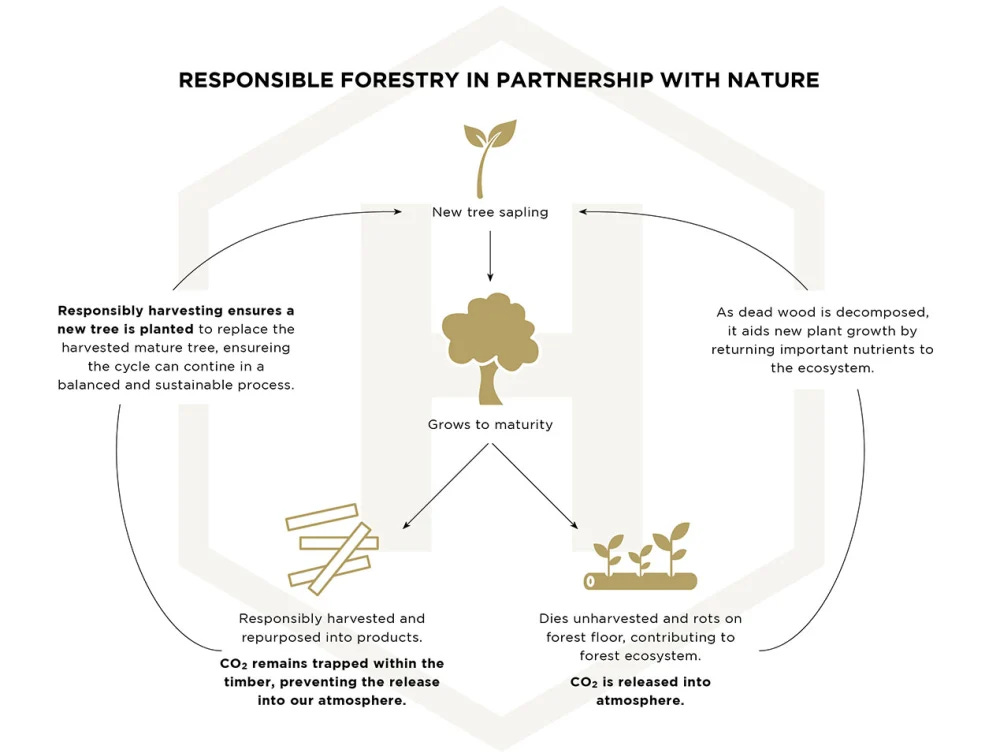
From Havwoods, a manufacturer of ‘engineered wood’: ‘Growing trees absorb CO2. One cubic metre of living wood absorbs almost one tonne of CO2! The trees then break it down through photosynthesis and release oxygen into the atmosphere while storing the carbon in their wood for the life of the tree. If the wood is put to use after the tree has long died, the carbon remains stored in the timber, preventing it from being released into our atmosphere. It is only when timber begins to rot that the carbon is finally released. It is in this way that we can slow down the carbon release through prolonging the life of the timber as building materials, flooring and other wooded products.’
They provide a nifty diagram of the life cycle of the tree. I’m attracted.
Then they tell me that engineered wood is best: ‘Unlike solid timber flooring which uses only a limited section of each tree, engineered timber flooring is constructed using multiple thinner planks, allowing for a greater amount of each tree to be utilised in the construction. Engineered timber flooring makes optimal use of a precious resource and results in far less wastage.’
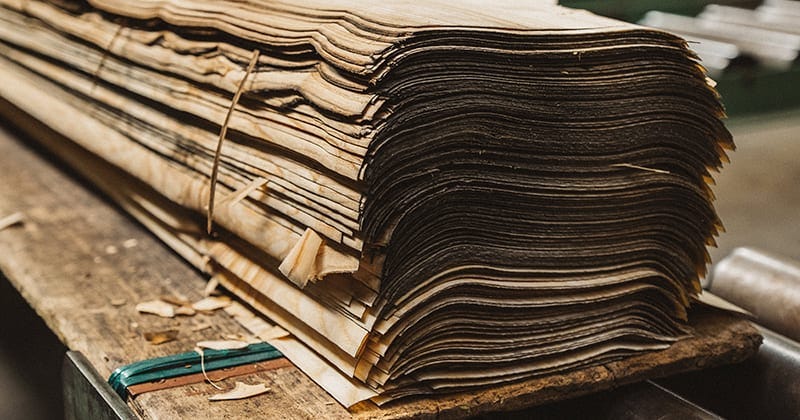
‘Engineered’ wood: using every bit [source]
And yet, and yet …
Can I have beautiful solid wood floors and still feel guilt-free? This site tells me they ‘know each tree and where it came from’. Gosh.
‘Australian Sustainable Timbers is a native forest manager and timber processor… We do everything from the forest to your door. This is our way of providing a responsible model of restorative, intergenerational forestry.
We can supply Forest Stewardship Council certified Australian native hardwoods fit for many purposes – from kiln dried furniture grade timber and architectural products to round poles, decking and flooring … we know each tree and where it came from. So you can sit back and enjoy some of the most beautiful and durable timber in the world and know that your choice is supporting an ecologically sustainable future.’
Where’s the forest?
It seems to me that the first thing to ask is where the wood was grown. The forest should be accredited as managed under best sustainable practices. It should also be local—buying local wood means it hasn’t been transported across the world.
Which is not to say there aren’t some divine imported woods available. Check out this site for that French country villa look: oak sourced from the North of France, ‘found in the fertile forests bordering the Champagne region, our French Oak floors are grown, harvested, milled and finished by a family with over 50 years’ experience.’
But Australian hardwood is beautiful too.
Spotted Gum
Spotted Gum is the strongest and most durable of all Australian hardwoods on the market. It’s resistant to fire, moisture, and termites. It also comes in a variety of colours depending on the tree: light to deep red in heartwood timbers, and white to light brown in sapwood timbers. Narangba Timbers sings the praises of Spotted Gum: incredibly beautiful, easy to paint, stain, and polish, tough, inexpensive, environmentally friendly (because grown so close to home) and easily resurfaced.
Spotted Gum has a Janka Hardness Test rating of 11 and a heartwood level of class 2. New fun fact: a ‘Janka’ test, named after its Austrian inventor, measures the resistance of a sample of wood to denting and wear.
About the Spotted Gum Tree
The Spotted Gum is a majestic Australian hardwood tree which can grow to between 35 and 60 metres tall, and 1 to 1.5 metres in diameter. It grows in Coastal New South Wales and South East Queensland—relatively close to Normanhurst.
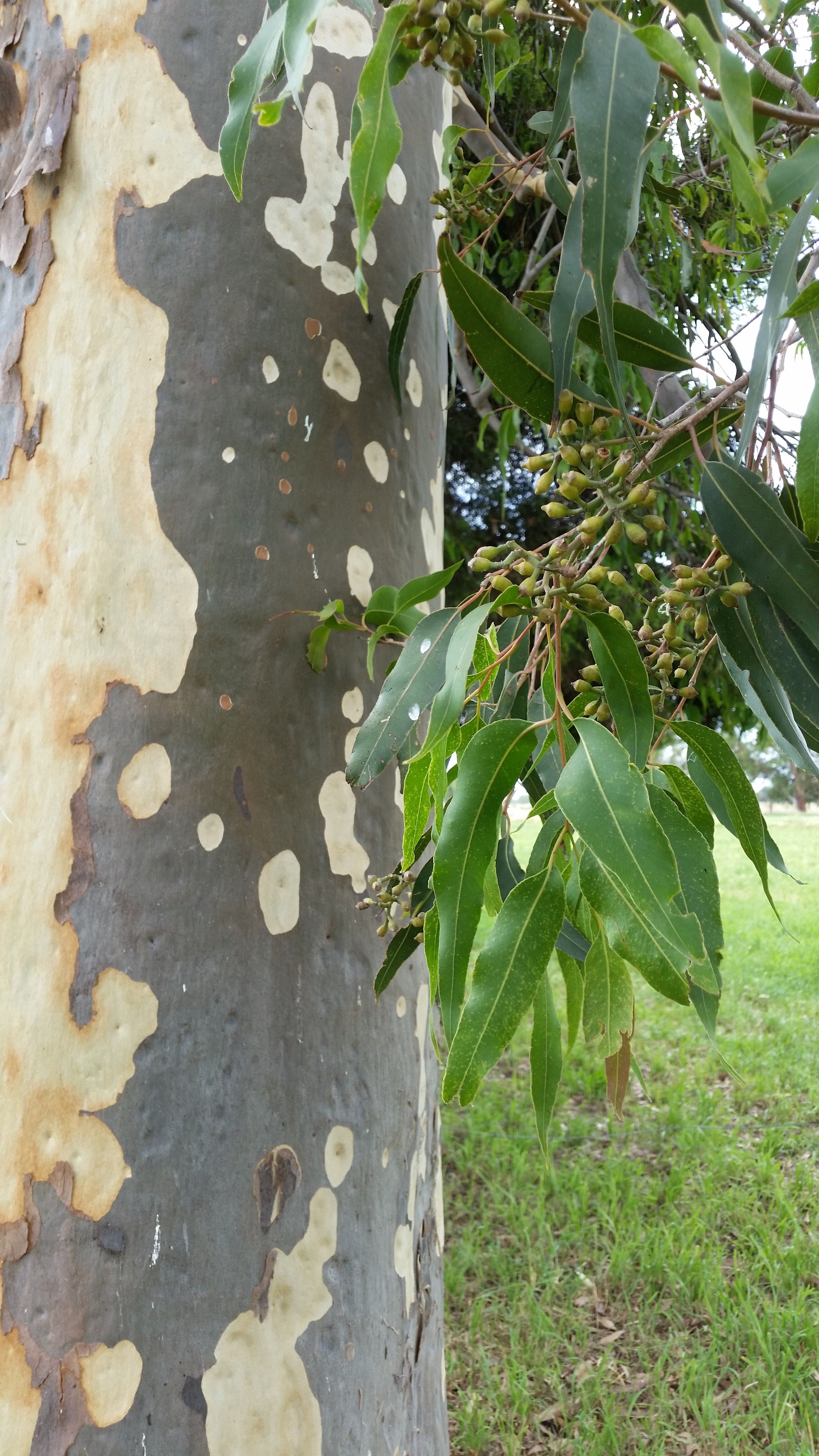
‘Corymbia maculata, commonly known as spotted gum, is a species of medium-sized to tall tree that is endemic to eastern Australia. It has smooth, mottled bark, lance-shaped to curved adult leaves, flower buds usually in groups of three, white flowers and urn-shaped or barrel-shaped fruit.’ [Wikipedia]
The popularity of Spotted Gum
Perhaps I’m in the zeitgeist, but the more I read, the more attached I become to the idea of Spotted Gum floors. One site insists they are ‘the pinnacle of Australiana in your home.’ Hard to go past that. The site then goes on to list ‘10 reasons why so many people are crazy about Spotted Gum flooring’ including ‘feel of prestige and very Australian’.
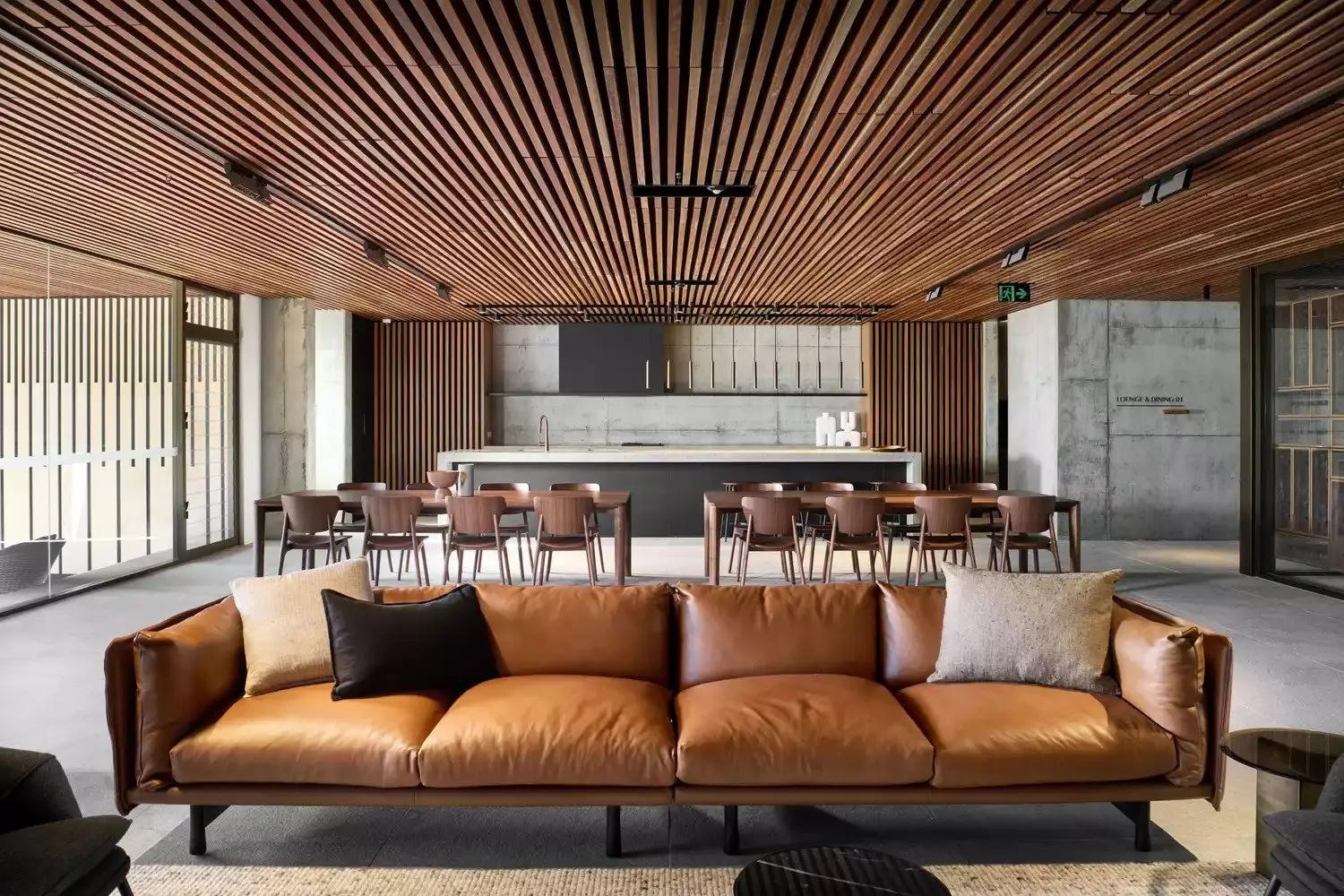
Here are spotted gum battens used on a fabulous ceiling
‘Colours vary from dark chocolate brown to light brown, with the sapwood being very pale. The Queensland kind … has deeper and richer shades of colour with more natural variations than the New South Wales one, which tends to be much lighter and more uniform in colour.’
I’ve convinced myself: solid wood floors in Australian Spotted Gum.
But on a concrete slab?
The new house in Normanhurst will probably be built on a concrete slab, a common contemporary building technique. Despite a prevalent misconception, solid wood floors can, apparently, be laid on concrete. However proper preparation is required. Moisture is the enemy of wood, so the concrete needs to be absolutely dry. A vapour barrier is recommended (6 ml polyethylene sheathing or asphalt felt layers with asphalt mastic). Then a thick wood under layer (remembering that this will raise the floor level measurement). [Info from this site].
Add to this the sanding and lacquering of the floor, you can see why solid wood is more expensive than engineered wood for floors. Hmm. In the end, budget may prevail.
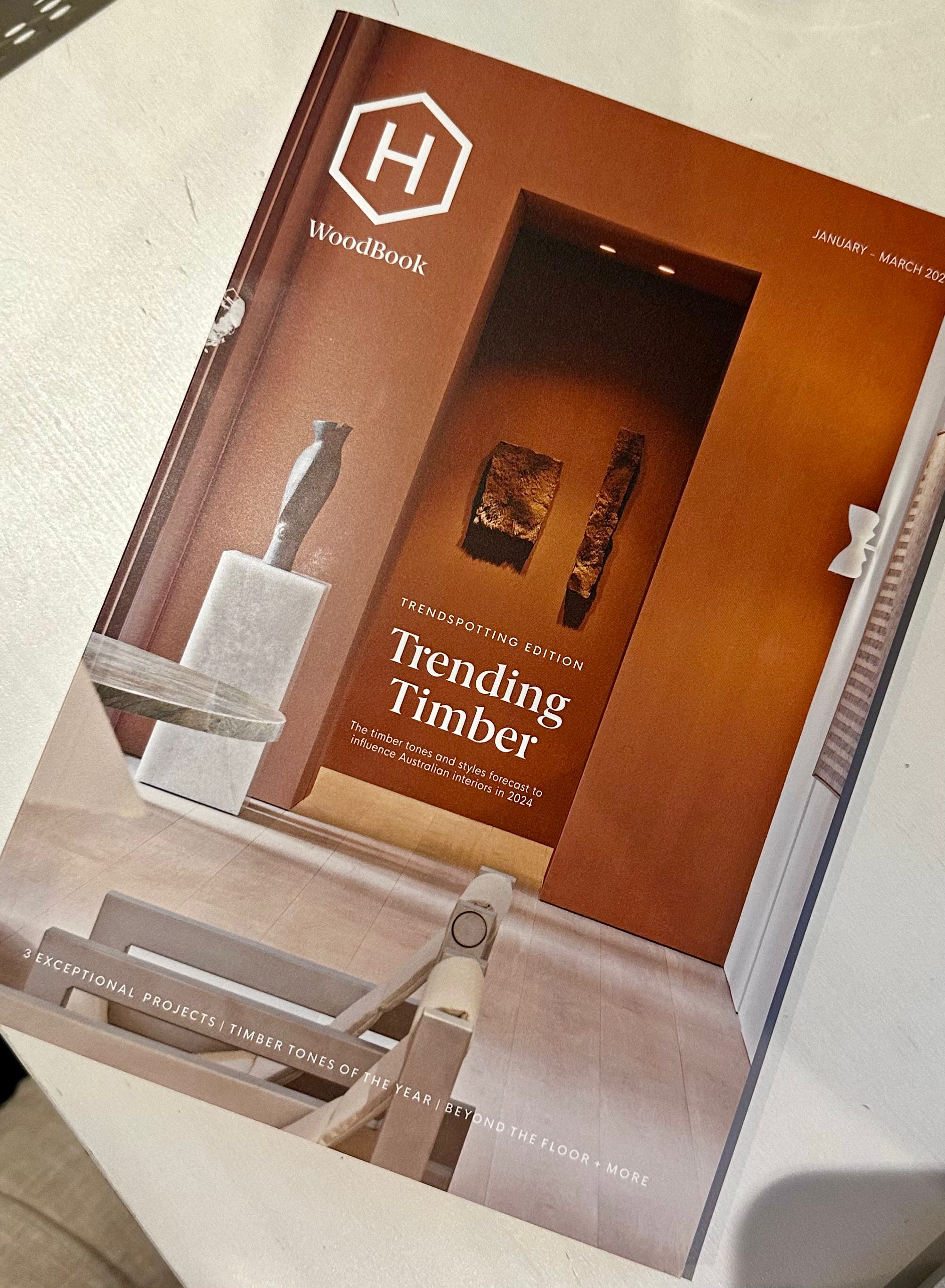
‘Trending Timber’
Other woody choices
Matt or gloss finish? Wide planks, like those lovely old ones in my last house? Or narrower, contemporary widths? Light, medium or dark tone? Pattern? Plank? Chevron? Herringbone?
Beyond the floor: wood panelling on the walls and ceilings? Wooden cabinetry, wooden bookshelves?
Sometimes I think it’s a good thing building design is a slow process with plenty of time to consider all the decisions. Other times, I wish I was moving in tomorrow.