
Finding a Builder
... the many pitfalls

Welcome back to How To Downsize 2026 edition, in which everyone devoutly hopes this house will actually, finally get BUILT.
Update—where are we at?
The Construction Certificate is SO close—just a few more fees to be paid. Everyone has their hands out at this stage: the Council, insurance company, the government. The final final step is appointing a builder, then the fees can be paid and the job can start.
My neighbours on either side are well past the lock-up stage, and I expect to see the moving vans at their shiny new front doors any day now.
My block remains an empty space full of possibility.
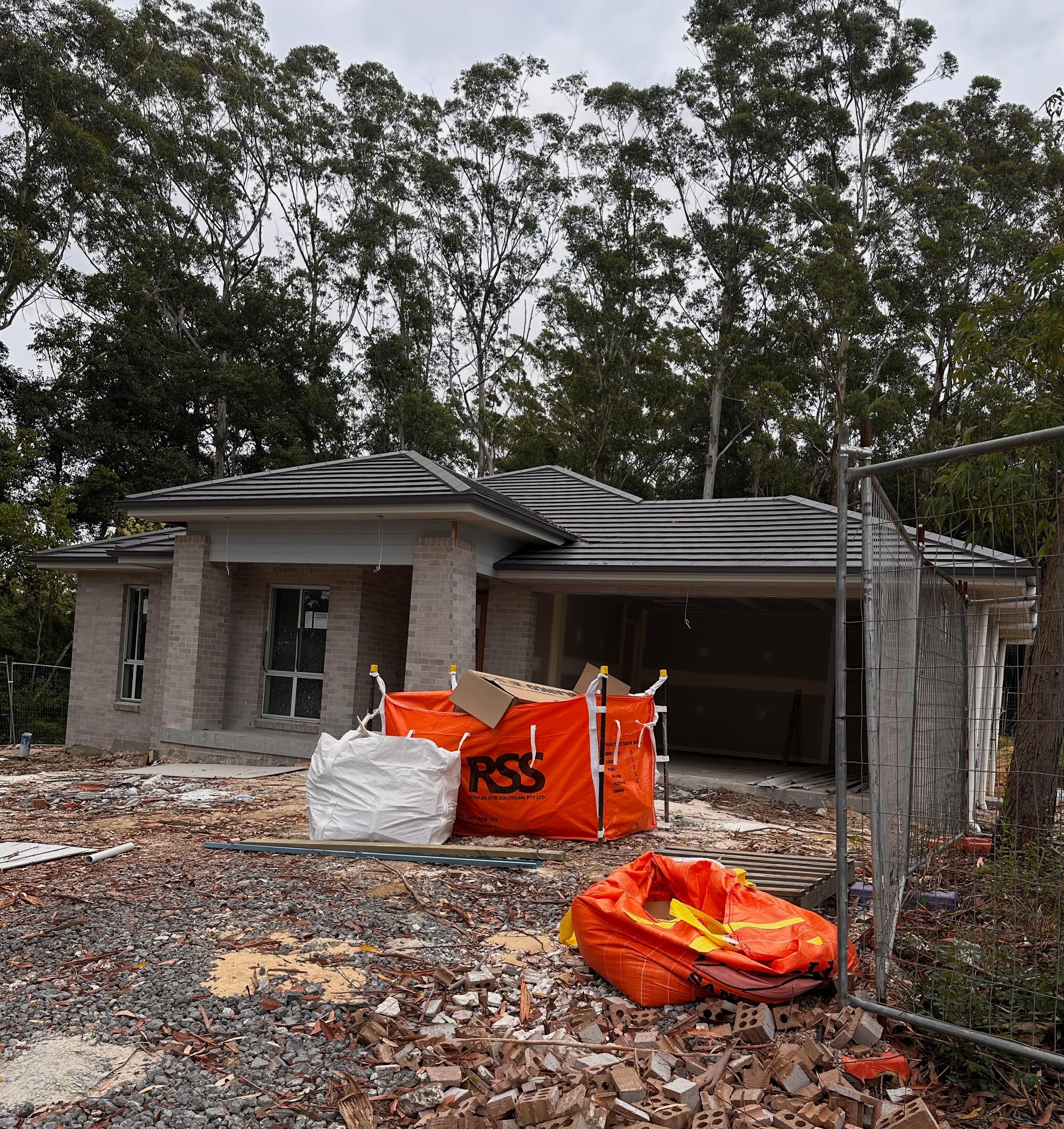
The neighbours: nearly done
Update—finding a builder
For the past six or eight months we have been working closely with a builder whose work we loved. He too worked hard, crunched plenty of numbers, made suggestions, and crossed things off my wish-list, but he couldn’t bring the project within my budget. So, after several agonising Zoom meetings and a few testy emails, we had to part company.
Lesson One: Don’t put all your eggs in one builder basket, no matter how many lovely homes they’ve built or awards they’ve won.
Lesson Two: Get the cost estimating going much earlier in the process.
Anyway, since the beginning of 2026 I’ve consulted with two more builders. Both of whom are local and do good work, and are available, and are keen to quote on my project.
One is a smaller, bespoke builder who is considering yet another passive house building option, to just to see if we can’t squeeze a really energy efficient house out of my budget. They hope to have an indication in a week or so.
The other is a somewhat larger scale builder (though not a project builder), who holds out hope of bringing the job in within budget provided the whole “passive house thing” is dropped. Still a 7-star energy rated building—just not passive house. No HRV, no blower door test. Also, no wildly expensive windows costing three times more than a European holiday. This outfit hopes to give me their final estimate next week.
Which would you wish for?
Read about the BASIX 7 STAR requirements HERE
Compromises
We’ve spoken to a third builder also (see Lesson One above) but he too couldn’t get it within budget without many exclusions—such as the joinery. Now, I can skip a few cupboards I guess, but the bookshelves are pretty integral. Delete the writing shed? The fireplace? Basically all the landscaping? One builder even omitted the driveway.
In response to this rather soul-destroying exercise, Evan and I have resolved to maintain our focus: how can we get this house built? What are our absolute bottom line no-compromise items?
Must stay:
The sandstone blade wall
The bookshelves
The ceiling heights
The shower courtyard
What could go:
Timber lining to the ceilings
The fireplace if it must
The shed (*tear*)
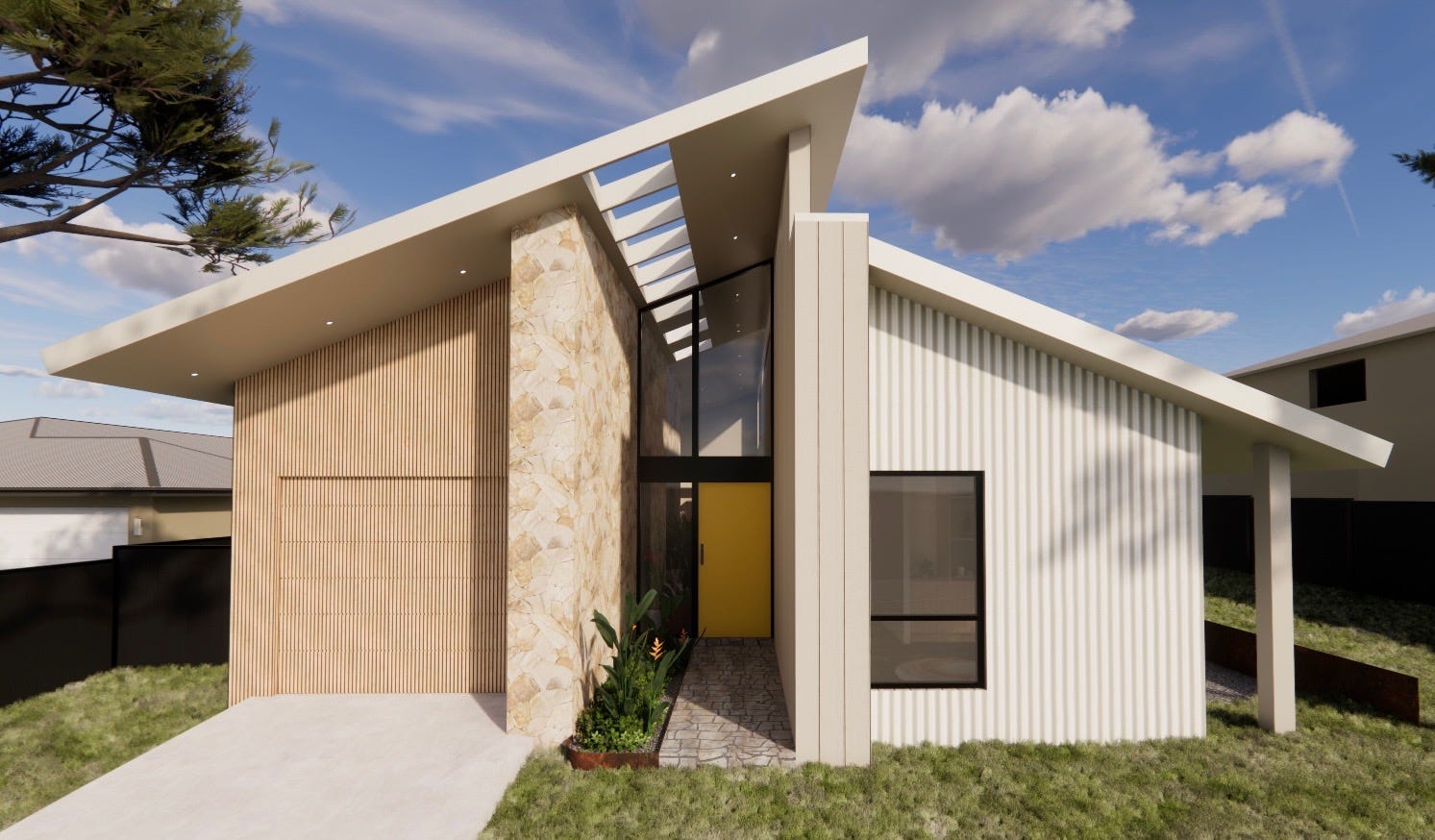
The sandstone blade wall has to stay
And the biggest, saddest compromise of all? The passive house construction. Because that adds, very roughly, at least $200,000-$300,000 to the build price. Maybe even more with proper thermally-broken windows. I could fuss about the bedroom carpet, or the benchtop selection, or a fancy toilet, but at the end of the day, those passive house panels are a much bigger sticking point.
The process of the last few months has definitely shifted from the aesthetics and the joy of design, to the nitty gritty of what it takes to actually build a bespoke house in Sydney in 2026. Fortunately some of the builders we are now speaking to have scratched their heads and come up with solutions to adjust our design wish-list without completely abandoning our design vision.
Example: vertical slats on the garage door? Bespoke and expensive. How about horizontal slats? Cheaper and easier, don’t require a custom door. Example: Hidden door joinery? Custom built and expensive. How about a proprietary hidden door system which would come in much cheaper? Example: Those foundations you’ve specified for the shed? We’d need to bring in a post hole digger. A simple slab would be much cheaper and easier.
These are the can-do, option-rich conversations we need to be having with builders right now, and I’m pleased to report that they are happening.
The good news!
There is good news (as well as lessons learnt). At least one of the builders now busily crunching their estimates thinks they can bring this thing in within budget without deleting the sandstone wall, or the fireplace—and can even include the shed. Provided it’s a “traditional build”. Right now, a traditional build is looking better than no build.
The budget grind
You may think my budget must be wafer thin. It’s true that I’m not in the $5m range. On the other hand, I’m hoping to build a fairly modest 200 sq m single story house, equivalent to a three bedroom, on a clear, flat block with good access, in Sydney. It’s not even to be built of bricks. How much should that cost?
Often the builders I’ve spoken to have used the line “you could do this later”, as in “you could put in a solar system later”, or “you could build a shed later”. However, given that this house is being funded from the proceeds of the last one, and no one is going to lend money to a person of my age with no employment to speak of, there is no “do it later”. If it’s not done from the existing pot of funds, it’s probably not going to be done. I’ve built houses before in my life, back in times when I was in gainful employment and there may have been an opportunity for a slightly larger mortgage to cover shortfalls. This is not then.
I’m confident we can do it, one way or another! However, you might all be invited over to help me DIY the landscaping.