Field Trip
Visiting a Passivhaus

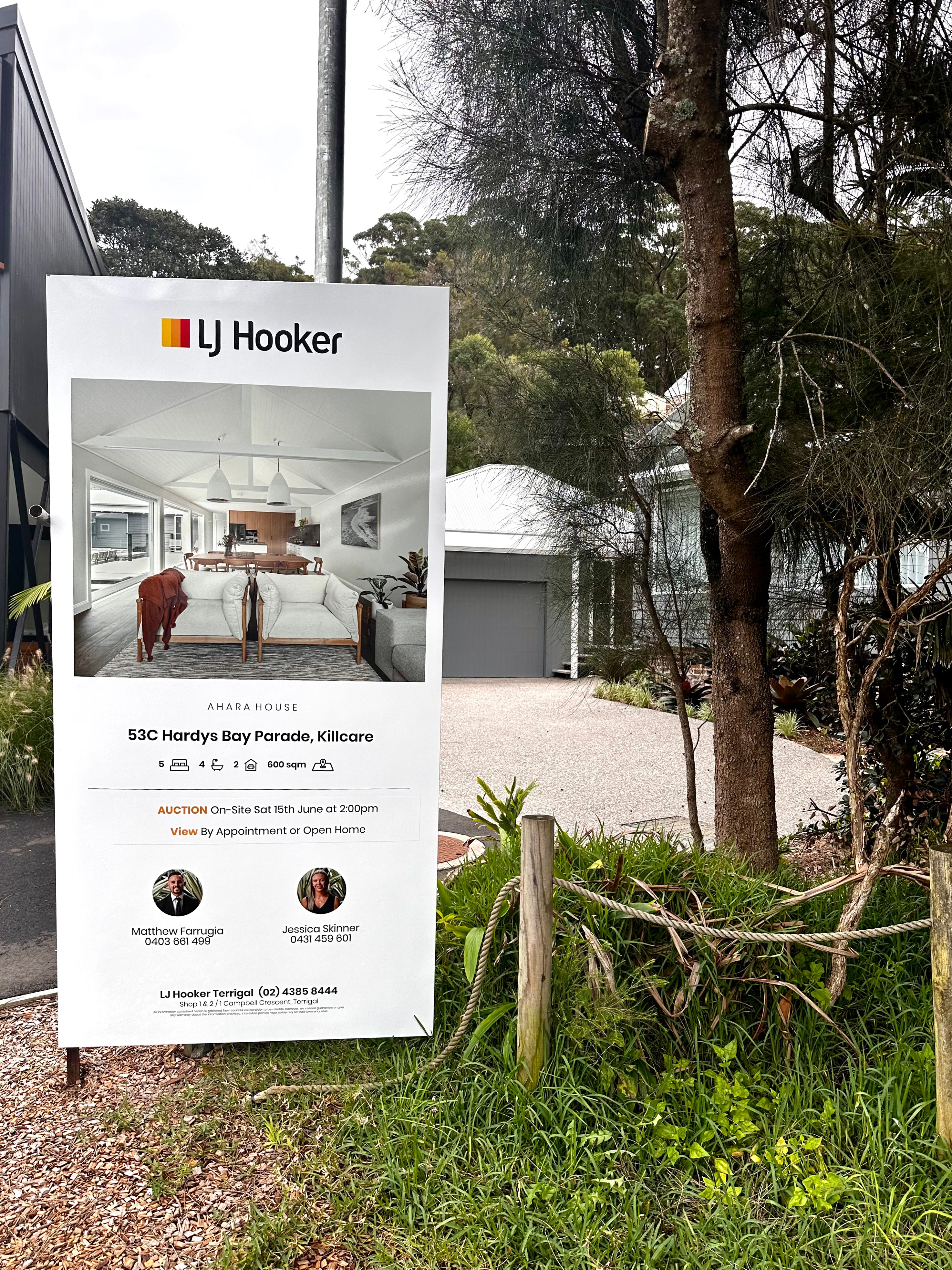
Passivhaus construction for residential houses is growing in popularity, yet there are still few completed buildings. So when one was listed for sale, we became interested visitors.
Field Trip
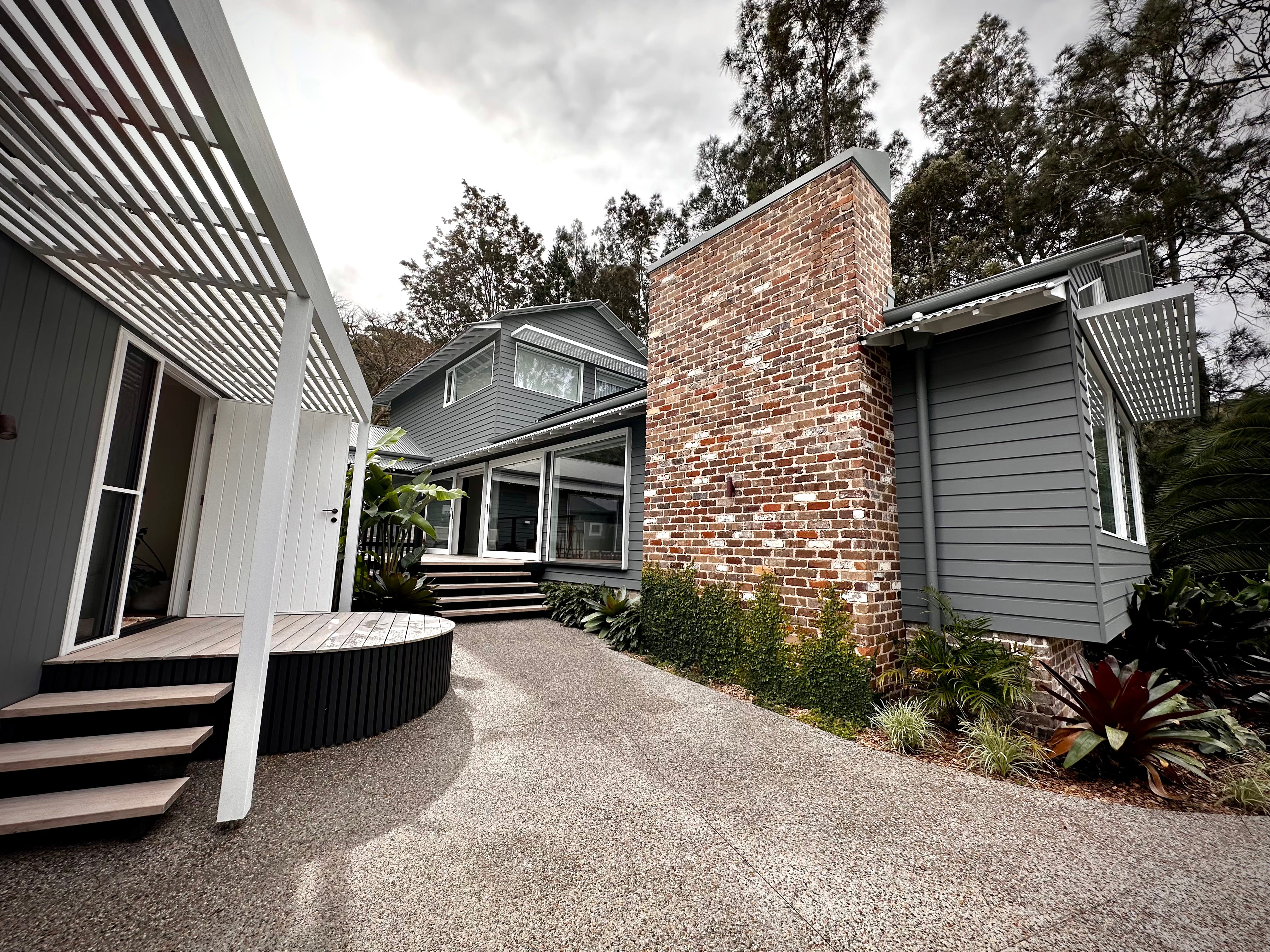
This involved a 1.5 hour drive to the NSW Central Coast and masquerading as potential buyers, but the field trip was worth it. The house in question is five bedrooms, built near the water, and has been available for lease as a holiday house. It’s spread mainly on one level, but has a master bedroom and ensuite on an upper floor. There’s a mineral plunge pool and an infra-red sauna, adding to the spa resort vibe. The place is rather gorgeous. It’s up for auction soon.
Ahara House
According to the real estate blurb, the house has been selected for the 9Life TV show Australia’s Best House, so keep an eye out for that. It’s called ‘Ahara House’ and you can tour its website here.
AHARA: a Sanskrit word for inspiration and breath.
Who built it?
The house was built recently as a collaboration between Lou Projects and Luke Farrugia Architect. Lou Projects, the builder, is based on the Central Coast and according to their website they try to ‘build with a conscience’:
We’re constantly educating ourselves and searching for options to ensure we build more sustainable homes using the best techniques and materials available. During the building process itself, we consider the environmental impact of the materials we use and how we manage waste onsite. We source local and sustainable materials as much as possible. We pride ourselves on keeping our worksites clean and tidy throughout the entire build. We ensure waste is minimised and everything leftover is reused or recycled.
The architect too is Central Coast based:
Established in 2016, Luke Farrugia Architect is a design practice based on the Central Coast of NSW. LFA designs new houses, alterations, additions and small commercial projects throughout the Central Coast, Sydney and Newcastle. We aim to achieve simplicity, light and quality of space coupled with intelligent and passive environmental design on every project and our approach is always collaborative.
The interior design, contemporary and beige, is by a Newcastle firm, Pair Design.
What was the brief?
The builders’ website is full of useful information for people embarking on their own Passivhaus journey.
Ahara House is a healthy and high performing home that prioritises energy efficiency and mould prevention. The house exceeds standard building practices with its completely waterproof and airtight building envelope, effectively safeguarding against moisture and humidity infiltration that can lead to mould growth and structural damage.
The ventilation system
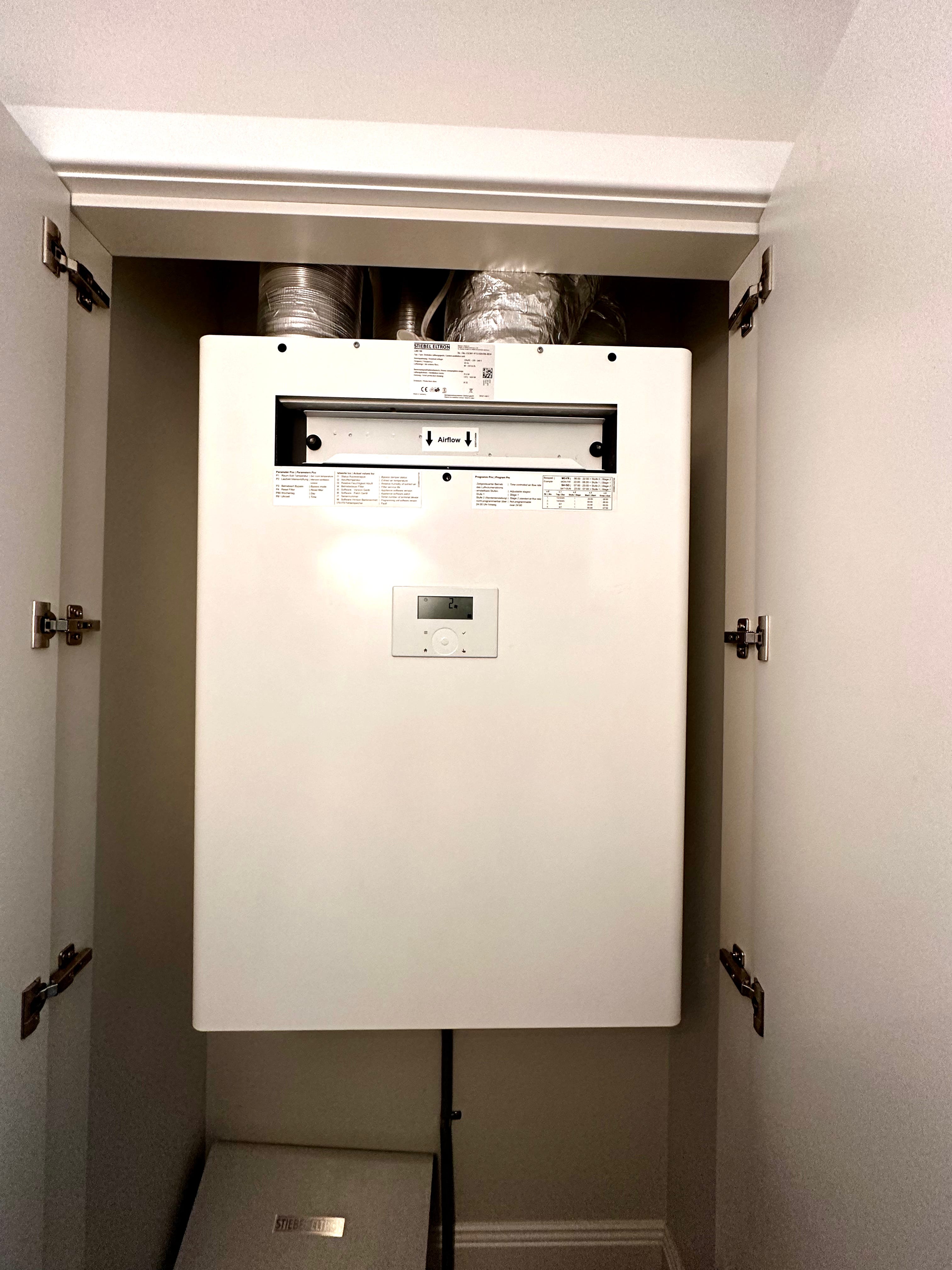
To ensure superior indoor air quality, the house is equipped with a whole-house HRV (heat recovery ventilation) system, from Stiebel Eltron.
This advanced system continuously removes stale, moist air from inside, while introducing filtered, fresh air from the outside. The integrated filters effectively eliminate various pollutants, such as pollen, bacteria, smoke, smog, and mould spores. With the ability to adjust the incoming air temperature based on the season, the HRV system provides a consistent supply of clean, filtered air at a comfortable temperature throughout the year.
We had our eye out for this feature! Ducts above the kitchen bench ventilated the large combined living space, and in the bedrooms and hallways we noted small round vents.
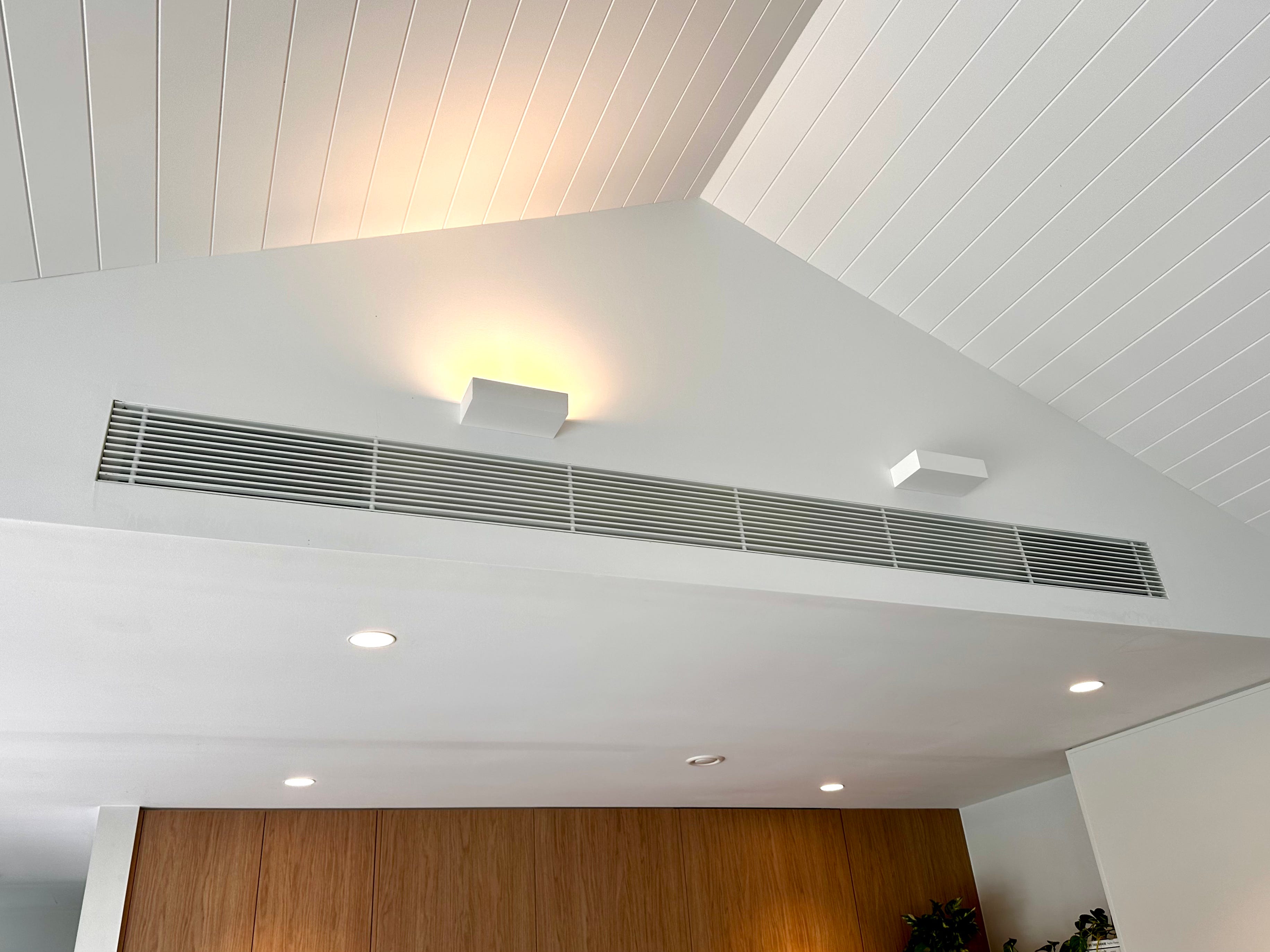
Opening a cupboard at the end of a hallway, opposite the European-stye cupboard laundry, we found the machine itself.
Other cool things
Additionally, the entire house is outfitted with a Puretec WH2-60 water filter, featuring a dual filtration system that removes chlorine, chemicals, and sediment from the water supply. This ensures that every tap in the house, including showers and sinks, delivers filtered water, offering benefits such as healthier skin and hair, a stronger immune system, and increased wellbeing.
Hmmm … water purification. A feature I hadn’t yet seriously considered. *adds to To Do List*
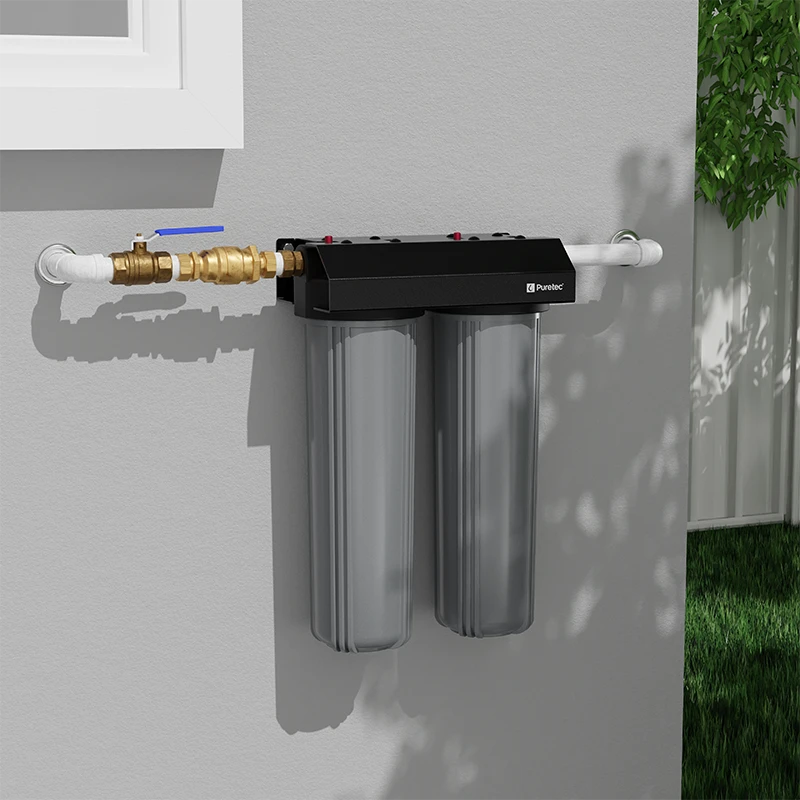
Water purification: Image from the Puretec website
The SIPs
We knew this house was built with SIPs. In fact, SIPs are used for the entire construction: all walls, ceilings and floors. The house is raised from the ground on steel piers (possibly because of its proximity to the water—a creek flows down one side of the block). Excitingly, this meant we could peek under the house and see the SIPs in situ. I have to say, we were the only visitors inspecting the house who seemed excited by that prospect.
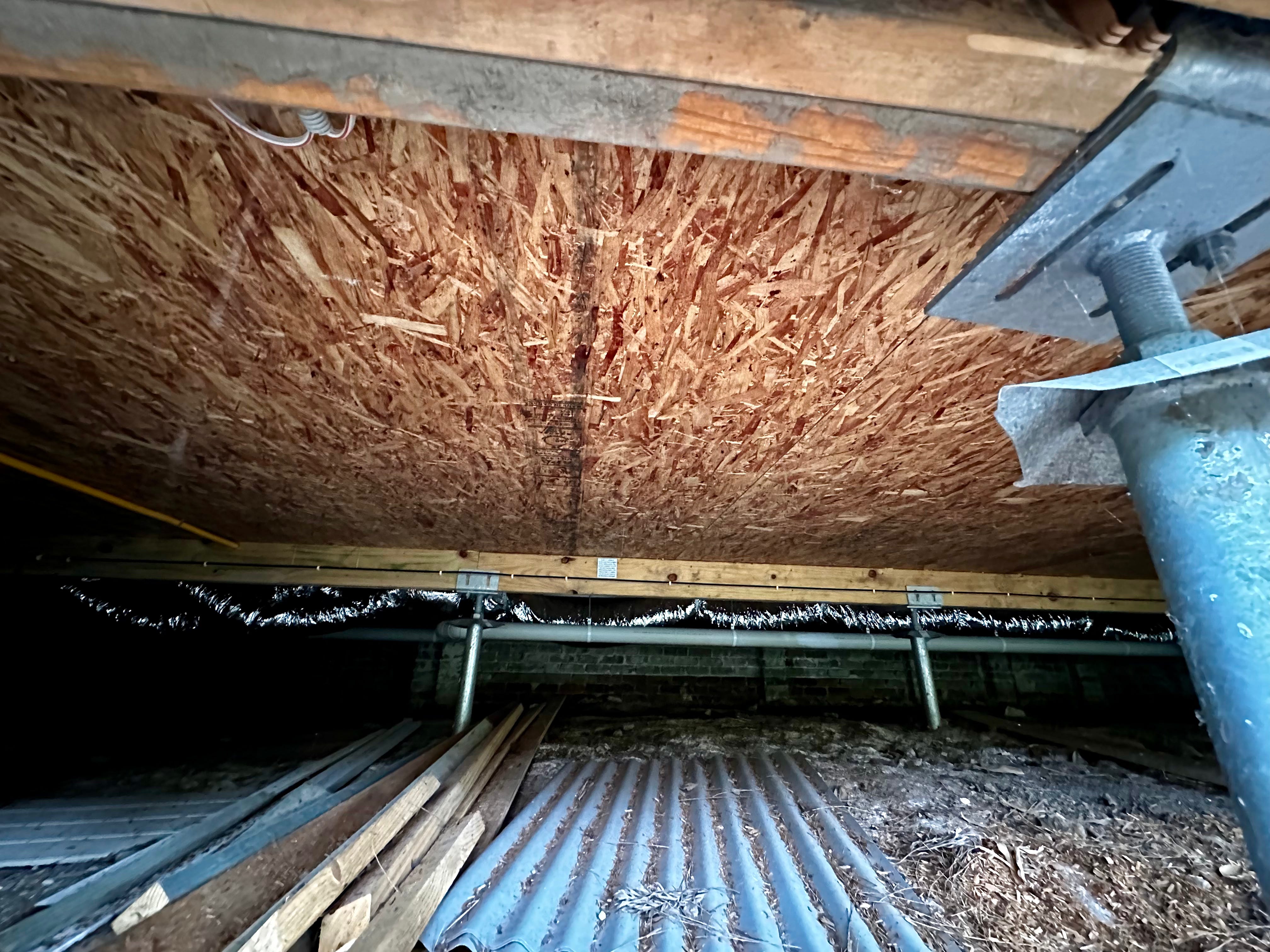
Ahara House prioritises energy efficiency and comfort through exceptional insulation. The use of SIPs (structural insulated panels), sourced from Smart SIPs Australia, provides a highly insulated, airtight frame that enhances durability and energy efficiency. The majority of the SIPs panels used in Ahara House boast an impressive R-value of 8.2, with others ranging from R-values of 6.2 to 4.2. This significantly exceeds the insulation levels of traditional construction methods.
As regular readers will know, I’ve already done some research on the SIP revolution, so all this talk of R-values impresses me!
Doors and windows
To further enhance thermal performance, the house features timber-framed double glazed windows and doors, sourced from Windoor. Timber naturally provides insulation, minimising heat/cold transfer between the interior and exterior. Coupled with double glazing, these windows and doors contribute to a high performing, energy efficient environment, keeping the home warm in winter and cool in summer. The inclusion of quality airtight seals ensures minimal air leakage and maximises energy efficiency.
I looked up Windoor – they are Sydney based, and have a showroom in Willoughby *adds to To Do List*
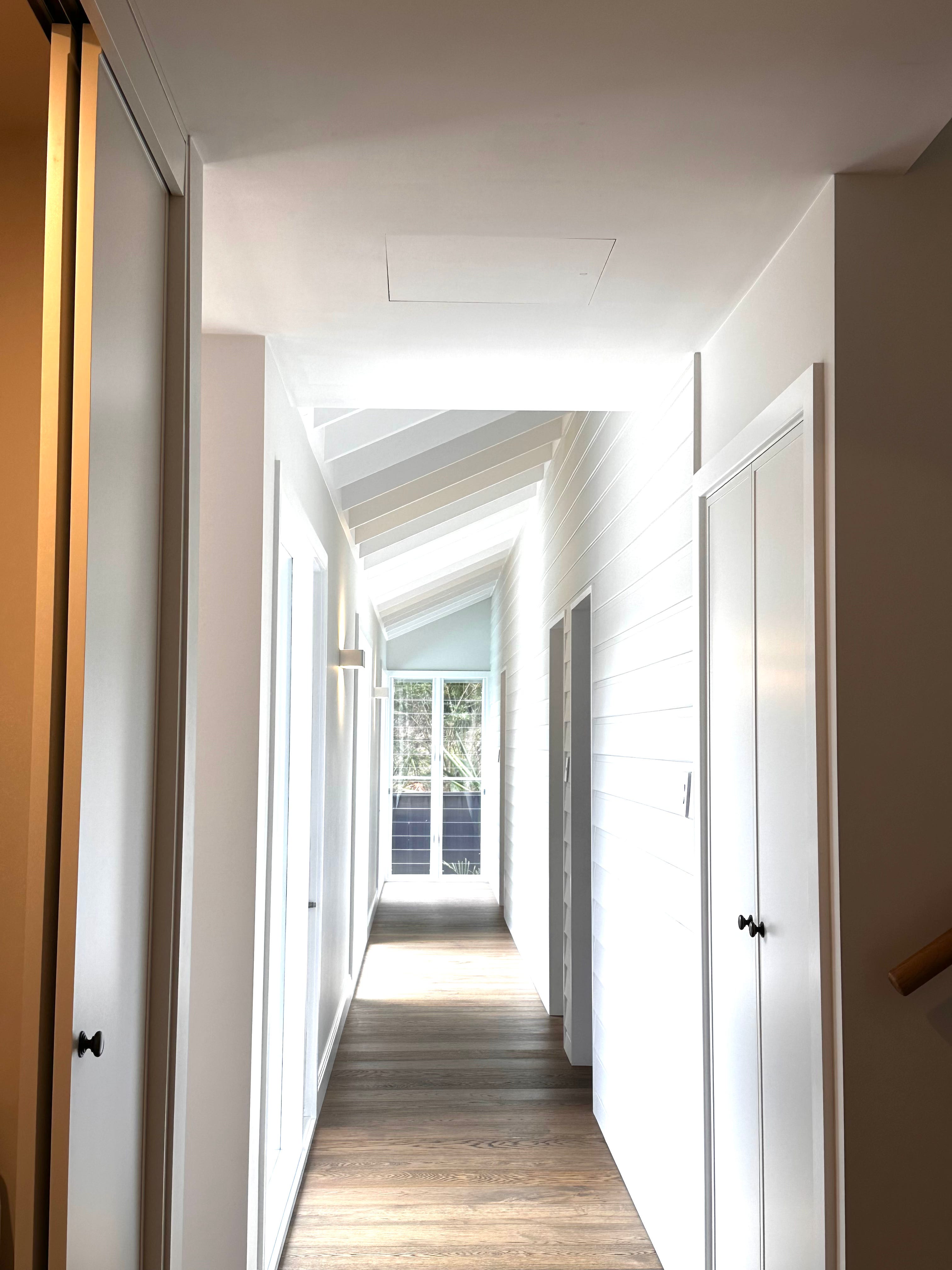
Interestingly, at each end of a long hallway which runs the length of the house, louvered windows have been installed. Since a Passivhaus is deliberately built to be sealed up, this window choice must have been made to allow the ‘purging’ of the interior air if it gets too warm, allowing a flow of cross-ventilation. Clever! Do we need this?
The Exterior
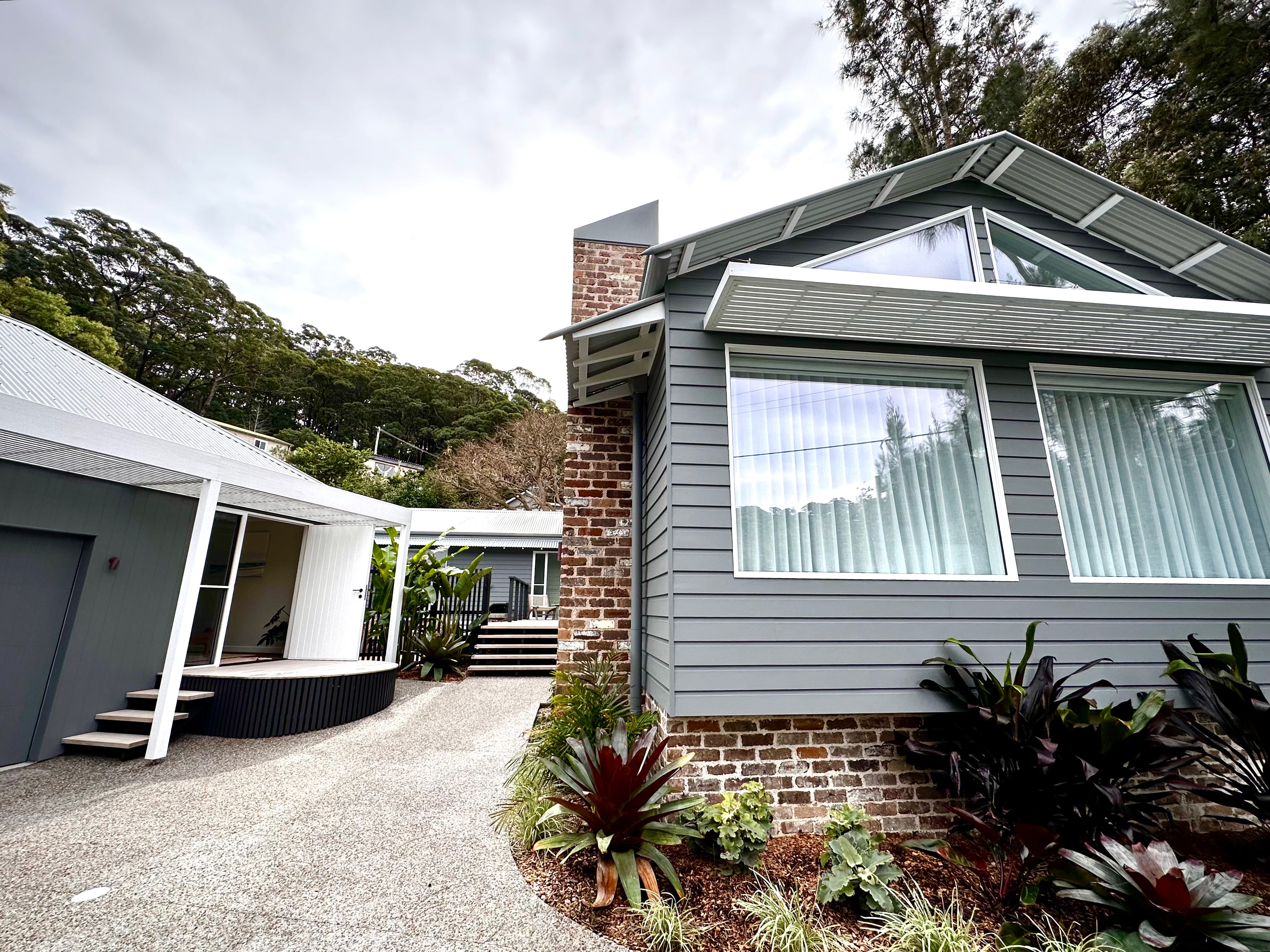
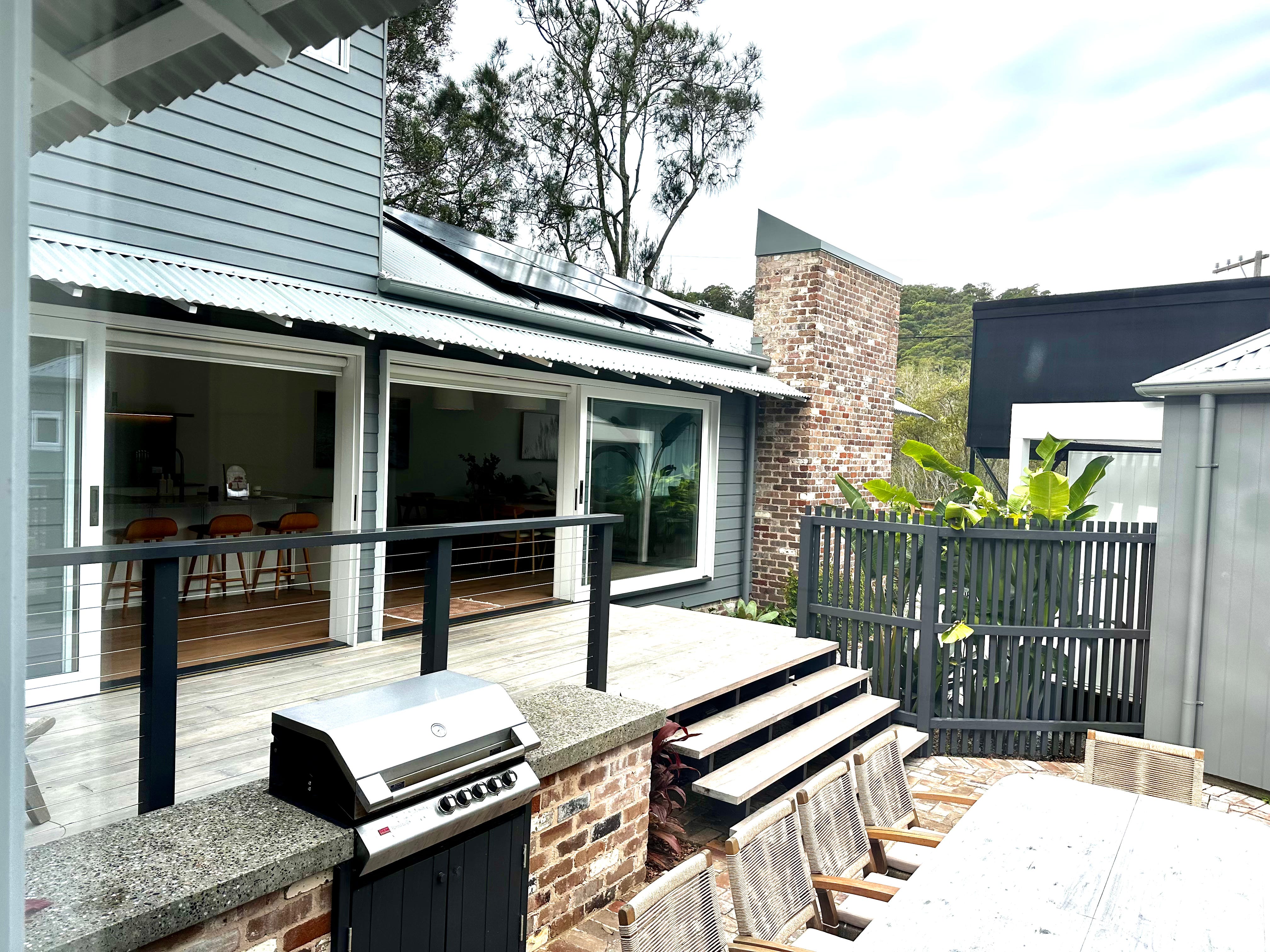
The house is built principally of timber, boards of engineered wood over the SIP panels. In places, exterior brickwork has been added—for an over-sized chimney, and to hide the space under the house in areas where it would be visible. The windows and doors are timber-framed. The aesthetic effect is lovely, but I see a lot painting in the future.
The roof is of Colorbond steel in a white shade with a corrugated profile—that would be my choice to. Reflective, and a nod to traditional Australian rural architecture. The house also has odd little awnings added to the eaves, purely for decorative effect. We speculated that, in rain, the house would be surrounded by a cascade of water.
And of course there’s a solar array on the roof.
What was it like inside?
Because the real estate agent was welcoming prospective buyers, he had the two big sliding doors from the living area to the outdoor entertaining area wide open. So it conditions were not optimum to ‘feel’ the effect of a sealed Passivhaus. But walking through the other rooms—mainly bedrooms—the interior had a sense of solidity, and was certainly very quiet. Outdoor sounds were muffled.
The interior decoration is staged for potential buyers, and possibly for guests of the house in its B&B persona—very elegant and comfortable, with none of the family mess common in a well-lived-in house.
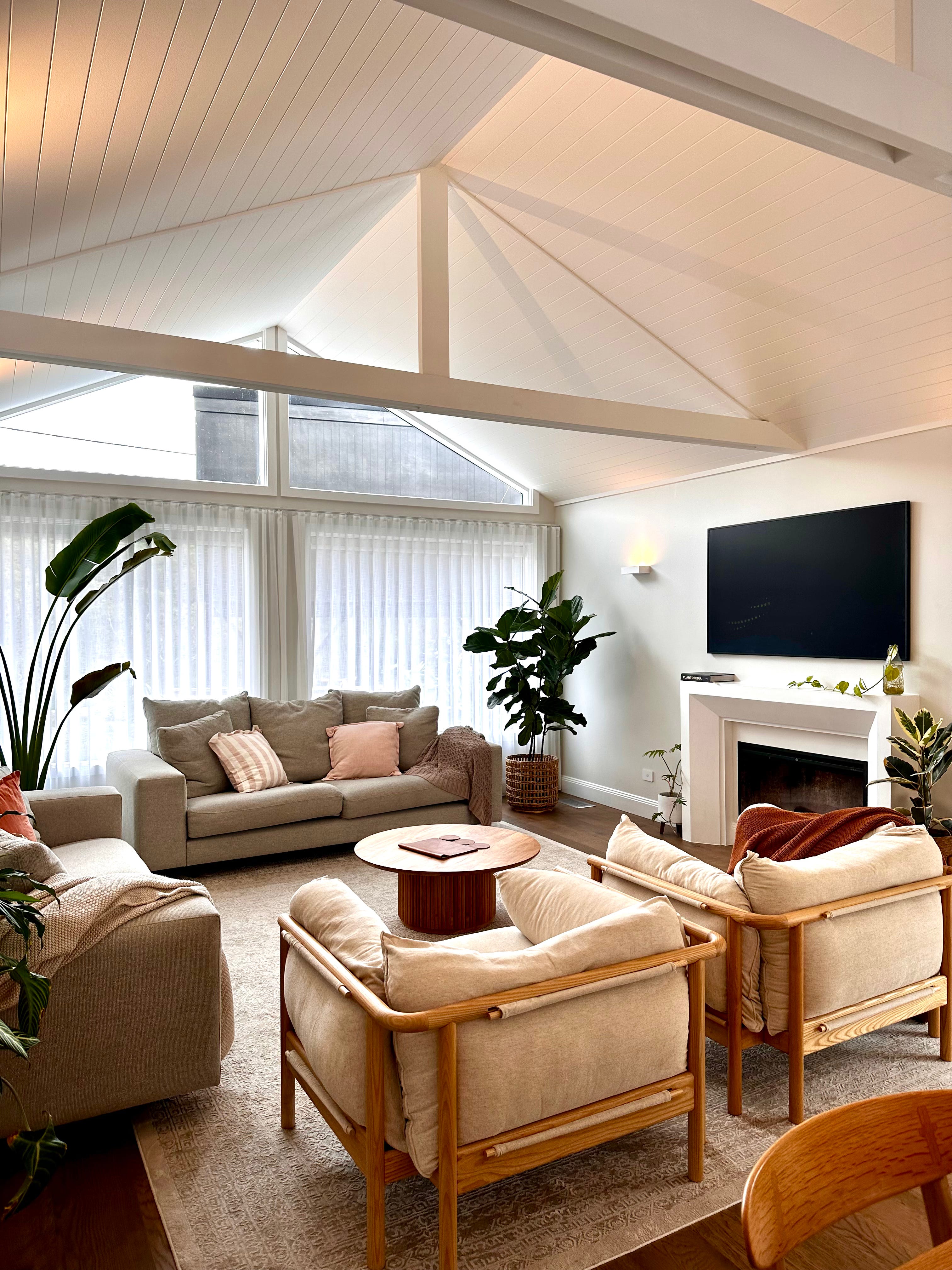
We liked some design features, such as the shelving in the secondary bedrooms, and the windows to a tropical-style garden. The kitchen boasts a hidden butler’s pantry.
We puzzled over some other design choices, such as the large bathroom area leading to the infra-red sauna, which seemed detached from the other rooms. And we decided we preferred doors on wardrobe joinery.
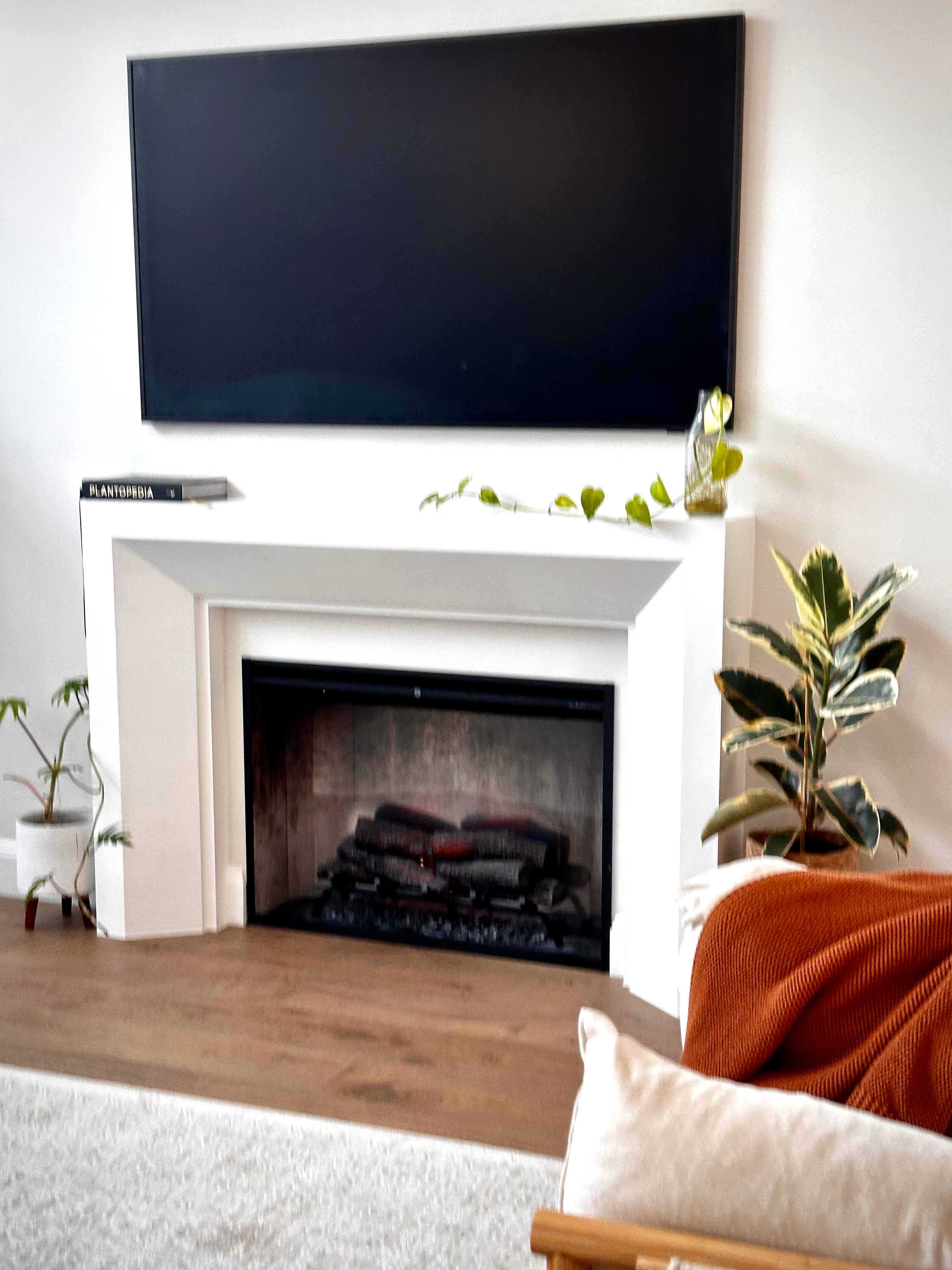
And there’s a fireplace! In fact, there’s a massive brick chimney which forms a feature of the exterior design of the house, though the fireplace is electric: a fake flame and a blow heater. Still, it looks good. Cosy. Should I re-think that cold fake flame idea?
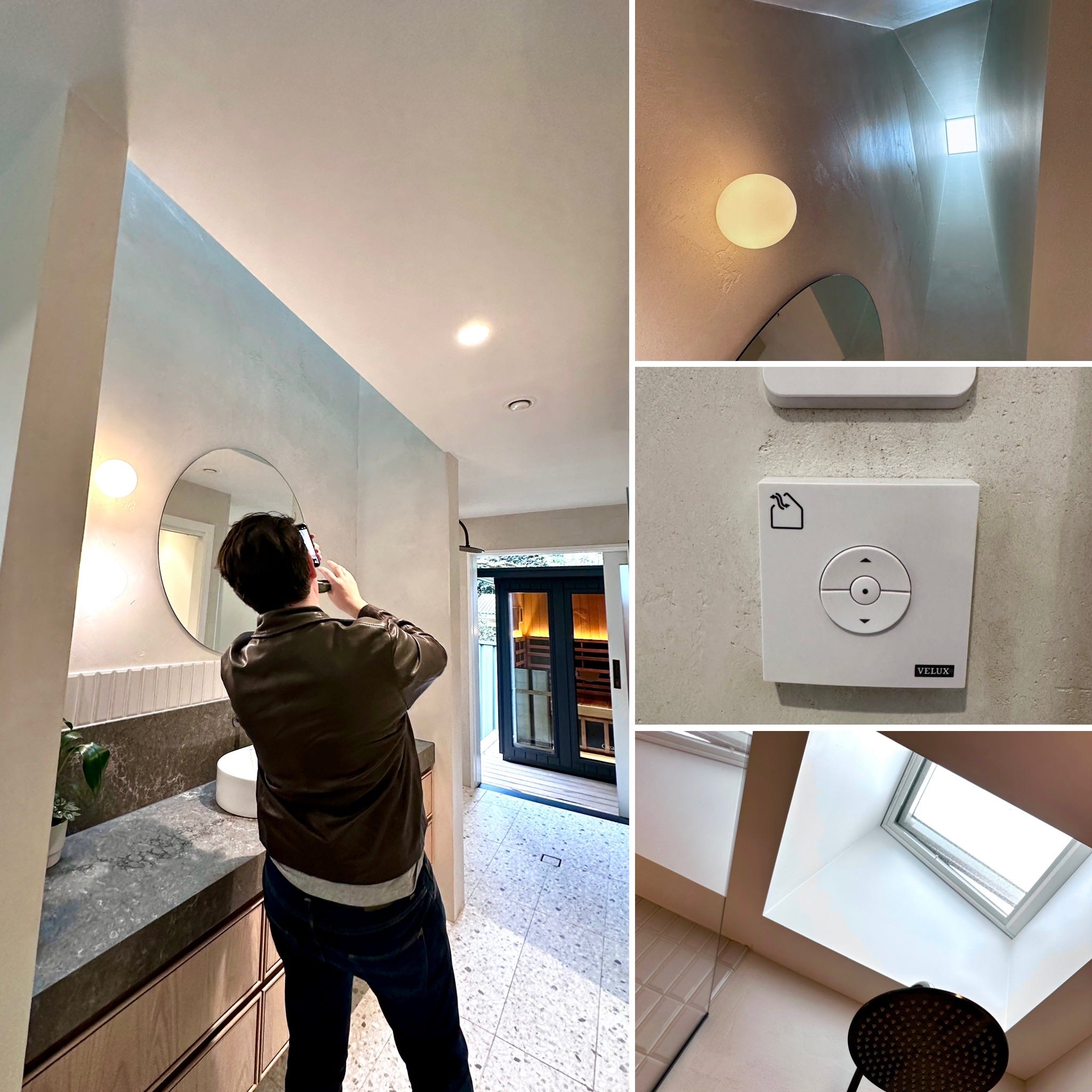
A couple of the bathrooms had long skylights for light, some with Velux fittings which could be opened electrically. Is this the solution to ventilating bathrooms in a Passivhaus?
Conclusion?
A lovely house, built around the concept of multiple bedrooms, contemporary design choices for a waterside spa-style retreat. Lovely comfortable living areas.
Ideas generated: Use French doors instead of big, heavy sliding doors. Electrically-operated skylights for the bathrooms? Investigate water purification. Think harder about the fireplace choices. Follow up on the suppliers.
And love the SIPs!