
Dream Kitchen
The Oven Demo

In Chatswood there’s a showroom for Miele, the German manufacturer of household appliances. There you can find a demonstration kitchen where a helpful chef will demonstrate the ins and outs of a bank of EIGHT different ovens—and that’s a mere selection of the Miele range. Help!
As compensation for the technical overload, the chef will also give you fresh-baked food. And a recipe book. It’s not all bad. In fact, I’m joking—it’s fabulous. Who knows if the budget will run to these high-end appliances? A gal can dream.
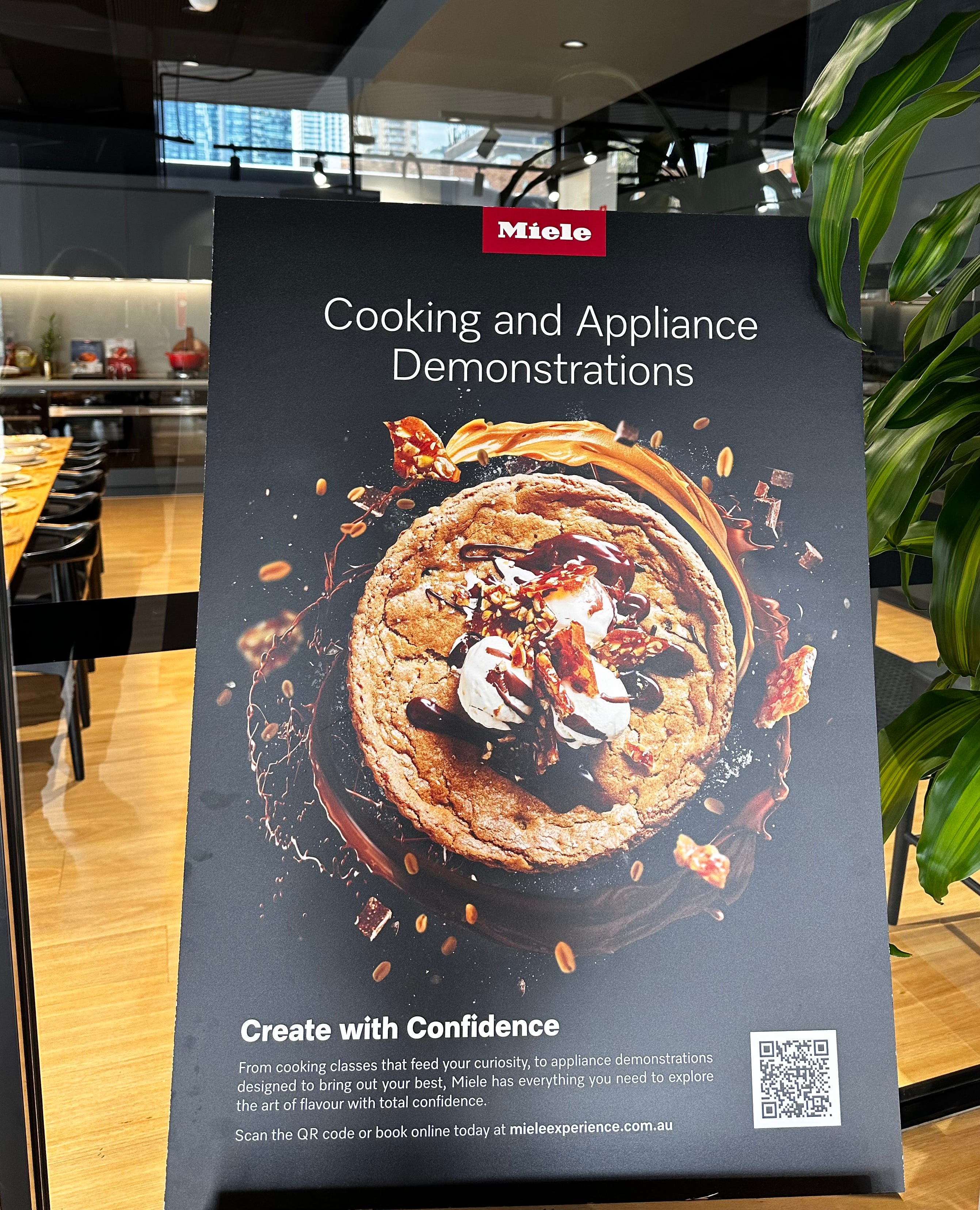
The appliances
The demonstration session I attended focussed on the ovens: conventional, and steam, and various combinations, and induction cooktops. Miele also make all the other things: dishwashers, fridges, laundry appliances. It’s doubtful my budget will encompass an all-Miele house, but I’m keen to see if I can afford/need their fancy cooking equipment. It seems marvellous in its wizardry.
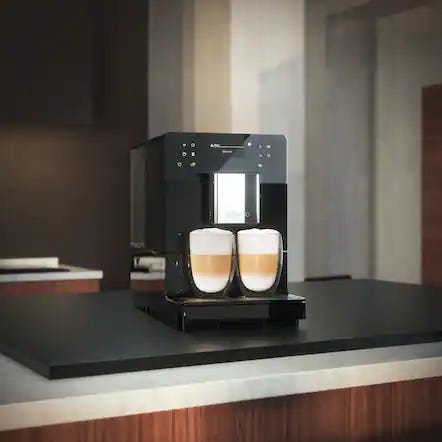
I’ve already bought a Miele coffee machine, because, you know, first things first.
The cooktop
Having decided that the house is going all-electric, an electric induction cooktop is the choice. The Miele range comes in three widths: 60 cm, 80cm and 90cm. The kilowatt power of each of these varies, with the 90cm being the most powerful.
Then there are three ‘styles’: cooktops with zones (you match the pot to the ‘zone’ size), something they call ‘Powerflex’ which has two wide zones on which you can place the pot in any location and the cooktop automatically senses which part to heat; and the ‘Full Surface’ where the whole expanse of the cooktop does this same clever thing. You can shove a whole cluster of pots and pans on it if you need to.
Basically, the stove thinks for you. That’s my takeaway.
One of the stove’s cool tricks is the ‘boost’ function—works best with the higher kilowatt models—which can heat a pot of cold water in less than two minutes. This was demonstrated to the amazement of onlookers.
Then there’s the model with the down-draft extraction fan built into the cook top itself. I fancy this one—it avoids the need for a big ole overhead extraction unit. It surges into action when it senses there’s steam to extract. I told you the stove thinks for you.
The ovens
I’m simplifying here, necessarily—Miele has a 2000 series at a lower price point, and a 7000 series at the Rolls Royce price point, plus multitudinous variations and options, such as four varieties of handles, or no handles, or different interior finishes, and masses of accessories. After a while it comes to seem impossible to choose. But choices must be made when building a new house. In fact, it’s my main role in the whole project. So despite being not-much-of-a-cook I listened and learned.
Conventional Ovens
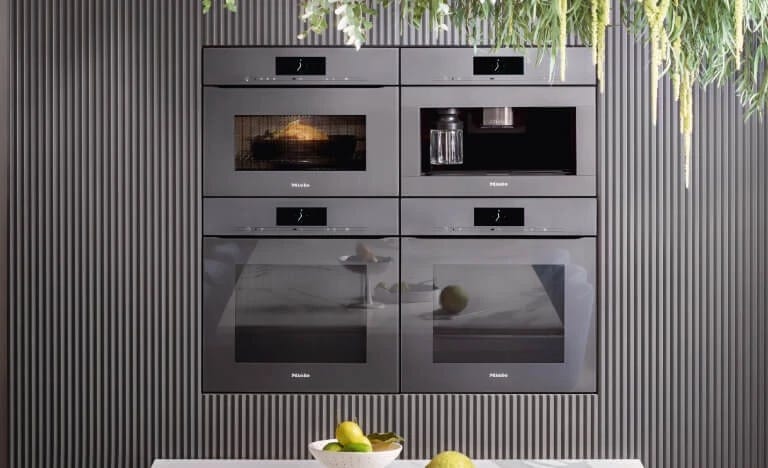
Miele make ‘conventional’ ovens, though the term doesn’t do justice to these engineering marvels. The demonstration kitchen has a bank of no fewer than EIGHT on display, and in use by Chef Michelle. The only one she didn’t investigate in detail was a beauty she called ‘The Dialogue’, the absolute Lear Jet of ovens, apparently. She told us it was ‘popular’—then amended that by admitting they’d sold only five in Australia.
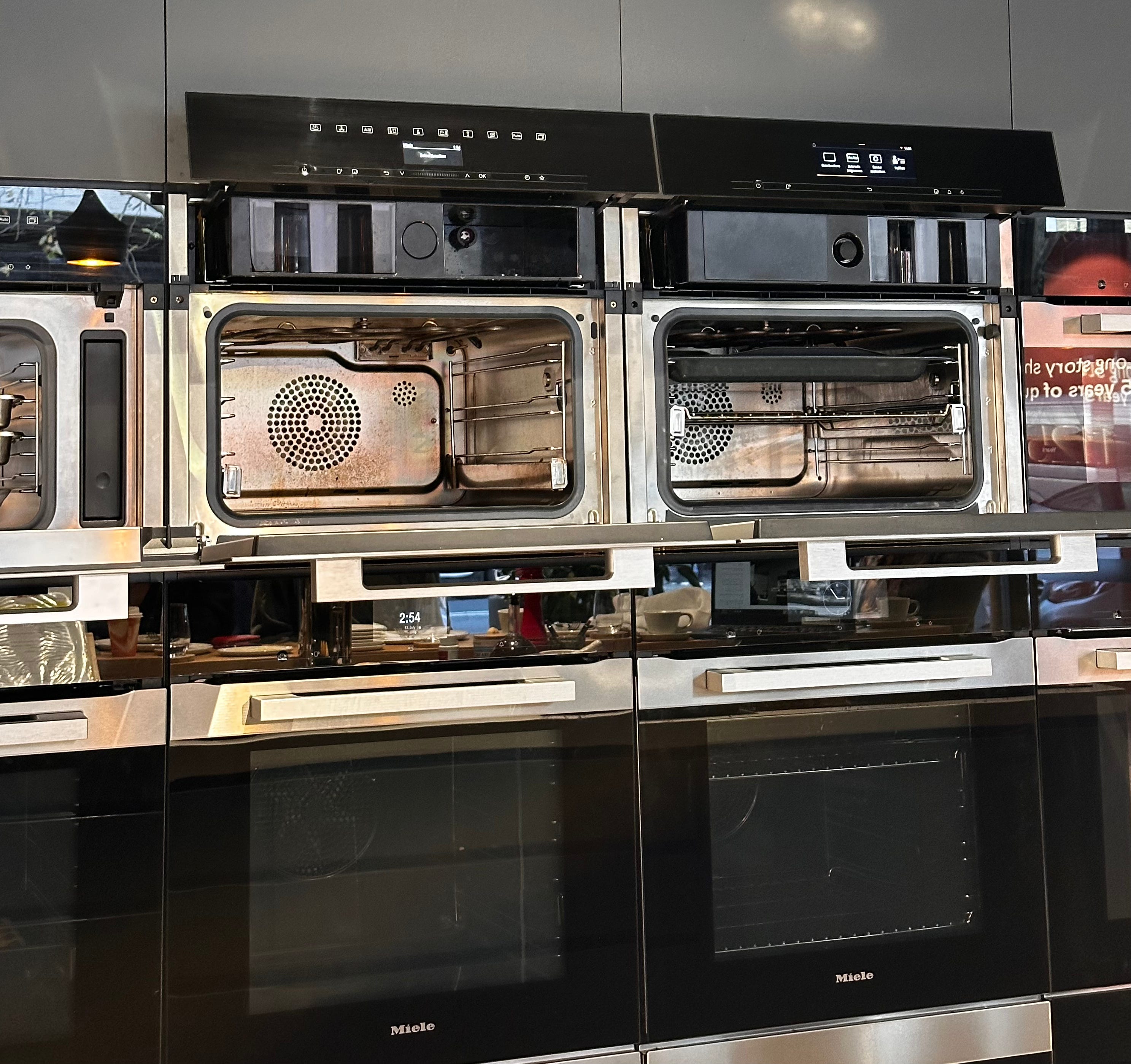
We moved on, and investigated all the many functions of the oven (I took notes), the auto cleaning features (something called ‘Pyrolitic’ Clean’ does what it sounds like it does: heats the oven to 450 degrees to blast it clean). Naturally the 7000 Series is connected to the internet and uses wi-fi. They will all do things automatically for you, even advise you how to concoct a meal out of whatever you have in the fridge.
The difference between the ‘economy class’ series and the ‘business class’ series seemed to be snazzier displays, more automatic programs (up to 150 compared to a mere 40), fancy cleaning options, and a few extra tricks.
How about steam?
For all the information overload, I did come to one conclusion: my life won’t be complete without a steam oven. Not that I’ve ever had one in my whole life until now, but hey. I can keep up with new technology (though steam ovens have in fact been around for decades, I learnt).
Even Miele’s conventional ovens have a ‘Moisture Plus’ function which adds steam to the cooking process. How have I ever cooked anything without this feature?
Miele makes a conventional oven which has ‘limited steam’ function. Then they have the super-duper 3-in-1 Pro steam oven, which combines steam, conventional cooking in its whole spectacular array of functions and programs, and the ability to use these two cooking methods together.
Wow.
I learnt that steam cooking is great for fish, shellfish, and chicken. Steak and salmon are apparently divine when cooked this way, then seared off on the stove top. With a steam oven, you can sous-vide (sous-vide bags, and gadget for sealing the bags, sold separately).
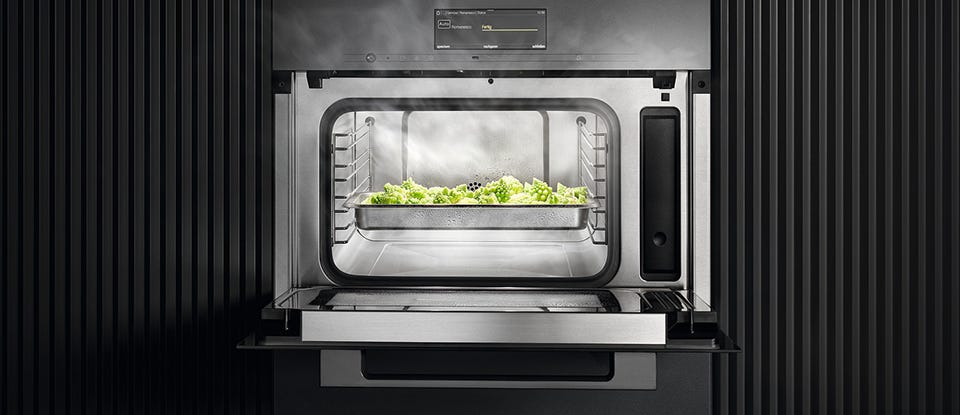
Adding moisture is also, it seems a must when cooking bread rolls, crispy pastry (as in the demonstration sausage rolls served). It creates lighter cakes, crisper pastry, with no drying out. It’s good for roasts, leaving them tender, with well-rendered fat and crisp skins.
(By the way, all the ovens come with a meat probe, which will turn off the oven when the meat reaches the desired temperature. Thinking for you.)
Praises were sung of risotto cooked in a steam oven. Not that I eat risotto, but I was already sold by that point.
What about a microwave?
It seems that a simple microwave which does nothing else is now old hat. Miele offers the option of a steam oven which doubles as a microwave. Or a ‘Speed Oven’ which is a both a microwave and a conventional oven with all the bells and whistles.
The warming drawer
I discovered another thing I didn’t know I wanted, but now I do: a warming draw. This sits at the base of an ‘oven tower’ and is of course used to warm plates—another thing I rarely do, but could if I had a warming drawer. But the real selling point was everything else this warming drawer can do. It heats to 45 – 95 degrees, and can be used like a cool-ish oven. Ferment your yoghurt in there, nurture your sourdough starter, prove dough. Slow cook. Dehydrate. Heck yeah!
Sizes & other technical things to remember
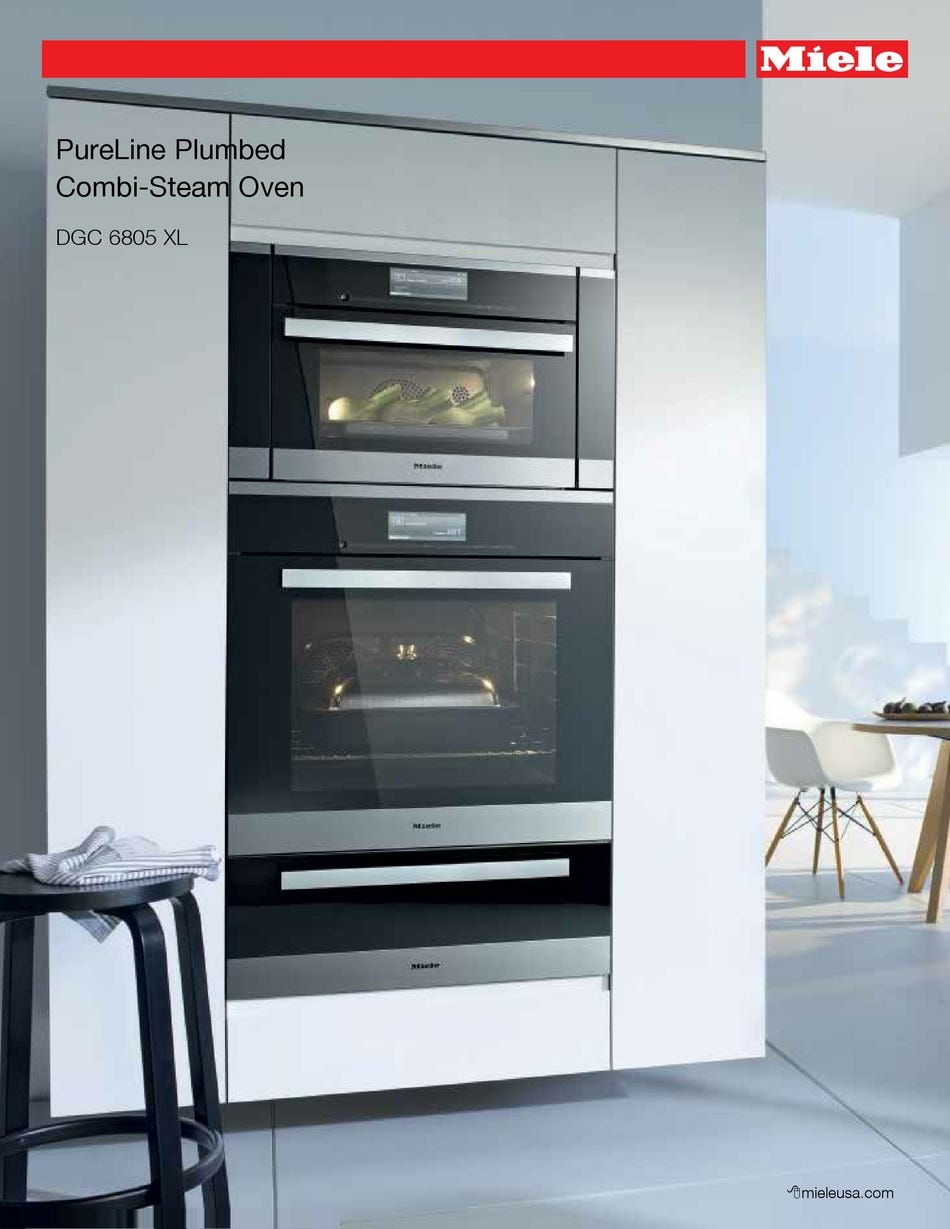
My kitchen vision is for the oven/s to sit in a tower, just like they have them in the Miele showroom. First a deep warming drawer (30 cm deep). Then the main oven, probably some kind of conventional/steam combo depending on affordability (60cm x 60cm – a 76 litre capacity), then perhaps a ‘speed oven’ providing microwave functionality AND a second oven (60 cm x 45 cm). Now that would be a ‘first class’ combo. Not the Lear Jet, but quite sufficient for this occasional cook.
Now I just need to decide if I really need an oven which uses wi-fi.
One more point: the fancier steam ovens need to be plumbed in (the lower-end versions have removable water tanks).
Yes, plumbing in one’s oven is now a thing. Who knew?