A bright idea
The downsizing project takes a turn

About a week before my house sold, while I was still in downsizing limbo and wondering how I’d fit into an apartment, speculating about where this Tardis-like place would be, and how I’d ever break the emotional bonds with my long-term home—I had a bright idea.
It didn’t arrive completely out of the blue. Of course I’d been doing a lot of thinking about my ‘ideal home’ (as distinct from the definitely non-ideal places I’d inspected so far). What would this Valhalla look like? Idly, I made a Pinterest board: high windows, natural materials, views of nature, room for my books.
The bright idea sprang upon me while I was, yet again, scrolling the real estate apps. ‘Why not’, it suggested, ‘take a drive and look at … some vacant land?’ Spaces full of possibility instead of other people’s depressing choices?
In case you’re wondering, it is possible to purchase a vacant block of land in Sydney. Of course, it’s expensive. Close to the beaches you can find tiny 300 square metre blocks costing millions of dollars, sandwiched cheek by jowl with existing houses. Out on the fringes of the city are larger blocks, a little more affordable. Unaccountably, the houses built on these blocks are often also cramped up close to their equally enormous neighbours. I’d prefer a little more space around me. Was I willing to go the full Treechange route and move right out to the country? I was not. So I drove around Sydney’s north chasing up blocks for sale.
I peered up at a steep block in Castlecrag, a suburb of meandering streets, interesting-looking mid-century houses and hidden, bushy parklets. This suburb, and some of the houses too, were originally designed by Walter Burley Griffin and his wife Marion Mahony Griffin. The steep block for sale had magnificent water views over Middle Harbour—so obviously I wouldn’t be able to afford that one.
I drove out in a westerly direction to Glenhaven in the Hills District, a suburb named because its upper part was known as ‘The Glen’ and its lower part as ‘The Haven’. There I found another steep block in a cul de sac called, atmospherically, ‘Rivendell Way’. I might be able to afford this block—depending on how my own sale went—but apart from its daunting steepness it was already hemmed in by two monstrous behemoths masquerading as family homes.
Still—I wouldn’t mind living on a street called ‘Rivendell Way’. I had visions of the fictional place in Tolkien’s Middle Earth, home of Elvish magic, peace and sanctuary. Sydney often surprises me; it might have a hidden Rivendell somewhere.
The real estate app listed several curiously-shaped blocks on the outskirts of the northern suburb of Hornsby, a place named after convict Samuel Henry Horne. He became a constable and was granted land in the area as a reward for capturing bushrangers. As I climbed out of the car to inspect the vacant block, this history of wild colonial days seemed curiously apt: around me the air zinged with rifle fire. It sounded like rifle fire, though I was prepared to be wrong—what do I know about rifles? Nothing. I inspected a couple of smallish wedge-shaped blocks and two larger versions which both dropped away dramatically towards the rear. One might even call those rear areas ‘cliffs’. As I drove off, unimpressed, I saw a sign pointing to ‘The Rifle Range’. So I’d been right about something.
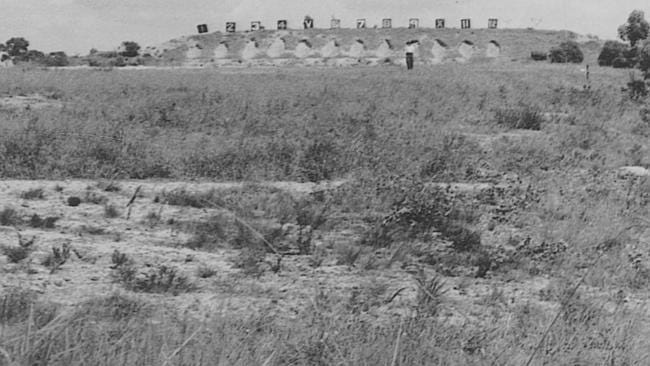
Hornsby Rifle Club formed in the lead up to World War I to improve marksmanship—From The Hornsby Advocate, March 11, 2015
Deciding to give up this fanciful quest for an open space, I turned my car towards home. From Hornsby, my route lay back down the Pacific Highway. I paused to re-check the real estate app—hadn’t I flicked past a block for sale nearby, more or less on my way home? I decided to swing through Normanhurst.
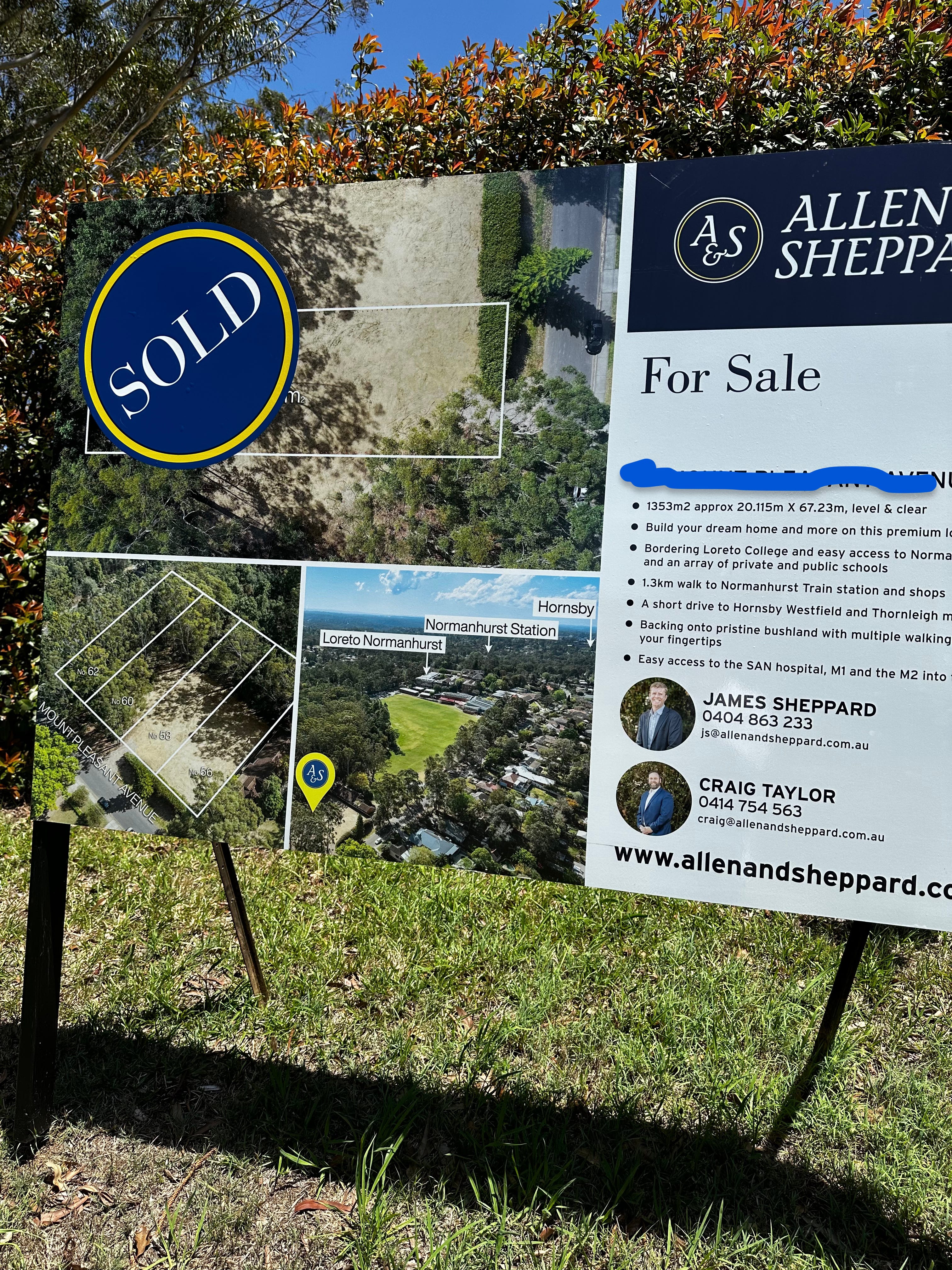
And there it was. A generously-sized, level-ish, accessible block, one of a little subdivision of four in a quiet street, backing on to bushland and neighbouring the wide green playing fields of a school. This looked like my own Rivendell. I leapt out of the car and paced up and down the empty space, imagination whizzing. I gazed into the branches of the tall trees surrounding me. Standing in the middle of this open place of possibility, excitement rising, I grabbed my phone and called the agent. Yes, still for sale. ‘But you better be quick. The other three have sold. They went within a couple of weeks.’
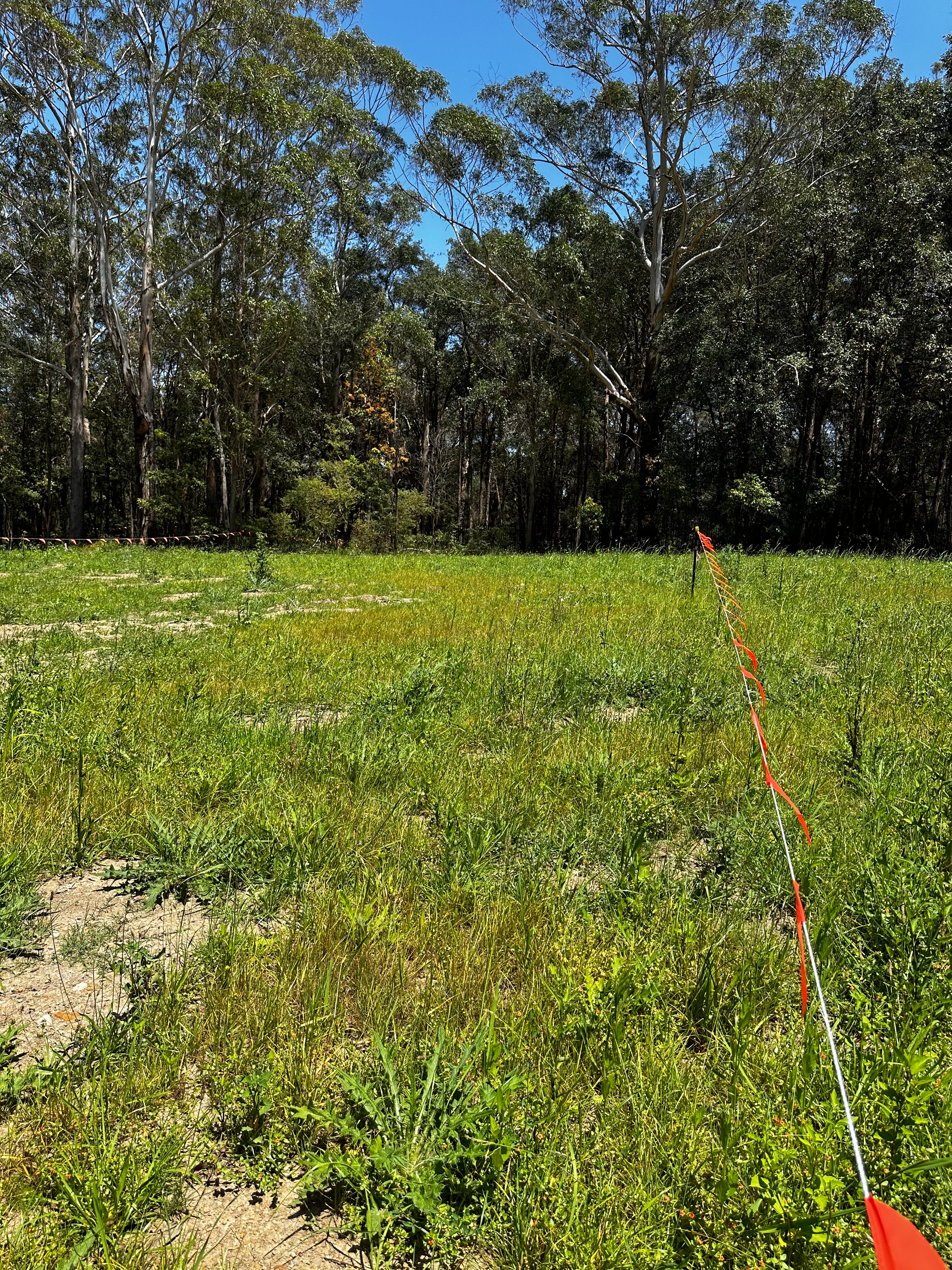
An open space of possibility. And quite a few weeds.
I still hadn’t sold my own house. Probably this block would be snapped up before I was in any position to even consider it. With an effort, I dampened my excitement, consoling myself with the thought that this discovery proved there were decent vacant blocks to be found in Sydney. Which was actually amazing, if you thought about it. A city housing a population of 5, 121,000, and rising every year.
One week later: I received an offer on my house. Contracts were exchanged on a heady and stressful Friday afternoon, solicitors and real estate agents working overtime to seal the deal. I checked back with the Normanhurst agent: that block was still available. Excitement returned. In my turn, I ‘made an offer’.
It wasn’t accepted right away. The block was being sold by the school next door, Loreto College Normanhurst, a large girls’ boarding school established in 1897 by the Loreto Sisters, who still run it. The real estate agent confided that the sisters were selling off the four blocks at the far end of their property to raise money for building new boarding facilities at the school. He suggested that I raise my offer a little. Not wanting to nickel-and-dime the nuns—that might be a bad beginning—I went back with an offer that hit their asking price.
The agent called. ‘Good news,’ he said. ‘The sisters have considered your offer and accepted it.’ I had a vision of nuns in conclave in a cloister somewhere, considering my offer. But I suppose it’s more likely they discussed it by text, or over Zoom.
And so, another SOLD sign.
This was extreme down-sizing—to nothing but a blank slate.
Time for another inspirational quote:
“Often when something is ending we discover within it the spore of new beginning, and a whole train of possibility is in motion before we even realise it. When the heart is ready for a fresh beginning, unforeseen things can emerge. And in a sense, this is exactly what a beginning does. It is an opening for surprises. Surrounding the intention and the act of beginning, there are always exciting possibilities.”
—Irish poet and philosopher, John O’Donohue, from To Bless the Space Between Us: A Book of Blessings (2008)